Understanding Social Media’s Influence on Young Minds in India
Total Views |


- Avani Javakhedkar
Childhood today unfolds in an environment vastly different from that of even a decade ago. Today, the screens are not just tools, but an integral part that shapes how children see themselves and the world around them. Social media, which was once a peripheral aspect of life, has now become deeply embedded in the everyday experiences of young people. For children under the age of 16, who are navigating critical stages of emotional, cognitive, and social development, this shift carries significant psychological implications.
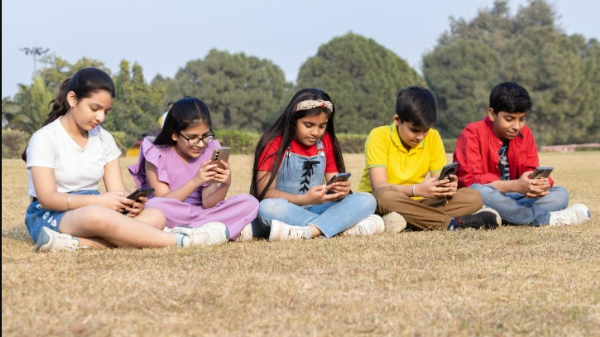
In my observation, particularly during my clinical internships and school-based interactions with children and families, it has become clear that social media extends beyond influencing behaviour; it plays a significant role in shaping identity, self-worth, and interpersonal relationships. While these platforms offer opportunities for connection and learning, their unregulated and excessive use raises pressing concerns, especially in the Indian context, where rapid smartphone access has outpaced digital literacy, supervision, and policy enforcement.
One of the most significant impacts is on mental and emotional well-being. In clinical and school settings, there has been a noticeable increase in children reporting anxiety, low self-esteem, and body image concerns. For instance, pre-teens as young as 11 or 12 often express dissatisfaction with their appearance after repeated exposure to filtered and idealized images on platforms like Instagram. At an age when identity formation is still evolving, children are comparing themselves not only with peers but also with influencers, leading to unrealistic self-expectations. In the Indian context, this is further complicated by the blending of local and Western beauty standards, creating confusion and internal conflict.
Social media has also intensified peer influence and reshaped social norms. Validation is increasingly quantified through likes, comments, and followers. In many cases, children equate online popularity with real-world acceptance. I have observed adolescents feeling excluded or distressed when they are not part of certain online groups or trends. The definition of “coolness” is fluid and constantly changing, often influenced by global, particularly Western, content. This has contributed to children “growing up” faster than their age, adopting behaviours and attitudes that may not align with their emotional readiness.
Another critical concern is the erosion of independent thinking. Social media platforms are saturated with opinions, often presented as absolute truths. Children, whose critical thinking skills are still developing, may struggle to distinguish between credible information and misinformation. For example, during major news events or viral trends, many young users tend to adopt dominant opinions without questioning their validity. This makes it increasingly difficult for them to form their own perspectives without being influenced by the prevailing digital narrative.
Behavioural changes, particularly related to attention and impulse control, are also evident. The popularity of short-form content has conditioned children to seek constant stimulation, reducing their ability to focus on longer tasks such as reading or studying. Teachers and parents frequently report difficulties in maintaining children’s attention in academic settings. This shift towards instant gratification can have long-term implications for learning and perseverance.
A major contributing factor is the lack of effective parental control and digital supervision. In India, rapid smartphone penetration has outpaced parents' digital literacy. Many caregivers are either unaware of the platforms their children use or unsure how to regulate them. As a result, children often navigate complex online environments without adequate guidance. This gap becomes particularly concerning given the scale of access. India has one of the largest populations of young internet users globally.
High exposure to social media also increases risks such as cyberbullying, online exploitation, and exposure to inappropriate content. Cases of cyberbullying among school students have become more visible, with some leading to severe emotional distress. Additionally, children may unknowingly share personal information, making them vulnerable to online predators or scams. The normalisation of oversharing further complicates issues of privacy and safety.
India has begun to recognise these challenges within its evolving digital and regulatory framework. Initiatives such as the Information Technology (Intermediary Guidelines and Digital Media Ethics Code) Rules, 2021, and growing discussions around data protection and age-appropriate content regulation indicate a shift toward greater accountability. However, implementation remains a challenge, particularly in ensuring that platforms enforce age restrictions and safeguard young users effectively.
Globally, there are instructive examples that offer direction. Notably, Australia has taken a strong stance by proposing restrictions that would effectively prevent children under the age of 16 from accessing social media platforms. This approach is grounded in the understanding that children require a protected developmental window before being exposed to the psychological pressures of digital ecosystems. If such a model were thoughtfully implemented across countries, it could significantly reduce early exposure to harmful content, comparison culture, and online risks.
However, the success of such a policy depends on how it is executed. Merely setting an age limit is insufficient without robust verification systems, platform accountability, and parental awareness. If adopted properly, a global standard, such as restricting social media use below 16, could create a more uniform digital environment where children are not pressured to join platforms prematurely due to peer influence. It would also encourage technology companies to design age-appropriate alternatives and safer digital spaces for younger users.
At the same time, such restrictions must be balanced with education. Children will eventually enter digital spaces, and delaying access should be accompanied by equipping them with critical thinking skills, emotional resilience, and digital literacy. Otherwise, the risks may simply be postponed rather than prevented.
From a broader societal lens, social media is reshaping cultural patterns among Indian youth. Aspirations, communication styles, and value systems are increasingly influenced by global content. While this fosters exposure and openness, it also risks diluting local cultural grounding if not balanced with contextual awareness.
In conclusion, the impact of social media on children below 16 is complex and far-reaching. It affects not only individual development but also family dynamics, education systems, and societal values. Addressing this issue requires a multi-stakeholder approach, parents must engage actively, schools should incorporate digital literacy and emotional education, and policymakers need to strengthen child-focused regulations. Most importantly, children must be guided to use social media consciously, rather than being shaped by it unconsciously. Only then can we ensure that this powerful tool contributes positively to their growth, rather than hindering it.
Childhood today unfolds in an environment vastly different from that of even a decade ago. Today, the screens are not just tools, but an integral part that shapes how children see themselves and the world around them. Social media, which was once a peripheral aspect of life, has now become deeply embedded in the everyday experiences of young people. For children under the age of 16, who are navigating critical stages of emotional, cognitive, and social development, this shift carries significant psychological implications.
In my observation, particularly during my clinical internships and school-based interactions with children and families, it has become clear that social media extends beyond influencing behaviour; it plays a significant role in shaping identity, self-worth, and interpersonal relationships. While these platforms offer opportunities for connection and learning, their unregulated and excessive use raises pressing concerns, especially in the Indian context, where rapid smartphone access has outpaced digital literacy, supervision, and policy enforcement.
One of the most significant impacts is on mental and emotional well-being. In clinical and school settings, there has been a noticeable increase in children reporting anxiety, low self-esteem, and body image concerns. For instance, pre-teens as young as 11 or 12 often express dissatisfaction with their appearance after repeated exposure to filtered and idealized images on platforms like Instagram. At an age when identity formation is still evolving, children are comparing themselves not only with peers but also with influencers, leading to unrealistic self-expectations. In the Indian context, this is further complicated by the blending of local and Western beauty standards, creating confusion and internal conflict.
Social media has also intensified peer influence and reshaped social norms. Validation is increasingly quantified through likes, comments, and followers. In many cases, children equate online popularity with real-world acceptance. I have observed adolescents feeling excluded or distressed when they are not part of certain online groups or trends. The definition of “coolness” is fluid and constantly changing, often influenced by global, particularly Western, content. This has contributed to children “growing up” faster than their age, adopting behaviours and attitudes that may not align with their emotional readiness.
Another critical concern is the erosion of independent thinking. Social media platforms are saturated with opinions, often presented as absolute truths. Children, whose critical thinking skills are still developing, may struggle to distinguish between credible information and misinformation. For example, during major news events or viral trends, many young users tend to adopt dominant opinions without questioning their validity. This makes it increasingly difficult for them to form their own perspectives without being influenced by the prevailing digital narrative.
Behavioural changes, particularly related to attention and impulse control, are also evident. The popularity of short-form content has conditioned children to seek constant stimulation, reducing their ability to focus on longer tasks such as reading or studying. Teachers and parents frequently report difficulties in maintaining children’s attention in academic settings. This shift towards instant gratification can have long-term implications for learning and perseverance.
A major contributing factor is the lack of effective parental control and digital supervision. In India, rapid smartphone penetration has outpaced parents' digital literacy. Many caregivers are either unaware of the platforms their children use or unsure how to regulate them. As a result, children often navigate complex online environments without adequate guidance. This gap becomes particularly concerning given the scale of access. India has one of the largest populations of young internet users globally.
High exposure to social media also increases risks such as cyberbullying, online exploitation, and exposure to inappropriate content. Cases of cyberbullying among school students have become more visible, with some leading to severe emotional distress. Additionally, children may unknowingly share personal information, making them vulnerable to online predators or scams. The normalisation of oversharing further complicates issues of privacy and safety.
India has begun to recognise these challenges within its evolving digital and regulatory framework. Initiatives such as the Information Technology (Intermediary Guidelines and Digital Media Ethics Code) Rules, 2021, and growing discussions around data protection and age-appropriate content regulation indicate a shift toward greater accountability. However, implementation remains a challenge, particularly in ensuring that platforms enforce age restrictions and safeguard young users effectively.
Globally, there are instructive examples that offer direction. Notably, Australia has taken a strong stance by proposing restrictions that would effectively prevent children under the age of 16 from accessing social media platforms. This approach is grounded in the understanding that children require a protected developmental window before being exposed to the psychological pressures of digital ecosystems. If such a model were thoughtfully implemented across countries, it could significantly reduce early exposure to harmful content, comparison culture, and online risks.
However, the success of such a policy depends on how it is executed. Merely setting an age limit is insufficient without robust verification systems, platform accountability, and parental awareness. If adopted properly, a global standard, such as restricting social media use below 16, could create a more uniform digital environment where children are not pressured to join platforms prematurely due to peer influence. It would also encourage technology companies to design age-appropriate alternatives and safer digital spaces for younger users.
At the same time, such restrictions must be balanced with education. Children will eventually enter digital spaces, and delaying access should be accompanied by equipping them with critical thinking skills, emotional resilience, and digital literacy. Otherwise, the risks may simply be postponed rather than prevented.
From a broader societal lens, social media is reshaping cultural patterns among Indian youth. Aspirations, communication styles, and value systems are increasingly influenced by global content. While this fosters exposure and openness, it also risks diluting local cultural grounding if not balanced with contextual awareness.
In conclusion, the impact of social media on children below 16 is complex and far-reaching. It affects not only individual development but also family dynamics, education systems, and societal values. Addressing this issue requires a multi-stakeholder approach, parents must engage actively, schools should incorporate digital literacy and emotional education, and policymakers need to strengthen child-focused regulations. Most importantly, children must be guided to use social media consciously, rather than being shaped by it unconsciously. Only then can we ensure that this powerful tool contributes positively to their growth, rather than hindering it.