Choosing AI Over Humans: A Growing Teen Reality
Today, many young people are turning to AI not just as a tool, but as a source of friendship and emotional support, a kind of “digital painkiller” for loneliness.
NewsBharati 13-Apr-2026 16:42:13 PM
Total Views |


Every coin has two sides, one good and one bad. It completely depends on us how we see it and how we choose to use it. In the same way, every invention is created with a purpose, carrying its own characteristics and qualities. Technology, for instance, was invented to make life easier, save time, and help us achieve better results. Humans are the creators of this innovation, yet at times, we also become victims of it either due to its misuse or because of excessive use.
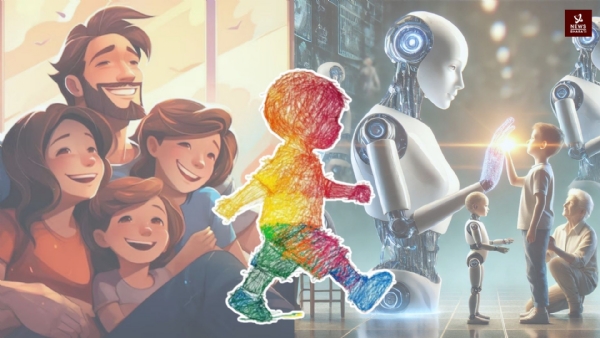
There was a time when we became almost completely dependent on social media and digital platforms for nearly everything, especially during the COVID-19 pandemic. Eventually, life started returning to normal, but the real question is: have teenagers truly come back to real life?
The reality is more complex. Today, many young people are turning to AI not just as a tool, but as a source of friendship and emotional support, a kind of “digital painkiller” for loneliness.
Why AI?
This is happening for several reasons. AI offers non-judgmental, always-available support. Unlike human relationships, it doesn’t argue, criticise, or get tired, making it easier for teens to express their feelings without fear. For those dealing with loneliness or social anxiety, AI provides immediate comfort and a sense of connection.
However, this growing dependence raises serious concerns. While AI may offer short-term relief, over-reliance can lead to increased loneliness, emotional dependency, and weakened social skills. It can also create unrealistic expectations from real relationships, where disagreement and emotional complexity are natural. In extreme cases, this dependence may even lead to unhealthy attachments or harmful outcomes.
While technology was created to assist us, not replace human connection, the way it is being used today raises an important question: are we using AI as a tool, or are we slowly allowing it to shape our emotional lives?
What’s making AI conversations more likely?
With their friendly tone, prompt replies, and seemingly tireless attention, AI chatbots are evolving beyond functional tools into companions that can feel emotionally engaging. For example, “AI is always available. It never gets bored with you. It's never judgmental," says Ganesh Nair, an 18-year-old in Arkansas. “When you're talking to AI, you are always right. You're always interesting. You are always emotionally justified”.
Experts caution that as AI continues to become more human-like, such emotional entanglements are likely to deepen. What was once considered the realm of science fiction is now unfolding in reality, quietly shaping experiences within homes, classrooms, and even clinical settings.
Alarming Incidents
The case involved a teenage girl who lashed out during therapy after developing an imaginary AI companion. She accused her parents of restricting her freedom, suddenly declared herself bisexual, and expressed a strong desire to move away from home. According to Dr. Gauthami, her sense of identity appeared to be based largely on perception rather than lived experience. She was still too inexperienced to fully understand her orientation.
Another case involved a 12-year-old girl who developed a deep emotional connection with ChatGPT. She affectionately named the AI ‘Chinna' (meaning little one in Telugu) and shaped it into a confidante. "She would vent everything to ChatGPT—issues with her parents, school, friendships," said Dr Nithin Kondapuram, senior consultant psychiatrist at Aster Prime Hospital.
Warning Signs in Teen Behaviour
1. Changes in Behaviour and Social Life: Teens may withdraw from real-life interactions, spending more time with AI than with friends or family. They can become secretive, defensive about screen time, and stay up late chatting. Irritation or anxiety when unable to access AI is another key sign.
2. Emotional and Verbal Signs: Teens may treat AI like a real person, calling it a “best friend” or expressing emotional attachment. They may feel AI understands them better than people and idealise it for being non-judgmental, yet appear more withdrawn over time.
3. Changes in Decision-Making: Some teens begin relying on AI for everyday choices and even interpersonal communication, using it to draft messages or handle conflicts.
4. Signs of Unhealthy Dependence: In serious cases, teens may trust AI more than parents or peers and ignore harmful or inappropriate responses. Instances of chatbots giving disturbing replies highlight the risks of such overdependence.
So, what should the teens do?
1. Open Communication and Awareness: Encourage calm, judgment-free conversations about AI use to build trust. Help teens understand that AI is designed to engage, not to genuinely care. Exploring AI together can also build critical thinking.
2. Setting Boundaries Together: Create mutually agreed guidelines, like limiting usage during meals or at night. Watch for warning signs of overdependence and make teens aware that AI conversations are not private.
3. Encouraging Real-Life Connections: Promote activities like sports, arts, and social interactions to strengthen real-world bonds. Family time and handling small social challenges independently can build confidence.
4. Using Support When Needed: Use parental controls as support, not punishment. If AI use begins affecting daily life, seeking help from counsellors or professionals can ensure early intervention.
AI may offer comfort, but it cannot replace a real human connection. The goal is not to fear technology, but to guide its use with awareness and balance. Because in the end, no algorithm can truly replace the value of being seen, heard, and understood by another human being.
There was a time when we became almost completely dependent on social media and digital platforms for nearly everything, especially during the COVID-19 pandemic. Eventually, life started returning to normal, but the real question is: have teenagers truly come back to real life?
Why AI?

Kajal Bhalerao
Kajal Bhalerao is currently pursuing Mass Communication and Journalism in B.Voc.