Online radicalisation of children and Terrorism
Total Views |


– Rupali Bhusari
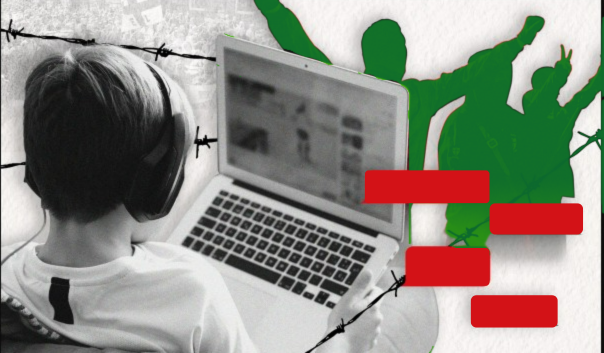
Studies on global terrorism reveal that terrorist organisations are achieving their objectives by exploiting the innocence of young children. Young children are targeted easily and can be moulded into future terrorists. Terrorist Organizations such as the Liberation Tigers of Tamil Elam (LTTE), Al-Qaeda, and Boko Haram have engaged in the exploitation of children. Nowadays, social media has become an easy means for the recruitment of children for various crimes. Online radicalisation of children has become a global challenge. As terrorism and the cyber world have no boundaries, the combination of both is lethal.
Currently, at least 22 individuals have been arrested in Ghaziabad (UP). The police took immediate action following an initial tip-off that youths from Bhovapur in Uttar Pradesh were capturing photographs and videos of railway stations and military bases and sending them abroad. They had been lured with the promise of money. Their recruitment process was conducted through social media and encrypted messaging apps. The instructions were extremely specific—detailing which railway stations to film, which areas to map, from what angles to record footage, and exactly when to transmit the coordinates. A remuneration ranging from ₹ 5,000 to ₹ 20,000 was paid for each 'assignment.' The recruitment focused on youths and minors with technical skill such as those working at mobile repair shops, CCTV work etc.
Also, UP –ATS has arrested dental student (age -19) for links with ISIS online module. The accused has created several groups (WhatsApp, Instagram) to connect with likeminded people to circulate ISIS propaganda in India.
Lone wolf attacks and social media
Terrorist organisations use to provide material to radicalise children. Self-radicalisation is extremely dangerous as it produces Lone wolf attackers. It means the single person becomes a terrorist or even a suicide bomber by himself, without any organisational support. The lone–wolf terrorists are associated with the cyber world, which provides them with propaganda literature, videos, information, YouTube and much more. The children easily fall into this trap and get radicalised.
The main problem is that children don’t think of the person they have met online as a stranger – they are just friends!
Al-Qaeda has devised a 'Special Media Plan' specifically to recruit young children and to instil its radical ideology within them. Jihadi literature—including games, cartoons, songs, and similar content—is made available on the internet for children ranging from early childhood through adolescence. Terrorist groups address these children, using titles such as 'Cubs of the Caliphate' and urge other children to aspire to become like them. They are having a production house named 'Birds of Paradise,' which disseminates literature and media content related to Jihad. In Islam, there is a belief that children who pass away before reaching puberty go directly to Paradise; they are transformed into birds and sing songs of immortality. However, videos produced by this organisation depict these children transforming instead into lethal combatants against the enemy, with their sole objective being Jihad. Children tend to emulate these portrayals. Content produced by 'Birds of Paradise' is available in Arab nations, Canada, and Great Britain. Furthermore, terrorist organisations frequently upload videos to YouTube featuring young children participating in terrorist attacks, accompanied by messages suggesting that these actions will earn them a divine reward from GOD.
Around 2014, the terrorist organisation known as the Islamic State of Iraq and Syria [ISIS] seized control of the ‘Al-Bukamal’ region in Syria. They subsequently took over the local schools. Consequently, young children began receiving lessons steeped entirely in Islamic fundamentalism. Abu Shahed was a resident of this region; he has recounted his experiences. From the moment ISIS took control of the area and the schools, his eleven-year-old son underwent a complete transformation. His behaviour changed drastically. Illustrations of weapons and black flags began appearing in his schoolbooks. The parents began to feel as though a little spy was lurking within their own home. His wife, Um Shahed, states that she found her son's presence unbearable; it became difficult to trust him. In other words, a mother found it agonising to simply be in the company of her own child—she felt as though a pint-sized spy was constantly keeping her under surveillance. Due to ISIS's coercion, their children were compelled to attend these schools.
In Nigeria, in 2009, the organisation Boko Haram recruited 8,000 children into its terrorist ranks. To prove their allegiance to the organisation, some of these young children were subjected to conditions such as having to kill or destroy their own families. Consequently, these children launched attacks against their own kin. Girls were forcibly compelled to marry terrorists. Furthermore, girls were coerced into performing menial tasks for the organisation, such as cleaning and cooking. Additionally, young boys and girls were utilised as "human shields." The terrorist organisation ‘Al-Shabaab,’ which is active in Kenya and Somalia, has also recruited children.
There are numerous reasons behind the recruitment of children. Organisations such as ISIS and Boko Haram recruit children primarily to boost their membership numbers. The expansion of the organisation's reach and the amplification of its influence within society constitute the primary motivations behind this practice. Since people rarely harbour significant suspicion toward children, it becomes easier to launch attacks using them. Children do not require any monetary compensation; they enlist voluntarily once enticed. Their needs are minimal, making them a source of inexpensive manpower. Children are also utilised for espionage purposes, as well as for conveying messages and transporting supplies or explosives. Furthermore, it is relatively easy to exert ideological control over children.
Once recruited into the organisation, children are assigned a variety of tasks. These range from participating directly in combat and, at times, carrying out suicide attacks, to assassinating individuals, exchanging messages, fulfilling the sexual needs of terrorists within the organisation, and performing duties as domestic servants.
Overall, within the organisation, children serve as watchmen, messengers, spies, sweepers, recruiters, sex slaves, human shields, and suicide bombers. The specific roles assigned vary based on gender and age; however, girls are predominantly exploited to fulfil sexual needs. Often, the children are completely unaware that the packages they have been instructed to deliver contain explosives.
Some children fall prey to Islamic religious propaganda disseminated via the internet. Through mediums such as email, Facebook, YouTube, and various online or virtual groups, adolescents are lured into joining terrorist organisations. This phenomenon is termed 'E-Jihad.' This 'leaderless jihad' is orchestrated through the exchange of ideas and the dissemination of literature.
On December 8, 2016, Hamas uploaded a photograph to Twitter depicting a young boy in military fatigues holding a large rifle, asserting that Hamas is steadily enhancing its prestige and strength across generations. Numerous such photographs, as well as videos depicting the military training of young children, are readily available. This serves as an example of how an entire generation is corrupted. Terrorist organisations use these children as pawns on the chessboard of their own self-interest. Whenever these children are killed, the terrorists glorify them as "martyrs who died for our mission." This is a tactic to market their "ideological product" by capitalising on this martyrdom. Tragically, these children are utilised as weapons, and their innocence is forever victimised.
Conclusion- The children are connected to the global network through the cyber world. There are pros and cons of virtual reality. We must protect the children from online radicalisation and propaganda. Eternal vigilance is important to save children and ultimately the nation!
(Author is Editor of Ekata magazine, Author and independent researcher in Counter-Terrorism and national security)
Studies on global terrorism reveal that terrorist organisations are achieving their objectives by exploiting the innocence of young children. Young children are targeted easily and can be moulded into future terrorists. Terrorist Organizations such as the Liberation Tigers of Tamil Elam (LTTE), Al-Qaeda, and Boko Haram have engaged in the exploitation of children. Nowadays, social media has become an easy means for the recruitment of children for various crimes. Online radicalisation of children has become a global challenge. As terrorism and the cyber world have no boundaries, the combination of both is lethal.
Red Flags in Bharat
Currently, at least 22 individuals have been arrested in Ghaziabad (UP). The police took immediate action following an initial tip-off that youths from Bhovapur in Uttar Pradesh were capturing photographs and videos of railway stations and military bases and sending them abroad. They had been lured with the promise of money. Their recruitment process was conducted through social media and encrypted messaging apps. The instructions were extremely specific—detailing which railway stations to film, which areas to map, from what angles to record footage, and exactly when to transmit the coordinates. A remuneration ranging from ₹ 5,000 to ₹ 20,000 was paid for each 'assignment.' The recruitment focused on youths and minors with technical skill such as those working at mobile repair shops, CCTV work etc.
Also, UP –ATS has arrested dental student (age -19) for links with ISIS online module. The accused has created several groups (WhatsApp, Instagram) to connect with likeminded people to circulate ISIS propaganda in India.
Lone wolf attacks and social media
Terrorist organisations use to provide material to radicalise children. Self-radicalisation is extremely dangerous as it produces Lone wolf attackers. It means the single person becomes a terrorist or even a suicide bomber by himself, without any organisational support. The lone–wolf terrorists are associated with the cyber world, which provides them with propaganda literature, videos, information, YouTube and much more. The children easily fall into this trap and get radicalised.
The main problem is that children don’t think of the person they have met online as a stranger – they are just friends!
Planning by Terrorist Organisations
Al-Qaeda has devised a 'Special Media Plan' specifically to recruit young children and to instil its radical ideology within them. Jihadi literature—including games, cartoons, songs, and similar content—is made available on the internet for children ranging from early childhood through adolescence. Terrorist groups address these children, using titles such as 'Cubs of the Caliphate' and urge other children to aspire to become like them. They are having a production house named 'Birds of Paradise,' which disseminates literature and media content related to Jihad. In Islam, there is a belief that children who pass away before reaching puberty go directly to Paradise; they are transformed into birds and sing songs of immortality. However, videos produced by this organisation depict these children transforming instead into lethal combatants against the enemy, with their sole objective being Jihad. Children tend to emulate these portrayals. Content produced by 'Birds of Paradise' is available in Arab nations, Canada, and Great Britain. Furthermore, terrorist organisations frequently upload videos to YouTube featuring young children participating in terrorist attacks, accompanied by messages suggesting that these actions will earn them a divine reward from GOD.
Around 2014, the terrorist organisation known as the Islamic State of Iraq and Syria [ISIS] seized control of the ‘Al-Bukamal’ region in Syria. They subsequently took over the local schools. Consequently, young children began receiving lessons steeped entirely in Islamic fundamentalism. Abu Shahed was a resident of this region; he has recounted his experiences. From the moment ISIS took control of the area and the schools, his eleven-year-old son underwent a complete transformation. His behaviour changed drastically. Illustrations of weapons and black flags began appearing in his schoolbooks. The parents began to feel as though a little spy was lurking within their own home. His wife, Um Shahed, states that she found her son's presence unbearable; it became difficult to trust him. In other words, a mother found it agonising to simply be in the company of her own child—she felt as though a pint-sized spy was constantly keeping her under surveillance. Due to ISIS's coercion, their children were compelled to attend these schools.
In Nigeria, in 2009, the organisation Boko Haram recruited 8,000 children into its terrorist ranks. To prove their allegiance to the organisation, some of these young children were subjected to conditions such as having to kill or destroy their own families. Consequently, these children launched attacks against their own kin. Girls were forcibly compelled to marry terrorists. Furthermore, girls were coerced into performing menial tasks for the organisation, such as cleaning and cooking. Additionally, young boys and girls were utilised as "human shields." The terrorist organisation ‘Al-Shabaab,’ which is active in Kenya and Somalia, has also recruited children.
Reasons behind Recruiting Children into the Organisation
There are numerous reasons behind the recruitment of children. Organisations such as ISIS and Boko Haram recruit children primarily to boost their membership numbers. The expansion of the organisation's reach and the amplification of its influence within society constitute the primary motivations behind this practice. Since people rarely harbour significant suspicion toward children, it becomes easier to launch attacks using them. Children do not require any monetary compensation; they enlist voluntarily once enticed. Their needs are minimal, making them a source of inexpensive manpower. Children are also utilised for espionage purposes, as well as for conveying messages and transporting supplies or explosives. Furthermore, it is relatively easy to exert ideological control over children.
Once recruited into the organisation, children are assigned a variety of tasks. These range from participating directly in combat and, at times, carrying out suicide attacks, to assassinating individuals, exchanging messages, fulfilling the sexual needs of terrorists within the organisation, and performing duties as domestic servants.
Overall, within the organisation, children serve as watchmen, messengers, spies, sweepers, recruiters, sex slaves, human shields, and suicide bombers. The specific roles assigned vary based on gender and age; however, girls are predominantly exploited to fulfil sexual needs. Often, the children are completely unaware that the packages they have been instructed to deliver contain explosives.
Some children fall prey to Islamic religious propaganda disseminated via the internet. Through mediums such as email, Facebook, YouTube, and various online or virtual groups, adolescents are lured into joining terrorist organisations. This phenomenon is termed 'E-Jihad.' This 'leaderless jihad' is orchestrated through the exchange of ideas and the dissemination of literature.
On December 8, 2016, Hamas uploaded a photograph to Twitter depicting a young boy in military fatigues holding a large rifle, asserting that Hamas is steadily enhancing its prestige and strength across generations. Numerous such photographs, as well as videos depicting the military training of young children, are readily available. This serves as an example of how an entire generation is corrupted. Terrorist organisations use these children as pawns on the chessboard of their own self-interest. Whenever these children are killed, the terrorists glorify them as "martyrs who died for our mission." This is a tactic to market their "ideological product" by capitalising on this martyrdom. Tragically, these children are utilised as weapons, and their innocence is forever victimised.
Conclusion- The children are connected to the global network through the cyber world. There are pros and cons of virtual reality. We must protect the children from online radicalisation and propaganda. Eternal vigilance is important to save children and ultimately the nation!
(Author is Editor of Ekata magazine, Author and independent researcher in Counter-Terrorism and national security)