Tokenization, Transportation Tax, Energy Trap: A tilt towards a new Rule book!
NewsBharati 24-Apr-2026 15:26:51 PM
Total Views |


- Why the Iran-Israel+US war will be a defining moment of the initiation of Economic colonization?
- Why is the world still chasing fossil fuels when it knows that Agentic AI energy needs (already here) can never be met by fossil fuels?
- Does the mighty US need to defend USD anymore, or can it just tokenise its debt?
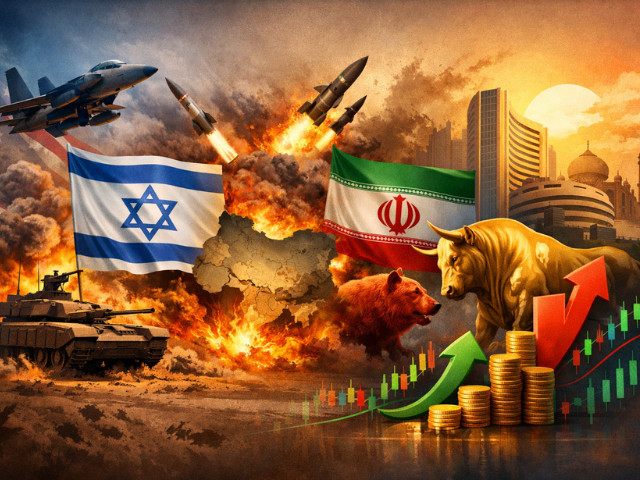
- To know the answers to these three questions presently haunting the world, the context of the ongoing Iran-Israel+US war must be understood.
The Context of Iran-Israel+US war
The popular narrative suggests three main theories.
- The US wants Iran to be nuclear disarmed, though reports suggest the latter has none as of now. Iran has 440 kg of enriched (60%) Uranium, which is good to make 10-12 nuclear weapons once enrichment reaches 90% levels.
- Israel has files and data (linked to Jeffrey Epstein) on President of the United States, which compelled the US to initiate ‘Operation Epic Fury’ killing ~ 40 to 50 top commanders and family members and Iran’s Supreme Leader Ali Khamenei.
- Pressure from the Kingdom of Saudi Arabia (KSA) on the US to dismantle the hardline Iranian regime, and the one causing instability in the Gulf region, to end, prompting the US to move quickly. Along with the decline of Iran’s present regime, the Yemen Houthi militia, Lebanese Hezbollah, and Popular Mobilisation Forces of Iraq (PMS IRAQ) also will come down, and KSA will again reign supreme in the region.
As for the first theory, Italian Prime Minister Giorgia Meloni made an interesting observation: “Ironically, out of nine countries that have nuclear weapon capabilities, the only country that has ever used a nuclear weapon is the US. It fears that others may use it inappropriately.” About the other two, there is no authentic account available in public domain.
History and facts suggest that wars are initiated and fought not for ego, not out of emotional decisions or compulsion, but out of significant, mammoth monetary gains. The war now is seeing a series of conversations, peace talks, negotiations, etc. Many believe this will be successful as well. Whatever the outcome of the talks, whether peace or conflict initiates again, the new rules have been set out, and they are here to stay for a long period of time.
Safety Tax on travel of goods and people
You want safety, pay the toll, pay the tax, pay the charge. No free lunches. This appears to be the new rule. It has the following geographical context too.
(a) Gulf of Hormuz – The most talked about is the Gulf of Hormuz. It comes under Iran’s jurisdiction in the North and Oman’s in the South. It blocks the Gulf that enables ~20% of the world’s energy movement. Iran had sought a USD safe passage tax per oil barrel to be paid in Bitcoin, USDT (Tether - pegged to USD) or Chinese Yuan.
(b) Bab el-Mandeb Strait – The Bab el-Mandeb strait is controlled by Yemen in the Northeast and Djibouti and Eritrea in the southwest. It is a critical checkpoint in maritime commerce, which sees a global 10%-12% trade passing through it. The Houthis (a militia group supported by Iran) control it. If conflict re-escalates, this checkpoint can also seek a safe passage toll or tax.
(c) Great Wall of Sand – Since 2013, the People’s Republic of China has been building manmade Islands in the South China Sea and Yellow Sea through dredging under its flagship program ‘Great Wall of Sand’. Over 3,200 acres of new land is created by dredging sand onto seven reefs in the Spratly Islands. These sites including Fiery Cross, Mischief, and Subi Reefs have been transformed into fortified military outposts with ports, runways, hangers, and missile systems. Over 30% of Global Maritime trade passes through this route.
(d) Ben Gurion Canal Project – Israel has been moving fast on a 250-300 km long sea-level canal to connect the Gulf of Aqaba to the Mediterranean Sea, passing near Gaza, bypassing the Suez Canal, with an estimated outlay of over USD 55 billion. The Suez Canal, under Egypt, controls ~15% of global trade and 30% of container traffic. The Ben Canal Project will make it redundant.
(e) Polar Silk Road – Russia and China are actively developing the Polar Silk Road, popularly called the Arctic route or Ice Silk Road, utilising the Northern Sea Route along Russia’s Arctic coast. This will bypass traditional Pacific and Suez Canal routes and will shorten shipping distances between East Asia and Europe by up to 40%, creating a shorter, strategic, and faster Arctic trade corridor.
These locations can prove critical in times of war, and the countries controlling these may benefit from getting a rent, toll or tax paid in return.
Decentralised Finance (DeFi) and Tokenisation
As the conflict in the Middle East escalates, so does the government debt of the US. Currently, it has debt of ~USD 39 trillion on a GDP of ~USD 32.25 trillion. In July 2025, the US President Donald Trump enacted the Guiding and Establishing National Innovation for U.S. Stablecoins (GENIUS) Act, enabling 1:1 enablement of stablecoin (digital asset) with the USD.
This raises a question: If the US can’t pay the debt, can it move the debt to stablecoins and tokenise it?
This can disperse the debt of the US beyond the original lenders and ensure stability of the US financial system.
BlackRock has been taking bets in Crypto. Blackstone, the largest private equity manager in the world, with over a trillion USD in AUM, has invested over USD 130 billion in blockchain infrastructure.
An interesting development adds more context in this regard. Pakistan has entered into agreements with World Liberty Financial (WLF), a crypto venture linked to Jared Kushner, Steve Witkoff, and the Trump family, to tokenise approximately USD 2 billion in state assets. This deal aims to digitise government land, infrastructure, and mining rights, alongside promoting the use of WLF’s USD1 stablecoin.
At present, the tokenised RWA (Real World Assets) is ~USD 29 billion. Leading consultancy firms project the tokenised RWA market will optimistically be a whopping ~USD 30 trillion by 2030, a probable, potential 100-times jump in four years.
Iran’s Cryptocurrency mining
Selling Oil through Shadow Fleet?
Domestic industrialisation and selling its in-house developed automobiles, pharmaceuticals, chemicals through barter and non-USD payment systems in the neighbourhood – Turkey, UAE and others?
Both the above and more.
This is the way Iran has built its fleet of dark hackers and miners, when the world was absolutely unaware of it.
The Conundrum of Energy Trap
When the world is moving from Generative AI to Agentic AI, the electricity needs will only be higher and higher. A simple Google Search takes 0.3 Watt-hours (Wh) of energy. A complex AI Google Search pushes up the energy consumption to ~3Wh to 5Wh depending on the query. Once Agentic AI comes, the power requirements will only surge through the sky.
The world produced ~30,000 Terawatt-hours (TWH) of electricity as of 2025-end and would need ~33600 TWH by 2030. Fossil fuels alone will not be able to foot the bill. The age of controlled fission with low enrichment for electricity production will come.
China has developed small modular reactors (SMRs), the ACP100 (Linglong One), the world’s first commercial land-based SMR approved by the International Atomic Energy Agency (IAEA). It is designed to provide flexible, portable power. China already has the capacity to manufacture 30-36 third-generation pressurized water portable reactors annually, which can energize islands and remove reliance on traditional energy sources.
Recently, Bharat also attained a breakthrough with the 500 MWe Prototype Fast Breeder Reactor (PFBR) at Kalpakkam, marking a self-sustaining nuclear chain reaction. This way, Bharat moves into the second stage of its three-stage nuclear energy programme. Fast Breeder Reactors (FBRs) can extract far more energy than limited uranium reserves, which offer a long-term, low-carbon energy solution, with the use of Plutonium to breed. This will ensure effective utilisation of Bharat’s large Thorium reserves.
Whilst the world is watching the war, conflicts, and death on phones and televisions, slowly the global capitalists have moved assets into the new age annuity.
People, positions, predilection may change but global greed is here to stay. It will create further and bigger divide amongst the haves and have-nots in a manner faster and swifter than anticipated.
(The author is Managing Director & Chief Operating Officer of a Leading Full-Service Investment Bank.)
Siddhartha Rastogi
Siddhartha Rastogi is Managing Director & Chief Operating Officer of a Leading Full Service Investment Bank. Views and opinions expressed in this article are those of the authors and do not necessarily reflect the official view or position of any company or sister concerns or group company where the author is presently employed.