Severe Summer- 19 of the world’s 20 hottest cities in India; IMD issues precautionary warnings
Cities such as Delhi, parts of Rajasthan, Maharashtra, and Uttar Pradesh are experiencing extreme conditions, with forecasts reaching 44°C or higher.
Total Views |


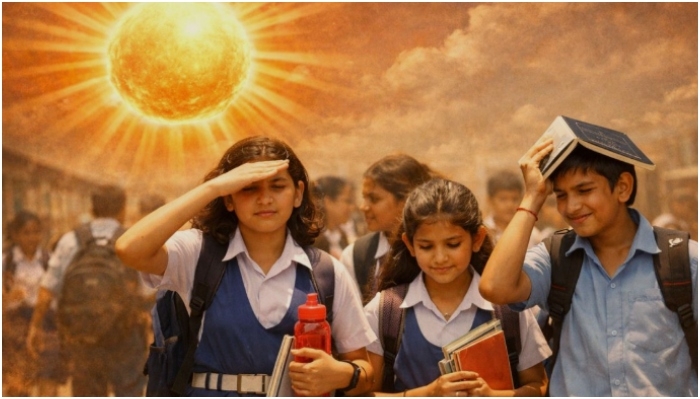
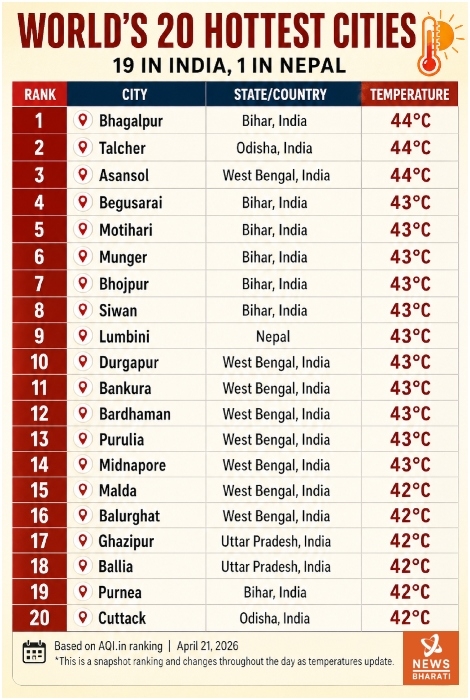
India is currently facing an intense heatwave, with temperatures soaring above 44°C in several cities and the India Meteorological Department issuing alerts across many regions. The conditions have turned so severe that 19 of the world’s 20 hottest cities are reported to belong to India.
According to reports, only one city among the world’s 20 hottest cities is from Nepal, while the remaining 19 are in India, recording temperatures ranging between 42°C and 44°C. The heatwave is affecting large parts of northern, central, and western India, with temperatures consistently remaining above normal levels.
The India Meteorological Department (IMD) has warned that heatwave conditions are likely to continue for several more days, with temperatures expected to stay 3–5°C above seasonal averages. Dry weather and low humidity are further worsening the situation. Cities such as Delhi, parts of Rajasthan, Maharashtra, and Uttar Pradesh are experiencing extreme conditions, with forecasts reaching 44°C or higher.
Reports mention that the current heatwave has become so severe due to a combination of factors. Anti-cyclonic circulation over regions such as Maharashtra is trapping heat and causing temperatures to rise sharply. Dry winds and low humidity are further intensifying the conditions by accelerating the heat buildup. In addition, long-term climate change trends are contributing to more frequent and intense heatwaves across the region.
The India Meteorological Department has issued important precautions for the public during the heatwave. People are advised to avoid stepping outdoors between 12 PM and 4 PM, when temperatures are at their peak. It is also recommended to stay well hydrated and wear light, breathable clothing. Individuals should remain alert for symptoms such as dizziness, fatigue, or nausea, which may indicate heat-related illness. Extra care should be taken for vulnerable groups, including children, the elderly, and those with existing health conditions.