Amid heavy CRPF deployment, incidents of violence, 90% voter turnout recorded in West Bengal
Total Views |


Polling for the crucial second phase of the West Bengal Assembly Elections 2026 concluded across 142 constituencies, with a strong voter turnout and scattered incidents of tension reported from several areas. According to the Election Commission, voter turnout reached approximately 78.68% by 3 pm, and 90% by 5 pm, reflecting high participation in what is seen as a decisive phase of the elections.
Over 3.22 crore voters were eligible to vote, with more than 1,400 candidates contesting across key districts in south Bengal and the Kolkata region in the ongoing polls, the result of which will be declared on May 4th.
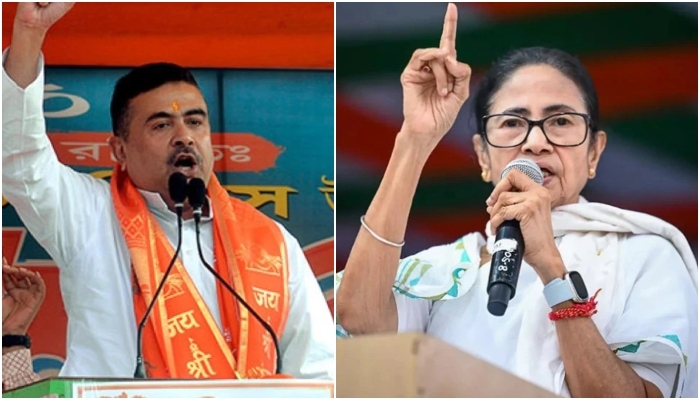
The current contest between the ruling TMC and the BJP has become one of the most intense political battles in the state, especially the one between Chief Minister Mamata Banerjee and Suvendu Adhikari, with the latter emerging as a key challenger in the high-profile Bhabanipur seat.
Both parties have invested heavily in the campaign outreach, booth-level mobilization, and even narrative building, for that matter. Women voters, rural communities, first-time voters, and traditional party workers all turned out in large numbers, as if the citizens asserted loud and clear that Bengal’s future matters, and that the voters responsibly wanted to shape it directly.
Notably, despite heavy deployment of central and state security forces and strict monitoring, sporadic incidents of violence and clashes were reported during the polls. TMC candidate Saokat Molla, in the second phase, alleged that police carried out a lathi charge in Bhangar, injuring party supporters and creating a tense atmosphere.
Meanwhile, BJP candidate Priyanka Tibrewal raised concerns over overcrowding at a polling booth in Entally, alleging that polling agents were 'sitting on EVMs' and compromising voter privacy. She claimed that her complaint led to partial corrective action, though tensions persisted.
West Bengal minister and TMC leader Firhad Hakim also blatantly levelled allegations against the Election Commission, alleging mismanagement and delays in polling. On the other hand, BJP leaders, including Tarun Chugh, expressed confidence in a strong mandate for the party, citing public support for development and governance under Prime Minister Narendra Modi.

During the first phase, the acts of violence were reported in Nowda, Murshidabad district, as unidentified people hurled crude bombs in the area. Major incidents were also reported in Kumarganj (South Dinajpur), where BJP candidate Subhendu Sarkar was attacked, and Asansol South, where BJP leader Agnimitra Paul’s car was vandalised. Tensions also erupted in Nandigram, Chanchal (Malda), Purulia, and Birbhum. After the polls, the state authorities said that around 41 people were arrested for their involvement in the poll-related violence, and 571 preventive detentions and custody actions across the state were executed.
Interestingly, ahead of the second phase, more than 2,400 people were apprehended across West Bengal, as revealed by the Election Commission. EC had also asked the National Investigation Agency (NIA) to ensure that no bombs are used by miscreants to disrupt voting and target workers of the political party. Authorities said most of those taken into custody were identified as potential troublemakers.
Given Bengal’s history of election-related violence, the Election Commission this time had also deployed large numbers of Central Armed Police Forces (CAPF) across the state. Central forces were stationed in sensitive booths, carried out patrols, and monitored vulnerable constituencies. Their presence was especially important because the BJP had repeatedly demanded neutral security arrangements, arguing that state police alone could not ensure free and fair voting.
The results, scheduled to be announced on May 4, will determine whether the TMC retains power in West Bengal or if the BJP makes significant inroads into the state’s political landscape.
Over 3.22 crore voters were eligible to vote, with more than 1,400 candidates contesting across key districts in south Bengal and the Kolkata region in the ongoing polls, the result of which will be declared on May 4th.
In a politically charged state like West Bengal, where violence often dominates the electoral landscape, elections are seen more as mass movements than routine democratic exercises. This turnout reflects the seriousness with which voters are approaching the battle for power.
The current contest between the ruling TMC and the BJP has become one of the most intense political battles in the state, especially the one between Chief Minister Mamata Banerjee and Suvendu Adhikari, with the latter emerging as a key challenger in the high-profile Bhabanipur seat.
Both parties have invested heavily in the campaign outreach, booth-level mobilization, and even narrative building, for that matter. Women voters, rural communities, first-time voters, and traditional party workers all turned out in large numbers, as if the citizens asserted loud and clear that Bengal’s future matters, and that the voters responsibly wanted to shape it directly.
Notably, despite heavy deployment of central and state security forces and strict monitoring, sporadic incidents of violence and clashes were reported during the polls. TMC candidate Saokat Molla, in the second phase, alleged that police carried out a lathi charge in Bhangar, injuring party supporters and creating a tense atmosphere.
Meanwhile, BJP candidate Priyanka Tibrewal raised concerns over overcrowding at a polling booth in Entally, alleging that polling agents were 'sitting on EVMs' and compromising voter privacy. She claimed that her complaint led to partial corrective action, though tensions persisted.
West Bengal minister and TMC leader Firhad Hakim also blatantly levelled allegations against the Election Commission, alleging mismanagement and delays in polling. On the other hand, BJP leaders, including Tarun Chugh, expressed confidence in a strong mandate for the party, citing public support for development and governance under Prime Minister Narendra Modi.
West Bengal’s 2026 Assembly election began on 23rd April, 2026, with an extraordinary democratic signal, record-breaking voter turnout. After the first phase of voting, the Election Commission stated that the voting crossed 92 percent, making it the highest voter participation seen in the state since Independence.
During the first phase, the acts of violence were reported in Nowda, Murshidabad district, as unidentified people hurled crude bombs in the area. Major incidents were also reported in Kumarganj (South Dinajpur), where BJP candidate Subhendu Sarkar was attacked, and Asansol South, where BJP leader Agnimitra Paul’s car was vandalised. Tensions also erupted in Nandigram, Chanchal (Malda), Purulia, and Birbhum. After the polls, the state authorities said that around 41 people were arrested for their involvement in the poll-related violence, and 571 preventive detentions and custody actions across the state were executed.
Interestingly, ahead of the second phase, more than 2,400 people were apprehended across West Bengal, as revealed by the Election Commission. EC had also asked the National Investigation Agency (NIA) to ensure that no bombs are used by miscreants to disrupt voting and target workers of the political party. Authorities said most of those taken into custody were identified as potential troublemakers.
Given Bengal’s history of election-related violence, the Election Commission this time had also deployed large numbers of Central Armed Police Forces (CAPF) across the state. Central forces were stationed in sensitive booths, carried out patrols, and monitored vulnerable constituencies. Their presence was especially important because the BJP had repeatedly demanded neutral security arrangements, arguing that state police alone could not ensure free and fair voting.
The results, scheduled to be announced on May 4, will determine whether the TMC retains power in West Bengal or if the BJP makes significant inroads into the state’s political landscape.