Impact of Social Media on Children's Behaviour & Attention Changes
Total Views |


-Sandhya Khasnis
The Economic Survey 2025-26 of India highlights the increasing digital engagement of children and youth on social media; this poses challenges for public health, the economy, and society. The report notes that children and adolescents are more at risk, who are the productive pillar of Vikasit Bhart @2047, so the highlights in the report are of real concern.
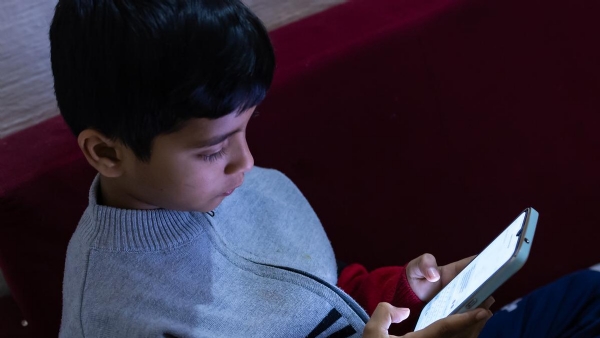
Social media engagement affects individuals' lives negatively, by shaking social relationships, affecting education, reducing productivity at the workplace, which further affects production and the economy, and it also creates physical and psychological problems.
The unavoidable dependence on technology cannot be denied, but its balanced, ethical, and responsible use must be promoted to children for their academic and future goals. To know the way out, the reasons behind this excessive use may help.
The Psychological and neurobiological study points out that children up to the age of 16 are more at risk of the effects of excessive social media engagement, as their brains are still developing. During the developmental stage, which ranges from the age of 10 to 25, the limbic system, which regulates emotions and rewards, develops faster, which leads to heightened emotional sensitivity, risk-taking, and peer influence. The prefrontal cortex, which is the area responsible for planning, risk assessment, self- regulation, and decision-making, matures to its fullest until the age of 20s. This developmental process makes them susceptible to excessive use of social media, gaming, and digital platforms, which manifests in their behavioural and attentional issues.
The children aged between 7 and 16 years are in their Concrete Operational and early Formal Operational stage, according to Jean Piaget’s Cognitive Development Theory. During this, executive functions are still developing, and children may struggle in sustaining attention. The short and fast content on social media, with frequent notifications, makes the children switch quickly from one thing to another, which reduces their attention span and concentration ability. Lack of awareness about the long-term consequences makes them stay for a longer time on social media.
According to the social development theory of Lev Vygotsky, children’s learning and behavior are reflections of the social environment and their interaction with society. The children get exposed to a strong social media environment via various digital platforms, where friends and online interaction influence them to form their behaviour. Peer influence and online communication keep them engaged in using various social media, and to avoid FOMO (Fear Of Missing Out). This constant use of social media reduces their focus on offline activities like studying and face-to-face interaction.
Albert Bandura’s Social Learning Theory explains that children learn new behavior and emotional reactions by observing and copying from the social environment they are exposed to. Social media presence influences the children's behaviour; they may imitate their friends, popular celebrities, and social media influencers. They may copy risky online challenges and attention-seeking behaviours unknowingly, without fully understanding the consequences, in a desire for quick rewards. This impatient and impulsive behaviour reduces concentration on activities like studying or completing tasks that require focus and effort.
The adolescent age of 12 to 18, which is the Identity vs. Role Confusion stage of the development, as stated by Erik Erikson’s Psychological Development Theory, during this age, adolescents try to understand who they are and expect acceptance from their peers. Social media is a platform where they can express themselves, post content, and check for likes, comments, and shares, which gives them a feeling of acceptance and value. This habit may lead to emotionalsensitivity and distract from other daily routines, less physical activities, more screen time, and a disturbed schedule.
Adolescent children below 16 are in their puberty phase, which is a period of rapid growth and development, due to the physical, psychological, emotional, and social changes in and around them. The active limbic system, developing prefrontal cortex, leads to excessive use of social media. These developments make them more vulnerable to distraction, impulsive behaviour, imitation of online trends, and reduced attention span.
Combined efforts from students, parents, and teachers help in creating awareness about the excessive use of social media by children aged below 16. Developing and implementing an age-appropriate awareness program that can inform the impact of excessive social media use, and inculcating healthy habits with self-regulation and self-control, which may guide these children to use social media with positive engagement. The program with appropriate pedagogy supports healthy behavioural and attentional development during these formative years. The program has a cascade model, where participants further spread awareness among peers and the society.
The goal is not to prevent the use of social media, but to encourage balanced, ethical, and responsible use and promote its benefits for academic and professional development. This may result in improved behaviour, emotion management, and social interaction.
Sandhya Khasnis
Researcher,
Jnana Prabodhini’s Institute of Psychology
The Economic Survey 2025-26 of India highlights the increasing digital engagement of children and youth on social media; this poses challenges for public health, the economy, and society. The report notes that children and adolescents are more at risk, who are the productive pillar of Vikasit Bhart @2047, so the highlights in the report are of real concern.
Social media engagement affects individuals' lives negatively, by shaking social relationships, affecting education, reducing productivity at the workplace, which further affects production and the economy, and it also creates physical and psychological problems.
The unavoidable dependence on technology cannot be denied, but its balanced, ethical, and responsible use must be promoted to children for their academic and future goals. To know the way out, the reasons behind this excessive use may help.
The Psychological and neurobiological study points out that children up to the age of 16 are more at risk of the effects of excessive social media engagement, as their brains are still developing. During the developmental stage, which ranges from the age of 10 to 25, the limbic system, which regulates emotions and rewards, develops faster, which leads to heightened emotional sensitivity, risk-taking, and peer influence. The prefrontal cortex, which is the area responsible for planning, risk assessment, self- regulation, and decision-making, matures to its fullest until the age of 20s. This developmental process makes them susceptible to excessive use of social media, gaming, and digital platforms, which manifests in their behavioural and attentional issues.
The children aged between 7 and 16 years are in their Concrete Operational and early Formal Operational stage, according to Jean Piaget’s Cognitive Development Theory. During this, executive functions are still developing, and children may struggle in sustaining attention. The short and fast content on social media, with frequent notifications, makes the children switch quickly from one thing to another, which reduces their attention span and concentration ability. Lack of awareness about the long-term consequences makes them stay for a longer time on social media.
According to the social development theory of Lev Vygotsky, children’s learning and behavior are reflections of the social environment and their interaction with society. The children get exposed to a strong social media environment via various digital platforms, where friends and online interaction influence them to form their behaviour. Peer influence and online communication keep them engaged in using various social media, and to avoid FOMO (Fear Of Missing Out). This constant use of social media reduces their focus on offline activities like studying and face-to-face interaction.
Albert Bandura’s Social Learning Theory explains that children learn new behavior and emotional reactions by observing and copying from the social environment they are exposed to. Social media presence influences the children's behaviour; they may imitate their friends, popular celebrities, and social media influencers. They may copy risky online challenges and attention-seeking behaviours unknowingly, without fully understanding the consequences, in a desire for quick rewards. This impatient and impulsive behaviour reduces concentration on activities like studying or completing tasks that require focus and effort.
The adolescent age of 12 to 18, which is the Identity vs. Role Confusion stage of the development, as stated by Erik Erikson’s Psychological Development Theory, during this age, adolescents try to understand who they are and expect acceptance from their peers. Social media is a platform where they can express themselves, post content, and check for likes, comments, and shares, which gives them a feeling of acceptance and value. This habit may lead to emotionalsensitivity and distract from other daily routines, less physical activities, more screen time, and a disturbed schedule.
Adolescent children below 16 are in their puberty phase, which is a period of rapid growth and development, due to the physical, psychological, emotional, and social changes in and around them. The active limbic system, developing prefrontal cortex, leads to excessive use of social media. These developments make them more vulnerable to distraction, impulsive behaviour, imitation of online trends, and reduced attention span.
Combined efforts from students, parents, and teachers help in creating awareness about the excessive use of social media by children aged below 16. Developing and implementing an age-appropriate awareness program that can inform the impact of excessive social media use, and inculcating healthy habits with self-regulation and self-control, which may guide these children to use social media with positive engagement. The program with appropriate pedagogy supports healthy behavioural and attentional development during these formative years. The program has a cascade model, where participants further spread awareness among peers and the society.
The goal is not to prevent the use of social media, but to encourage balanced, ethical, and responsible use and promote its benefits for academic and professional development. This may result in improved behaviour, emotion management, and social interaction.
Sandhya Khasnis
Researcher,
Jnana Prabodhini’s Institute of Psychology