'Wailing' Tigress
"Wailing" Tigress
Total Views |


The familiar script is unfolding once again in West Bengal. It is neither new nor surprising. As counting day approaches, Mamata Banerjee has chosen to raise serious allegations of EVM manipulation, framing the electoral contest as a “life and death” battle. Such rhetoric may serve immediate political mobilisation, but it raises a fundamental question. And the question is - Does repeatedly questioning the integrity of India’s electoral system strengthen democracy, or does it steadily erode public trust in it?
At the outset, it must be stated clearly that the credibility of the Election Commission of India is not a matter to be casually undermined. India’s electoral process, conducted across vast geographies and complex demographics, is widely regarded as one of the most robust in the world. The use of Electronic Voting Machines (EVMs) has, over the years, been scrutinised, tested, and upheld by technical experts as well as the judiciary. Yet, a pattern has emerged in Indian politics: EVMs are accepted when results are favourable, but questioned when outcomes appear uncertain.
In contrast, the rise of the Bharatiya Janata Party in West Bengal represents a different kind of political reality. One rooted in organisational expansion and voter outreach. Over the past decade, the BJP has transformed itself from a marginal player in the state to a formidable force. This growth has not occurred in a vacuum. It reflects a segment of the electorate seeking alternatives to entrenched political structures.
To dismiss this shift as a product of manipulated machines is to disregard the agency of the voter. It suggests that electoral outcomes are not shaped by public sentiment but by invisible tampering—a claim that is both serious and, in the absence of evidence, irresponsible. Democracy demands that political actors respect not only the process but also the possibility of losing.
At the outset, it must be stated clearly that the credibility of the Election Commission of India is not a matter to be casually undermined. India’s electoral process, conducted across vast geographies and complex demographics, is widely regarded as one of the most robust in the world. The use of Electronic Voting Machines (EVMs) has, over the years, been scrutinised, tested, and upheld by technical experts as well as the judiciary. Yet, a pattern has emerged in Indian politics: EVMs are accepted when results are favourable, but questioned when outcomes appear uncertain.
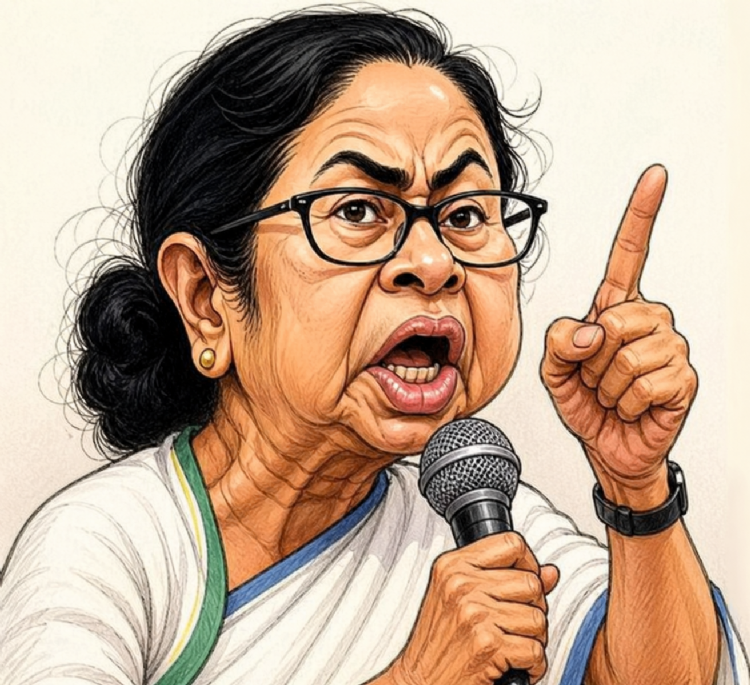
Mamata Banerjee’s current stance fits neatly into this pattern. Her invocation of a “life and death” struggle is not merely political language; it is a strategic attempt to shape perception ahead of results. By casting doubt on the process itself, the groundwork is laid to delegitimize any unfavourable verdict. This is not a defence of democracy. But it is a pre-emptive strike against electoral accountability.
Equally significant is the deployment of nearly 70,000 Central Armed Police Forces (CAPF) personnel across the state. Critics may interpret this as evidence of anticipated unrest, but such a reading is incomplete. The presence of CAPF is not an indictment of the electoral process but it is a reflection of the state’s past experiences with post-poll violence. West Bengal has, unfortunately, witnessed repeated instances where electoral outcomes have triggered intimidation, clashes, and targeted reprisals. In this context, the Election Commission’s decision is preventive, not reactive.
It is important to understand the distinction. The deployment of central forces is aimed at ensuring that the will of the voter is protected and not manipulated. It is a safeguard against precisely the kind of disorder that can arise when political narratives escalate tensions. If anything, it strengthens the democratic process by ensuring that results, whatever they may be, are implemented without fear or coercion. The attempt to link such security measures with alleged EVM manipulation is therefore misplaced. One pertains to administrative preparedness; the other to unsubstantiated claims. Conflating the two may serve short-term political messaging, but it does little to
It is important to understand the distinction. The deployment of central forces is aimed at ensuring that the will of the voter is protected and not manipulated. It is a safeguard against precisely the kind of disorder that can arise when political narratives escalate tensions. If anything, it strengthens the democratic process by ensuring that results, whatever they may be, are implemented without fear or coercion. The attempt to link such security measures with alleged EVM manipulation is therefore misplaced. One pertains to administrative preparedness; the other to unsubstantiated claims. Conflating the two may serve short-term political messaging, but it does little to
uphold institutional integrity.
In contrast, the rise of the Bharatiya Janata Party in West Bengal represents a different kind of political reality. One rooted in organisational expansion and voter outreach. Over the past decade, the BJP has transformed itself from a marginal player in the state to a formidable force. This growth has not occurred in a vacuum. It reflects a segment of the electorate seeking alternatives to entrenched political structures.
To dismiss this shift as a product of manipulated machines is to disregard the agency of the voter. It suggests that electoral outcomes are not shaped by public sentiment but by invisible tampering—a claim that is both serious and, in the absence of evidence, irresponsible. Democracy demands that political actors respect not only the process but also the possibility of losing.
ALSO READ- Amid heavy CRPF deployment, incidents of violence, 90% voter turnout recorded in West Bengal
There is also a broader implication to consider. Repeated allegations against EVMs, especially when made without substantiation, risk normalising distrust. Over time, this can create a dangerous precedent where every electoral outcome is contested not on political grounds, but on procedural suspicion. Such a trajectory weakens democratic institutions and fuels instability. Rahul Gandhi and Mamata Banerjee seem to be doing the same.
Moreover, the narrative of victimhood, of being targeted by a flawed system, can become a convenient shield against introspection. Instead of analysing governance challenges, organisational weaknesses, or shifts in voter priorities, the focus shifts outward. This may energise a political base, but it does not address the underlying dynamics that shape electoral outcomes.
It is also worth noting that India’s electoral system provides multiple layers of verification, including VVPAT (Voter Verifiable Paper Audit Trail). These mechanisms are designed precisely to address concerns about transparency. If there are specific grievances, they can and should be pursued through institutional channels. Public allegations, however, must be backed by credible evidence; otherwise, it risks reducing serious issues to political theatre. The current developments in West Bengal are less about EVMs and more about narrative control. But attempting to frame the contest as a “life and death” struggle, there is a risk of crossing a line where political rhetoric begins to undermine democratic confidence.
There is also a broader implication to consider. Repeated allegations against EVMs, especially when made without substantiation, risk normalising distrust. Over time, this can create a dangerous precedent where every electoral outcome is contested not on political grounds, but on procedural suspicion. Such a trajectory weakens democratic institutions and fuels instability. Rahul Gandhi and Mamata Banerjee seem to be doing the same.
Moreover, the narrative of victimhood, of being targeted by a flawed system, can become a convenient shield against introspection. Instead of analysing governance challenges, organisational weaknesses, or shifts in voter priorities, the focus shifts outward. This may energise a political base, but it does not address the underlying dynamics that shape electoral outcomes.
It is also worth noting that India’s electoral system provides multiple layers of verification, including VVPAT (Voter Verifiable Paper Audit Trail). These mechanisms are designed precisely to address concerns about transparency. If there are specific grievances, they can and should be pursued through institutional channels. Public allegations, however, must be backed by credible evidence; otherwise, it risks reducing serious issues to political theatre. The current developments in West Bengal are less about EVMs and more about narrative control. But attempting to frame the contest as a “life and death” struggle, there is a risk of crossing a line where political rhetoric begins to undermine democratic confidence.
ALSO READ- West Bengal polls: EC asks NIA to prevent crude bomb threats ahead of second phase
The responsibility, therefore, lies not only with institutions like the Election Commission but also with political leaders. Democracy is sustained not just by systems, but by the conduct of those who participate in it. Questioning institutions without evidence may yield immediate political dividends, but it comes at a long-term cost. India’s democracy has withstood far. What is particularly troubling is that Mamata Banerjee appears unwilling to accept the basic democratic principle that power flows from the people, not from perpetual incumbency.
The responsibility, therefore, lies not only with institutions like the Election Commission but also with political leaders. Democracy is sustained not just by systems, but by the conduct of those who participate in it. Questioning institutions without evidence may yield immediate political dividends, but it comes at a long-term cost. India’s democracy has withstood far. What is particularly troubling is that Mamata Banerjee appears unwilling to accept the basic democratic principle that power flows from the people, not from perpetual incumbency.
By projecting every electoral contest as existential and by casting doubts on institutions when politically expedient, she risks normalising an undemocratic mindset where defeat itself becomes illegitimate. This is not the hallmark of confident leadership but of political insecurity. In contrast, the Bharatiya Janata Party has consistently emphasised electoral expansion through voter connect and organisational strength, reinforcing faith in the democratic process rather than undermining it. It will withstand this, too. But its strength ultimately depends on a shared commitment to truth, restraint, and respect for the mandate of the people.