DMK's Dangerous Divisive Politics
NewsBharati 14-May-2026 15:40:13 PM
Total Views |


The repeated attacks on Sanatan Dharma by Udhayanidhi Stalin are not stray political remarks. They are part of a larger ideological project rooted in the old Dravidian politics of cultural hostility, identity mobilisation, and selective outrage, which was implanted by British rule and Western ideas. Every few months, the issue is revived, not because Tamil Nadu faces a crisis caused by Sanatan Dharma, but because sections of Dravidian politics continue to survive on manufacturing ideological enemies.
The controversy began when Udhayanidhi compared Sanatan Dharma to diseases such as dengue and malaria and said it should not merely be opposed but “eradicated.” The remark immediately triggered national outrage because it was not a criticism of a social evil or a regressive custom. It was a direct attack on a civilisational faith followed by millions of Hindus across India and the world.
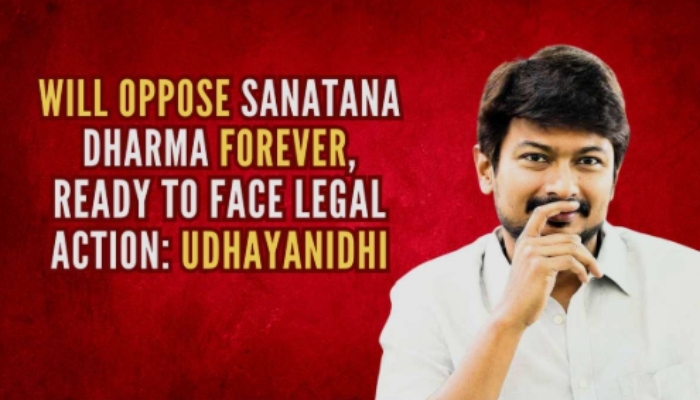
Even after criticism, there was little remorse. Instead, leaders from the DMK ecosystem attempted to intellectualise the statement under the garb of “social justice” and “anti-caste politics.” But the central question remained unanswered: would such language ever be tolerated if directed at any other religion? The answer is obvious.
The episode exposed the deep contradiction of contemporary Dravidian politics. It speaks endlessly about pluralism, tolerance, and constitutional morality, yet repeatedly resorts to inflammatory rhetoric when it comes to Hindu traditions and symbols. This selective secularism has increasingly alienated ordinary Hindus in Tamil Nadu, including many non-political voters who may not identify with the BJP but feel uncomfortable with the constant ridicule of their faith.
The legal and judicial dimensions of the controversy also became significant. Several complaints and petitions were filed across the country against Udhayanidhi Stalin over hate speech allegations. The matter reached the judiciary, and courts examined questions surrounding freedom of expression and the limits of provocative political speech. While Indian democracy protects criticism and debate, the controversy reignited discussion on whether political leaders can casually use language suggesting the “eradication” of a religion or spiritual tradition without social consequences.
The judiciary, over the years, has consistently maintained that freedom of speech is not absolute and cannot become a licence for promoting hatred or social disharmony. Though courts have also been cautious about criminalising political speech too broadly, the Sanatan controversy entered a sensitive constitutional space involving religious freedom, public order, and political accountability.
What made the controversy politically explosive was not merely the statement itself, but the perception that the DMK leadership never seriously distanced itself from the sentiment. Instead of calming tensions, several leaders attempted to reinterpret the remark as an attack on caste hierarchy rather than Hindu civilisation. But Udhayanidhi’s own words had gone far beyond social reform language.
This is where K. Annamalai emerged as one of the sharpest critics of the DMK leadership. Annamalai repeatedly argued that the DMK’s ideological discomfort with Sanatan Dharma was not accidental but foundational to its political identity. According to him, the DMK continues to recycle anti-Hindu rhetoric because it lacks a modern governance narrative capable of emotionally mobilising people.
Annamalai has consistently accused the DMK of practising “selective courage” — aggressively targeting Hindu beliefs while remaining silent on regressive practices in other communities. He has argued that attacking Sanatan Dharma is politically convenient because the DMK assumes Hindus will remain divided by caste and regional loyalties and therefore will not respond politically as a consolidated force.
More importantly, Annamalai believes such statements reveal the insecurity of Dravidian politics in a changing Tamil Nadu. Over the last decade, Tamil society has witnessed a visible resurgence of temple culture, spiritual discourse, civilisational pride, and pan-Indian Hindu consciousness, especially among youth. Pilgrimages, temple festivals, devotional networks, and interest in Indic traditions have expanded significantly. The BJP sees this as evidence that Tamil identity and Hindu identity are not contradictory, despite decades of ideological messaging suggesting otherwise.
That is precisely why the Sanatan issue has become politically important beyond a single remark. It reflects a larger ideological battle over the cultural future of Tamil Nadu. One side continues to frame Hindu civilisational identity as oppressive and outdated. The other argues that Tamil culture itself is inseparable from ancient Hindu spiritual traditions, temples, Bhakti literature, Shaivism, Vaishnavism, and civilisational continuity.
Ironically, leaders who routinely accuse others of “divisive politics” often end up deepening social polarisation themselves through reckless statements. India’s constitutional framework allows criticism, reform movements, and debate within every religion. Hindu society itself has produced countless reformers from within. But calling for the “eradication” of an entire spiritual tradition crosses the line between reform and hostility.
The bigger political question is whether Tamil Nadu’s voters still respond to this style of rhetoric. Increasingly, there are signs of fatigue. Younger generations are more aspirational, connected to national narratives, and less interested in perpetual ideological wars from the last century. They seek governance, development, jobs, investment, and cultural confidence — not endless provocation in the name of outdated political binaries.
The Sanatan controversy may therefore be remembered not merely as an inflammatory remark, but as a moment that exposed the limitations of old-style Dravidian politics in a rapidly changing India.
Satyajit Shriram Joshi
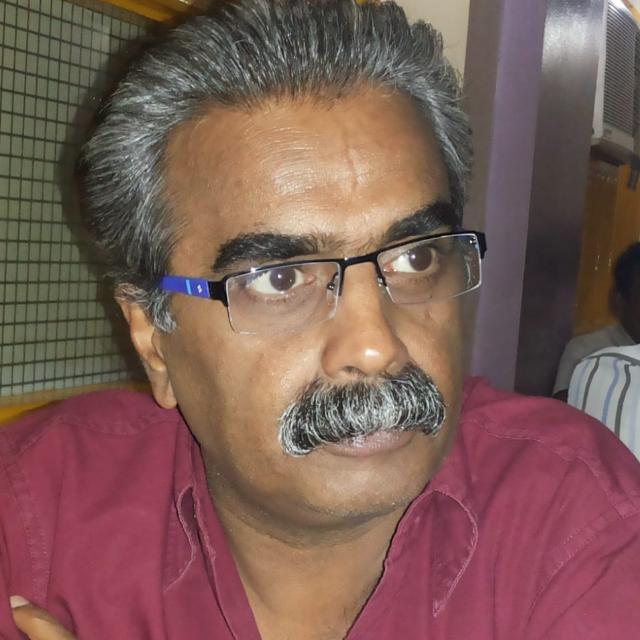
Satyajit Shriram Joshi is Pune based senior journalist.