Operation Smiling Buddha: The secret nuclear test that changed India on May 18, 1974 forever
On May 18, 1974, India carried out its first successful nuclear test at Pokhran in Rajasthan under the codename “Operation Smiling Buddha”, becoming the sixth country in the world to demonstrate nuclear capability
NewsBharati 18-May-2026 10:58:54 AM
Total Views |


In the early hours of May 18, 1974, deep beneath the sands of Rajasthan’s Pokhran desert, India quietly carried out one of the most significant operations in its modern history. Without any public announcement and under extraordinary secrecy, Indian scientists successfully detonated the country’s first nuclear device, sending a powerful message to the world that India had entered the nuclear age.
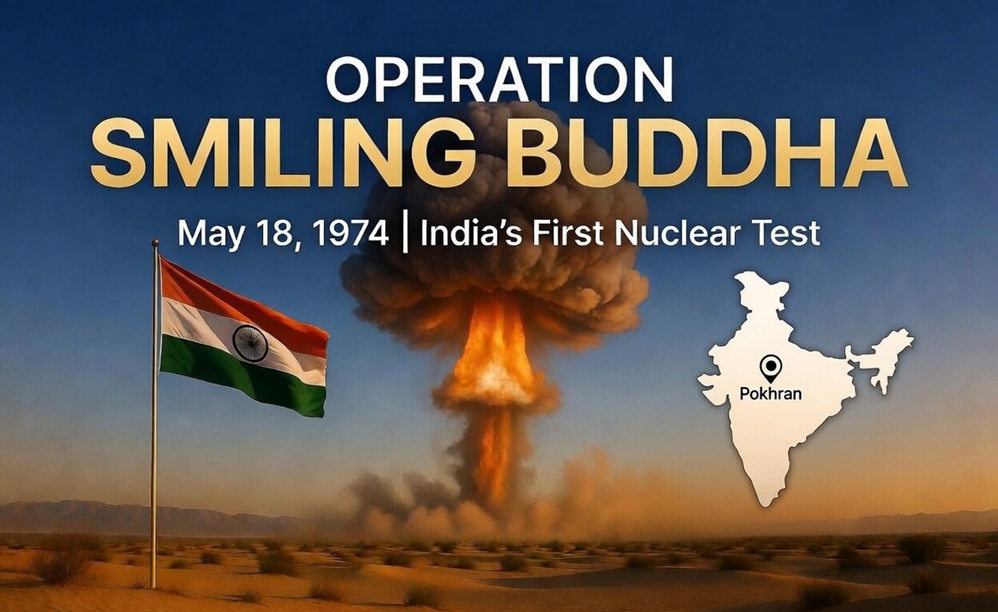
Image Source : AI Generated
The mission, officially known as “Operation Smiling Buddha”, marked a watershed moment in India’s scientific, military and geopolitical journey. The successful underground nuclear test transformed India into the world’s sixth nuclear-capable nation at a time when only the United States, Soviet Union, United Kingdom, France and China possessed nuclear weapons technology.
The test came during one of the most tense periods of global politics, the Cold War, when nuclear capability was closely linked with military strength, international influence and strategic autonomy. India’s success not only demonstrated scientific advancement but also reflected the country’s determination to pursue technological self-reliance despite international pressure and limited external support.
The roots of India’s nuclear programme stretched back to the years following independence, when the country began investing heavily in atomic research and indigenous scientific institutions. The vision for a strong nuclear programme had been shaped earlier by scientists like Dr Homi Jehangir Bhabha, often referred to as the father of India’s nuclear programme. However, the immediate groundwork for the 1974 nuclear test began under then Prime Minister Indira Gandhi.
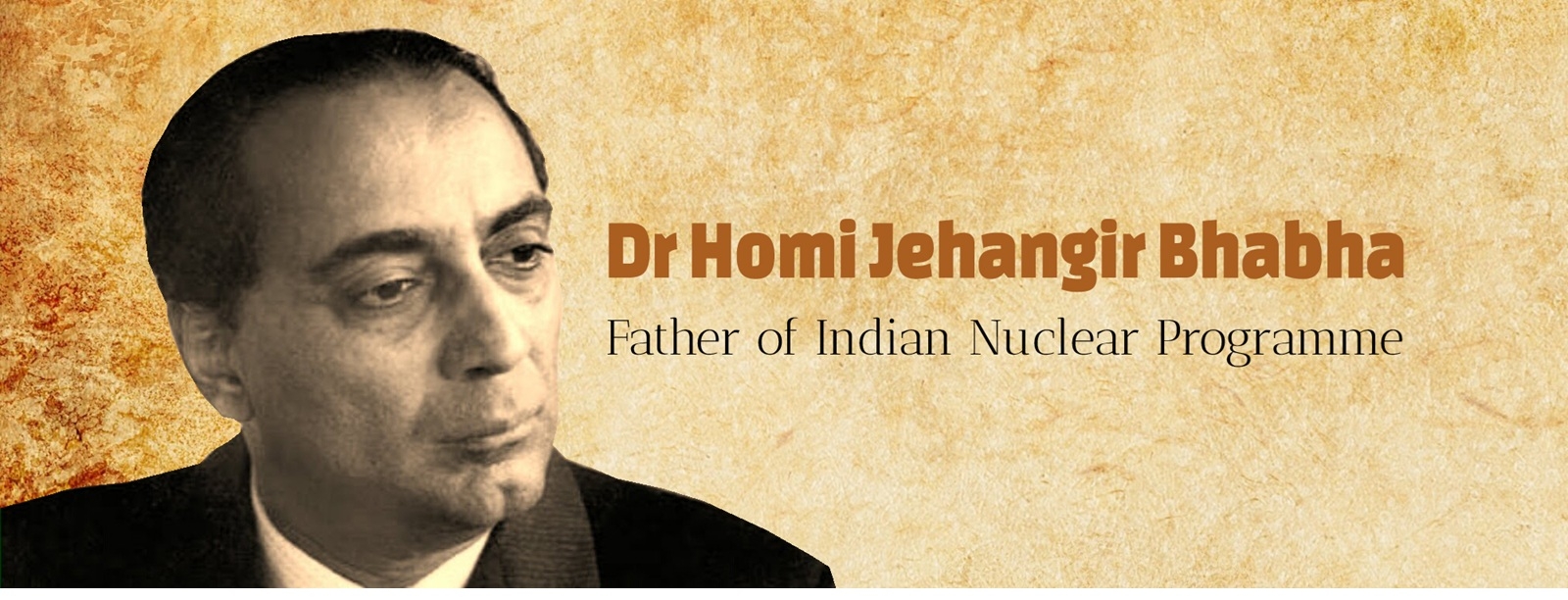
Image Source : Google images
Reports over the years suggest that on September 7, 1972, Indira Gandhi authorised Indian scientists to develop and test an indigenous nuclear device. The approval came at a time when India faced growing regional security concerns, particularly after China’s nuclear test in 1964 and changing geopolitical equations in South Asia.
Once political approval was granted, work on the mission accelerated under extreme secrecy. Only a small circle of scientists, military officials and senior government authorities were aware of the operation. Scientists reportedly worked in isolated teams, information was compartmentalised and movements were carefully concealed to avoid attention from foreign intelligence agencies, especially those of the United States and Western powers.
The mission was led by renowned nuclear physicist Raja Ramanna, then Director of the Bhabha Atomic Research Centre (BARC). Ramanna became the central figure coordinating the scientific and technical aspects of the project.
He worked alongside Basanti Dulal Nag Chaudhuri, then Director of the Defence Research and Development Organisation (DRDO), who helped coordinate the teams involved in developing the explosive mechanism and technical infrastructure required for the mission.
Smiling Buddha: How a Scientist, Raja Ramanna Shaped the Nation’s Security? | Pokhran I
— Ritam English (@english_ritam) May 17, 2026
Link: https://t.co/G9xZU4mL8b
One of the key scientific minds behind the device itself was P. K. Iyengar, Raja Ramanna’s deputy at BARC. Iyengar played a major role in designing and assembling the plutonium implosion device used during the test and solved several complex engineering and technical challenges associated with underground nuclear detonation.
Another major contributor was R. Chidambaram, who later became Chairman of India’s Atomic Energy Commission. Chidambaram’s work in nuclear physics and device development proved critical to the success of the operation.
At the administrative and strategic level, Homi Nusserwanji Sethna, then Chairman of the Atomic Energy Commission, ensured that the project received institutional support, resources and coordination while maintaining the secrecy surrounding the mission.
An important technical contribution also came from N. S. Venkatesan and his team at the Terminal Ballistics Research Laboratory (TBRL). Their work focused on designing the high explosive implosion mechanism required for the device.
Apart from these senior scientists, several others played vital roles at different stages of the project, including M. R. Srinivasan, P. K. K. Menon and C. N. R. Rao. Numerous engineers, technicians, military personnel and support staff also contributed silently behind the scenes.
The test site selected for the operation was Pokhran in Rajasthan’s Thar desert. The remote desert location provided the secrecy and geographical conditions necessary for underground nuclear testing. Scientists and military personnel reportedly worked for months preparing shafts, equipment and testing infrastructure while disguising activities to avoid satellite surveillance.
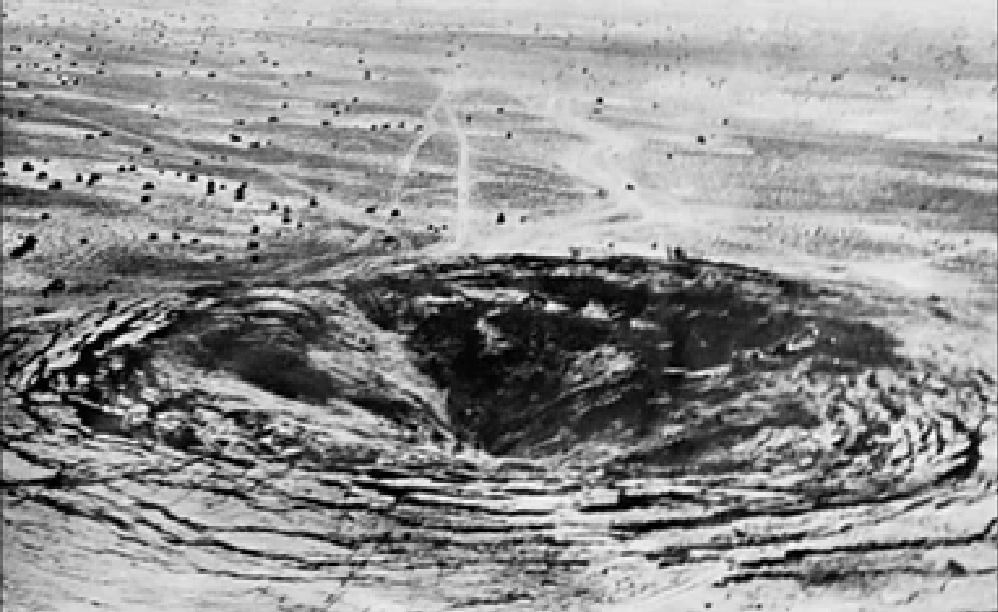
Image Source : BBC
The codename “Smiling Buddha” was reportedly chosen because the test took place on Buddha Purnima. According to accounts linked to the operation, after the successful detonation, Raja Ramanna informed Indira Gandhi of the mission’s success by delivering the famous message: “The Buddha has smiled.”
India tested the device underground on May 18, 1974. Though the exact yield remains debated even decades later, various estimates placed the explosion between 8 and 12 kilotons of TNT.
The success of the mission stunned the international community. Reports later suggested that major foreign intelligence agencies, including those of the United States, failed to detect the preparations in advance, making the operation one of the most secretive nuclear tests of its time.
Within India, the successful test was celebrated as a moment of national pride and scientific achievement. It was seen as proof that Indian scientists and institutions could achieve highly advanced technological goals despite limited resources and international restrictions.
Internationally, however, the reaction was far more critical. Several Western countries, including the United States and Canada, imposed sanctions and restrictions on India over concerns related to nuclear proliferation. The test also led to tighter global controls on nuclear technology and fuel transfers.
Despite diplomatic pressure and economic consequences, Operation Smiling Buddha permanently altered India’s strategic outlook. The test strengthened India’s position in global geopolitics and laid the foundation for the country’s future nuclear policy and deterrence strategy.
More than two decades later, India carried out another series of nuclear tests at Pokhran in May 1998 under Operation Shakti during the government of then Prime Minister Atal Bihari Vajpayee. Those tests firmly established India as a declared nuclear weapons state.
Today, more than five decades later, Operation Smiling Buddha continues to be remembered as one of the boldest and most consequential missions in India’s post-independence history. It was not merely a nuclear test, but a defining moment that changed India’s global image, strengthened its strategic confidence and demonstrated the capabilities of Indian science and innovation in the face of immense international pressure.

Shashank Dwivedi
Shashank Dwivedi holds a PhD in Political Communication and brings rich experience in research and journalism. He has been associated with ETV Bharat and Organiser Weekly. His areas of interest include politics, welfare, education, law, culture and society.