Ladakh 2 to 7: Muslim parties play victim, but here's why the region needs an administrative district division
Under the new administrative restructuring, Leh district will now comprise 44 revenue villages, Nubra 30, and Changthang 24. On the other hand, Kargil district will include 80 revenue villages, while Sham will have 27, Zanskar 26, and Drass 19.


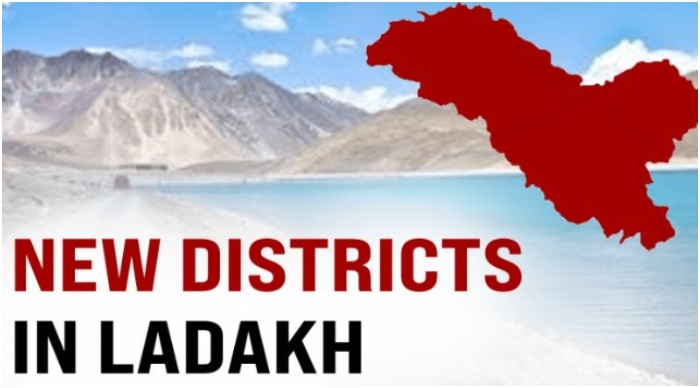
Under the new administrative restructuring, Leh district will now comprise 44 revenue villages, Nubra 30, and Changthang 24. On the other hand, Kargil district will include 80 revenue villages, while Sham will have 27, Zanskar 26, and Drass 19. In terms of demographic distribution, Buddhist-majority regions fall under Leh with a total of 151 villages, whereas Shia Muslim-majority areas are part of Kargil with 99 villages.
The newly created districts of Nubra, Sham, and Changthang have been carved out of the existing Leh district, while Zanskar and Drass have been separated from Kargil. This marks the most significant administrative overhaul in Ladakh since it was designated a Union Territory in 2019.
A historic day for Ladakh.
— LG Ladakh (@lg_ladakh) April 27, 2026
I have approved the notification for creation of five new districts in Ladakh, fulfilling the aspirations and long pending demand of the people of Ladakh.
With creation of five new districts - Nubra, Sham, Changthang, Zanskar and Drass - Ladakh will…
A key objective behind this reorganisation is decentralisation. The Central government aims to improve access to administration, development initiatives, healthcare, education, and grievance redressal by bringing governance closer to remote regions such as Nubra Valley, Changthang Plateau, Zanskar, and Drass, which were previously administered from distant district headquarters.

Referring to the 2011 Census data, Owaisi argued that Muslims have effectively been reduced to a minority in administrative terms, with only two districts, while five districts are now Buddhist-majority. He pointed out that Muslims constitute 46.40% of Ladakh’s population, compared to 39.65% Buddhists, out of a total population of 2,74,289. Despite this, only two districts are Muslim-majority, prompting him to accuse the Modi government of “gerrymandering.”
The Kargil Democratic Alliance (KDA), meanwhile, has described the creation of five new districts as a “calculated attempt” to divide the joint statehood movement of Buddhists and Muslims, who have been demanding full statehood for Ladakh and inclusion under the Sixth Schedule for tribal safeguards.

Contrary to some claims, Ladakh’s new district boundaries largely follow long-standing demographic and geographic realities. Leh and its sub-regions, Sham, Changthang, and Nubra, have historically been Buddhist-majority, while Kargil is predominantly Muslim-majority, with Zanskar as a Buddhist pocket and Drass largely Muslim. These patterns were not newly created.
District formation is meant to improve administrative efficiency, not ensure proportional political representation. Ladakh has no Vidhansabha and remains a single Lok Sabha constituency, so new districts do not impact elections.
Zanskar Buddhist Association Youth Wing welcomes the historic declaration of #Zanskar as a separate district, calling it the fulfillment of a long-pending demand
— Radio News Kargil (@airnewskargil) April 28, 2026
Thanked PM @narendramodi, HM @AmitShah & @lg_ladakh, expressing hope for faster development & better governance pic.twitter.com/XjHQEhg52F
Buddhist-majority sub-regions of Leh, such as Nubra, Sham, and Changthang, have long sought improved administrative mechanisms to boost development and address local grievances more effectively. Claims that the creation of new districts will fracture Buddhist-Muslim unity over the demand for Ladakh’s statehood lack a factual basis, as statehood remains a separate political issue unaffected by administrative restructuring.
The frequent use of the term “gerrymandering” in this context is also misplaced. By definition, gerrymandering refers to the manipulation of electoral boundaries to influence voting outcomes. In Ladakh’s case, this does not apply, as it is a Union Territory without a legislative assembly and remains a single Lok Sabha constituency. The newly formed districts are purely administrative units and have no impact on elections or voting power.
The restructuring largely formalises existing geographic and demographic realities. Zanskar has historically been a Buddhist-majority region, while Drass has long been Muslim-majority. Ladakh’s population is unevenly distributed, with concentrated Muslim-majority pockets in the Kargil region and vast Buddhist-majority areas in Leh. Districts are not designed as population-proportional political units but as administrative divisions for effective governance.
Concerns raised about disparities in village distribution, for instance, one Muslim-majority district having 80 villages compared to others with fewer, overlook the fact that Kargil alone has more villages than any of the newly created districts or even Leh. Such differences are largely shaped by geography, with Leh spanning a much larger and more sparsely populated high-altitude area.
Further arguments citing Finance Commission norms are also misleading. While the 15th Finance Commission uses population and area as criteria for fund allocation, it does not prescribe rules for the creation of districts. District formation remains an administrative decision aimed at improving governance. Rather than skewing resources, the creation of new districts is expected to decentralise administration, ensuring dedicated budgets and better service delivery to remote regions, whether in Buddhist-majority areas like Zanskar or Muslim-majority regions like Drass.
Siddhi Somani
Siddhi Somani is known for her satirical and factual hand in Economic, Social and Political writing. Having completed her post graduation in Journalism, she is currently engaged in completing her Masters in Politics. The author meanwhile is also exploring her hand in analytics and statistics.