What are the Uses of Vacuum Pumps in the Medical Industry: Key Applications
Advt.
Total Views |


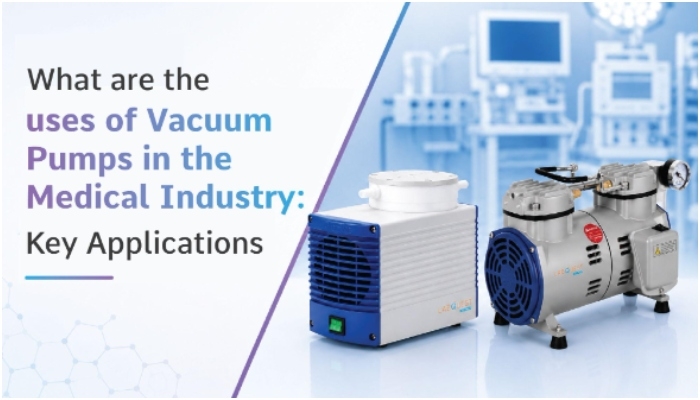
Vacuum technology is central to medical, pharmaceutical, and research work. It supports tasks from surgical suction and sterilisation to pharmaceutical manufacture and sample preparation. Choosing the right vacuum pump affects efficiency, contamination control, and operational reliability.
Surgical Suction and Fluid Management
_202605221427288794_H@@IGHT_328_W@@IDTH_700.jpg "vaccum pumps")
_202605221429337669_H@@IGHT_297_W@@IDTH_700.jpg "vaccum pumps")
_202605221431055176_H@@IGHT_297_W@@IDTH_700.jpg "vaccum pumps")
Several high-precision diagnostic instruments rely on vacuum technology:
● MRI cryogen handling benefits from controlled vacuum systems.
● Electron microscopy needs ultra-clean vacuum conditions for high resolution.
● Plasma treatments for implants use vacuum to generate and control reactive species.
Oil-free piston and diaphragm pumps are often selected for these tasks because they give steady vacuum, low noise and minimal maintenance.
Medical Waste Handling and Hospital Gas Distribution
Vacuum systems help manage waste and medical gases safely:
● containment and removal of biological waste
● controlled handling of anaesthetic gases
● assisting wastewater treatment for hospital effluents
Chemical-resistant, oil-free pumps are recommended for waste streams that contain corrosive or solvent vapours to ensure leak-free, durable service.
Choosing the Right Vacuum Pump for Medical Applications
_202605221433052061_H@@IGHT_400_W@@IDTH_700.jpg "vaccum pumps")
Oil-free and chemical-resistant pumps are commonly used because they require less maintenance, last longer, and reduce contamination risk. These pumps are important where sterility and hygiene are critical. This guide outlines key uses of vacuum pumps with emphasis on oil-free systems and their role in aqueous and solvent-based filtrations.
Surgical Suction and Fluid Management
Vacuum pumps power surgical suction systems, providing steady negative pressure to clear surgical fields, remove bodily fluids, and help airway management.
In operating theatres, oil-free pumps are preferred to avoid any risk of oil reaching patient fluids. For routine procedures and suction of aqueous body fluids, oil-free systems deliver a clean vacuum and require simpler upkeep..
Sterilisation and Vacuum Desiccators
Many medical devices, samples, and pharmaceuticals need dry and sterile storage. Vacuum desiccator sterilisation and desiccators remove air and moisture to improve sterilisation and prevent degradation.
Sterilisation and Vacuum Desiccators
Many medical devices, samples, and pharmaceuticals need dry and sterile storage. Vacuum desiccator sterilisation and desiccators remove air and moisture to improve sterilisation and prevent degradation.
Chemical-resistant pumps with PTFE-lined wetted parts are suitable where sterilisation gases or solvent vapours are present. Oil-free options that are chemical-resistant combine the contamination benefit of oil-free design with solvent tolerance.
Vacuum Filtration and Sample Preparation in Medical Labs
Vacuum pumps are vital for sample preparation and filtration. Precise vacuum control helps maintain sample purity and consistent processing, whether for aqueous buffers or organic solvents.
Key Applications in Medical Laboratories:
● vacuum filtration for liquid–solid separation
● centrifugal concentration to remove solvents from biological samples
● supporting mass spectrometry by maintaining clean vacuum conditions
● vacuum desiccation to protect sensitive samples
For filtration tasks that use aqueous buffers or solvent mixtures, an oil-free pump with chemical-resistant wetted parts or appropriate inlet traps is best. This combination prevents oil contamination while tolerating solvent vapours. Oil-free vacuum pumps from leading scientific brands like Borosil Scientific are widely used for routine aqueous and solvent-based filtrations in medical and analytical laboratories.
Pharmaceutical Manufacturing and Processing
Vacuum systems are used across many manufacturing steps, providing control and reproducibility.
Vacuum Filtration and Sample Preparation in Medical Labs
Vacuum pumps are vital for sample preparation and filtration. Precise vacuum control helps maintain sample purity and consistent processing, whether for aqueous buffers or organic solvents.
Key Applications in Medical Laboratories:
● vacuum filtration for liquid–solid separation
● centrifugal concentration to remove solvents from biological samples
● supporting mass spectrometry by maintaining clean vacuum conditions
● vacuum desiccation to protect sensitive samples
For filtration tasks that use aqueous buffers or solvent mixtures, an oil-free pump with chemical-resistant wetted parts or appropriate inlet traps is best. This combination prevents oil contamination while tolerating solvent vapours. Oil-free vacuum pumps from leading scientific brands like Borosil Scientific are widely used for routine aqueous and solvent-based filtrations in medical and analytical laboratories.
Pharmaceutical Manufacturing and Processing
Vacuum systems are used across many manufacturing steps, providing control and reproducibility.
In production areas that handle acids, bases or organic solvents, choose pumps with PTFE or similar inert wetted surfaces to resist corrosion and extend service life. Where contamination risk is a concern, prioritise oil-free technology.
Medical Imaging and Diagnostic Equipment
Medical Imaging and Diagnostic Equipment
Several high-precision diagnostic instruments rely on vacuum technology:
● MRI cryogen handling benefits from controlled vacuum systems.
● Electron microscopy needs ultra-clean vacuum conditions for high resolution.
● Plasma treatments for implants use vacuum to generate and control reactive species.
Oil-free piston and diaphragm pumps are often selected for these tasks because they give steady vacuum, low noise and minimal maintenance.
Medical Waste Handling and Hospital Gas Distribution
Vacuum systems help manage waste and medical gases safely:
● containment and removal of biological waste
● controlled handling of anaesthetic gases
● assisting wastewater treatment for hospital effluents
Chemical-resistant, oil-free pumps are recommended for waste streams that contain corrosive or solvent vapours to ensure leak-free, durable service.
Choosing the Right Vacuum Pump for Medical Applications
For aqueous filtrations and general clinical tasks, oil-free pumps are the preferred choice because they eliminate oil contamination. For processes that involve aggressive solvents or corrosive gases, a chemical-resistant oil-free solution or a chemical-resistant pump with proper trapping and exhaust systems is the safer option. Many hospitals and research facilities prefer equipment from premium manufacturers such as Borosil Scientific when selecting oil-free or chemical-resistant pumps for critical laboratory workflows.
Conclusion
Vacuum pumps underpin many medical and laboratory operations: surgical suction, sterilisation, filtration, production and waste handling. Selecting an oil-free pump for clean aqueous work and a chemical-resistant design for solvent-rich environments balances cleanliness, reliability and service life. Modern pumps with adjustable vacuum control, thermal protection and inert wetted parts meet the strict demands of medical and research environments.
Conclusion
Vacuum pumps underpin many medical and laboratory operations: surgical suction, sterilisation, filtration, production and waste handling. Selecting an oil-free pump for clean aqueous work and a chemical-resistant design for solvent-rich environments balances cleanliness, reliability and service life. Modern pumps with adjustable vacuum control, thermal protection and inert wetted parts meet the strict demands of medical and research environments.