‘Chor Bazaar’ in Bengal, ‘Democracy’ in Kerala? Rahul Gandhi’s double standards on Election Officers exposed
Rahul Gandhi was one of the loudest voices attacking the Election Commission and the BJP after the newly formed BJP government in West Bengal appointed former Chief Electoral Officer Manoj Agarwal as the state’s Chief Secretary.
NewsBharati 23-May-2026 20:05:03 PM
Total Views |


Rahul Gandhi accused BJP and Election Commission of running a “chor bazaar” after former West Bengal Chief Electoral Officer Manoj Agarwal was appointed Chief Secretary by the new BJP government. He implied that the officer was being rewarded after helping the BJP win the elections. But within days, the Congress-supported government in Kerala appointed former Chief Electoral Officer Dr. Rathan U. Kelkar to a top bureaucratic post after its own victory. This time, Rahul Gandhi had nothing to say. The near-identical appointments and completely opposite reactions have once again brought the Congress leader’s selective politics under sharp focus.
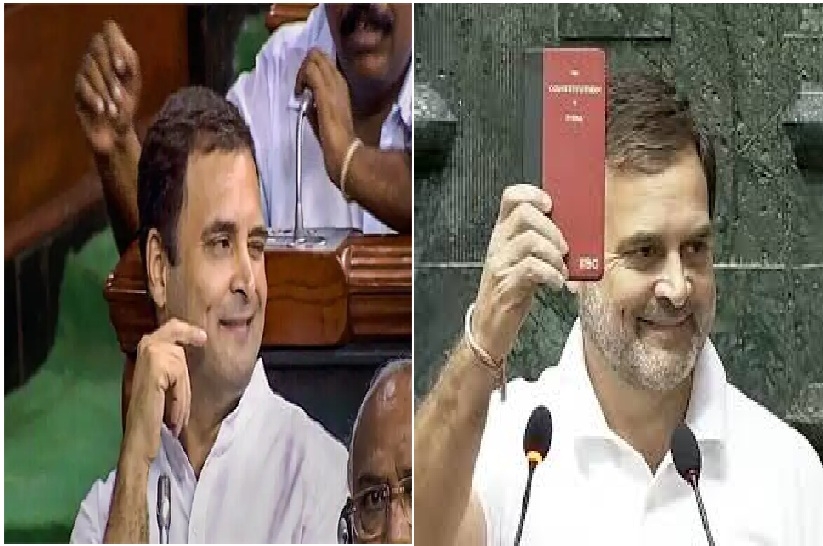
Rahul Gandhi was one of the loudest voices attacking the Election Commission and the BJP after the newly formed BJP government in West Bengal appointed former Chief Electoral Officer Manoj Agarwal as the state’s Chief Secretary.
The Congress leader took to X and wrote, “In the BJP-EC’s ‘chor bazaar’ - the bigger the theft, the bigger the reward.”
It was not an ordinary political attack. Rahul Gandhi was suggesting that the Election Commission had helped the BJP win elections and that the officer who supervised the polls was now being rewarded with the highest bureaucratic post in the state.
BJP-EC के “चोर बाज़ार” में - जितनी बड़ी चोरी, उतना बड़ा इनाम। https://t.co/2lNC1oATW1
— Rahul Gandhi (@RahulGandhi) May 12, 2026
The statement quickly became a rallying point for the opposition. Congress leaders amplified the allegation. Trinamool Congress leaders also joined the attack and questioned the neutrality of the Election Commission. The appointment was projected as proof of institutional bias and political favouritism.
But just ten days later, a strikingly similar development unfolded in Kerala.
The Congress-supported UDF government appointed former Kerala Chief Electoral Officer Dr. Rathan U. Kelkar as Secretary to Chief Minister V.D. Satheesan after winning the Assembly elections.
The similarity between the two cases was impossible to miss.
In West Bengal, Manoj Agarwal supervised 2026 Assembly elections. The BJP won polls and formed the government under Suvendu Adhikari. Soon after, Agarwal was appointed Chief Secretary.
In Kerala, Dr. Rathan U. Kelkar supervised the 2026 Assembly elections. The Congress-supported UDF emerged victorious and formed the government under V.D. Satheesan. Within days, Kelkar was appointed Secretary to the Chief Minister, one of the most powerful positions in the state administration.
The sequence was almost identical.
An election officer conducted the polls. A political party came to power. The same officer was then appointed to an influential bureaucratic post by the new government.
Yet Rahul Gandhi reacted in completely different ways.
In Bengal, he alleged a “chor bazaar” between the BJP and the Election Commission. In Kerala, there was complete silence.
No social media post. No allegation of institutional compromise. No questioning of the Election Commission. No claim that democracy had been undermined.
That silence became even more glaring because Rahul Gandhi’s original statement in Bengal was not limited to criticism of an appointment. It was a direct attack on the credibility of constitutional institutions and the integrity of the electoral process itself.
By using phrases like “bigger the theft, bigger the reward,” Rahul Gandhi clearly implied that the Bengal elections were compromised and that the officer who conducted them had acted in favour of the BJP.
If such a standard applies in Bengal, the same questions naturally arise in Kerala as well.
The controversy becomes even more uncomfortable for the opposition because Manoj Agarwal was originally selected as West Bengal’s Chief Electoral Officer from a panel submitted by Mamata Banerjee’s own Trinamool Congress government.
The same officer who is now being portrayed as biased was once approved by the TMC itself for one of the most sensitive constitutional responsibilities in the state.
Despite this, several TMC leaders targeted Agarwal after the BJP’s victory.
All India Trinamool Congress (AITC) MP Sagarika Ghose referred to him as a “so-called neutral umpire,” while TMC leader Saket Gokhale publicly questioned whether institutions were being “blind or complicit.”
The contradiction was difficult to ignore.
If Agarwal was unfit or politically compromised, why was his name cleared by the Mamata Banerjee government in the first place?
The BJP defended the appointment by pointing to administrative procedure and seniority. Party leaders said Agarwal is the senior-most IAS officer from the 1990 batch and that the government followed established service rules while appointing him.
The party also highlighted that service extensions for Chief Secretaries are not unusual in West Bengal. Several officers during previous governments, including under Mamata Banerjee, continued in office beyond retirement age.
Yet the opposition chose to portray the appointment as evidence of democratic collapse.
At the same time, the Kerala appointment passed without even a fraction of the outrage seen in Bengal.
Kerala BJP leader K. Surendran openly highlighted this contradiction.
In a pointed social media post, he questioned why Rahul Gandhi described the Bengal appointment as a “reward for theft” while remaining completely silent when the Congress government in Kerala made a nearly identical move.
When BJP appoints former West Bengal CEO Manoj Agarwal as Chief Secretary, @RahulGandhi screams:
— K Surendran (@surendranbjp) May 23, 2026
“The bigger the theft, the bigger the reward.”
But exactly 10 days later, the Congress govt in Keralam led by @vdsatheesan appoints Keralam CEO Rathan Kelkar as Secretary.
So Rahul… pic.twitter.com/wfzmuJXpxQ
He wrote on X, "When the BJP appoints former West Bengal CEO Manoj Agarwal as Chief Secretary, Rahul Gandhi screams, 'The bigger the theft, the bigger the reward.' But exactly ten days later, the Congress government in Kerala, led by V.D. Satheesan, appointed Kerala CEO Rathan Kelkar as Secretary. So, Rahul ji - what happened in Kerala? Is it still 'reward for theft' or suddenly the beauty of democracy?"
The Congress leadership has not offered any explanation. Rahul Gandhi has also not clarified why the same action was treated so differently in two states.
That silence has now become the biggest political takeaway from the controversy.
ALSO READ : Hyderabad: Congress leader's wife booked for threatening, assaulting hostel staff in Ameerpet
Because the issue is no longer just about bureaucratic appointments. Such appointments after elections are not new in Indian politics. Governments across parties have often placed trusted officers in key administrative roles.
The real issue is the difference in standards.
When the BJP appointed Manoj Agarwal, it was projected as an attack on democracy. When Congress appointed Dr. Rathan U. Kelkar after its own victory, the outrage disappeared completely.
The episode has once again exposed how political morality in India often changes depending on who is in power.
The controversy has also revived a familiar pattern in Indian politics. Opposition parties often raise questions over institutions like EVMs, voter rolls, or Special Intensive Revision exercises only after losing elections. When they win, the same systems are suddenly treated as fair, transparent, and democratic.
The pattern has repeated itself several times over the years. In states where the opposition secures victory, EVMs are hailed as accurate and the Election Commission is praised for conducting free and fair polls. But in states where the results go against them, the same EVMs suddenly become “hacked,” institutions become “compromised,” and the electoral process is branded suspicious.
For Rahul Gandhi, the Bengal appointment became proof of institutional conspiracy. The Kerala appointment, despite following the same pattern, did not deserve even a comment.
That contrast has ended up saying more than any speech or slogan ever could.

Shashank Dwivedi
Shashank Dwivedi holds a PhD in Political Communication and brings rich experience in research and journalism. He has been associated with ETV Bharat and Organiser Weekly. His areas of interest include politics, welfare, education, law, culture and society.