'No UCC restrictions will be imposed on the tribal society,' Amit Shah at Janjati Suraksha Manch, details
Shah noted that UCC had already been put into effect in two BJP-governed states and emphasised that Centre had made explicit provisions to keep all tribal communities outside scope of legislation
Total Views |


Union Home Minister Amit Shah, speaking on Sunday, May 24, addressed a large assembly of tribal community members drawn from across the country in New Delhi. He assured those gathered that the tribal community and tribal society would not be subject to any restrictions under the Uniform Civil Code. “I want to make it clear from this platform that no restrictions of the UCC will be imposed on the tribal community or on tribal individuals. The UCC will not infringe upon any tribal rights,” Shah said.
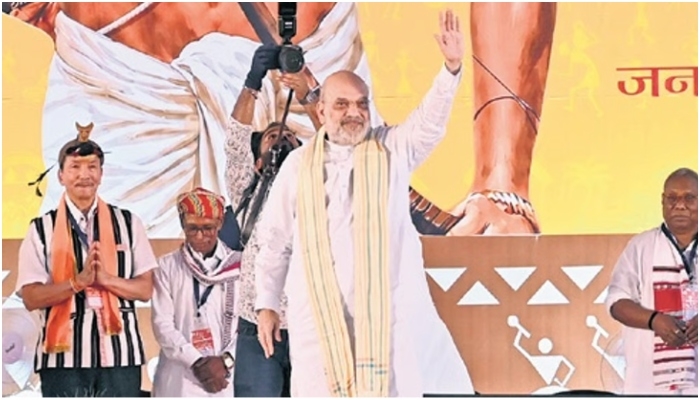
Shah said the large tribal gathering in Delhi would be remembered for years to come. He also praised Ganesh Ram Bhagat and Satendra Singh, saying the movement led by them for protecting tribal identity, uniting tribal communities, and preserving tribal culture was the first such major movement after Birsa Munda’s Ulgulan movement.
Meanwhile, the national president of RSS affiliate Akhil Bharatiya Vanvasi Kalyan Ashram, Satyendra Singh, also described a tribal cultural conclave in Delhi as the “Kumbh of tribal society” and asserted that the survival of tribals is essential for the protection of Sanatan Dharma.
“If tribal society survives, Sanatan Dharma will survive. If tribal culture survives, India’s culture will survive. The tribal community is the protector and carrier of Sanatan culture and civilisation,” he said. He also raised the issue of conversion of tribals to Christianity and other religions, saying it is not only destroying tribal culture but also affecting the constitutional rights of the community.
“The government should sit together and find a solution to this issue. Scheduled Tribes should get their rights and benefits,” he said, stressing the need for delisting people who convert to Christianity or other religions from the ST category.
Shah noted that the UCC had already been put into effect in two BJP-governed states, Gujarat and Uttarakhand, and emphasised that the Narendra Modi-led government had made explicit provisions to keep all tribal communities outside the scope of the legislation. Speaking at the Janjati Sanskriti Samagam, organised by the Janjati Suraksha Manch at the Red Fort grounds to mark the 150th birth anniversary year of tribal icon Birsa Munda, Shah underscored the importance of safeguarding tribal customs and traditions.
He observed that tribal communities hold nature in deep reverence, and that this bond with the natural world forges a profound connection between them and Sanatan Dharma. Drawing on episodes from the Ramayana, Shah said that Lord Ram's acceptance of the half-eaten berries offered by Shabari carried the message that all human beings are equal in worth and dignity. He further noted that by washing the feet of Nishadraj, Lord Ram had honoured forest dwellers and tribal communities.
The Home Minister called upon those present to deepen their ties with religion and culture, stating that doing so would serve as a means of preserving India's civilisational heritage. Remembering Birsa Munda, Shah said that despite the absence of modern communication facilities during his time, the tribal leader spread the message across the country that “this is our country, our religion is the true religion, and no one can occupy our forests.”
Union Home Minister Amit Shah's very BIG statement at the tribal enevt in delhi, Now No One In India Will Be Able To CONVERT Anyone's RELIGION pic.twitter.com/NrVHjcMody
— Megh Updates 🚨™ (@MeghUpdates) May 25, 2026
Shah said the large tribal gathering in Delhi would be remembered for years to come. He also praised Ganesh Ram Bhagat and Satendra Singh, saying the movement led by them for protecting tribal identity, uniting tribal communities, and preserving tribal culture was the first such major movement after Birsa Munda’s Ulgulan movement.
Launching an attack on the Congress, Shah alleged that during the Congress regime, the total budget allocation for tribal welfare was only Rs 28,000 crore, whereas the Modi government had increased it to Rs 1.5 lakh crore. The conclave was held under the chairmanship of Ganesh Ram Bhagat in the presence of Vishnu Deo Sai, Mohan Charan Majhi, and Rekha Gupta. Shah reiterated Prime Minister Narendra Modi’s commitment to integrating tribal communities into the mainstream of the country’s development journey.
Meanwhile, the national president of RSS affiliate Akhil Bharatiya Vanvasi Kalyan Ashram, Satyendra Singh, also described a tribal cultural conclave in Delhi as the “Kumbh of tribal society” and asserted that the survival of tribals is essential for the protection of Sanatan Dharma.
“If tribal society survives, Sanatan Dharma will survive. If tribal culture survives, India’s culture will survive. The tribal community is the protector and carrier of Sanatan culture and civilisation,” he said. He also raised the issue of conversion of tribals to Christianity and other religions, saying it is not only destroying tribal culture but also affecting the constitutional rights of the community.
“The government should sit together and find a solution to this issue. Scheduled Tribes should get their rights and benefits,” he said, stressing the need for delisting people who convert to Christianity or other religions from the ST category.