Rs 2 for cleanliness: A small charge, but a big test for MSRTC’s intent
On paper, the move appears practical and even overdue. In reality, its success will depend far less on the amount collected and far more on how the system is executed.
Total Views |


The decision by Maharashtra State Road Transport Corporation to introduce a ₹2 cleanliness surcharge across its network has sparked a familiar debate: “Should passengers pay extra for something as basic as hygiene?”
Last month (April 2026), Transport Minister Pratap Sarnaik announced that toilet facilities at all MSRTC bus stands across the state would be made ‘completely free’ for passengers starting June 1, the foundation day of the Corporation. (MSRTC bus stand sanitation)
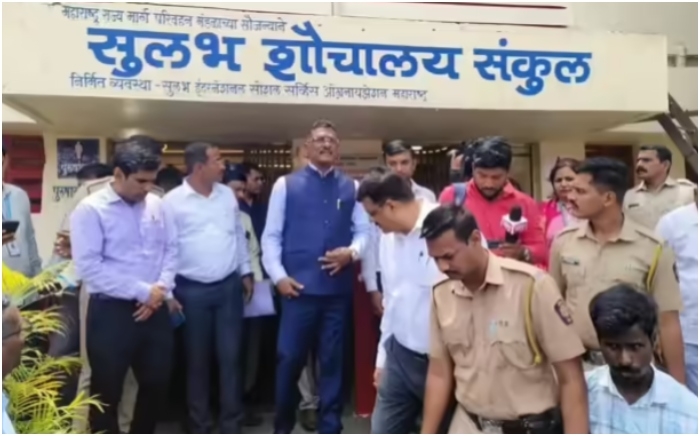
On paper, the move appears practical and even overdue. In reality, its success will depend far less on the amount collected and far more on how the system is executed. (MSRTC bus stand sanitation)
Public transport infrastructure in Maharashtra, particularly at the taluka and district levels, has long struggled with poor sanitation. Bus stands in smaller towns often present an unpleasant experience: overflowing garbage bins, foul-smelling restrooms, and a general lack of upkeep. What makes this more frustrating for commuters is that many of these facilities are not even free. Users are routinely charged ₹5 or ₹10 for toilets that remain unhygienic. This disconnect between payment and service quality lies at the heart of public scepticism toward the new surcharge.
The logic behind the ₹2 fee is straightforward. A dedicated pool of funds will be created to hire private agencies through a tendering process, ensuring regular cleaning of bus stations and vehicles. The plan reportedly mandates cleaning cycles every few hours, along with pre-departure cleaning of buses. If implemented as designed, this could bring a level of standardisation that has been missing due to fragmented and inconsistent maintenance practices.

There is also a philosophical concern. Cleanliness is not a premium service; it is a fundamental expectation.

Ultimately, the success of this move will be judged not by policy announcements but by ground reality. If passengers begin to notice cleaner platforms, usable toilets, and better-maintained buses, the ₹2 charge will hardly be questioned. But if conditions remain unchanged, even such a small levy will become a symbol of administrative inefficiency. (MSRTC bus stand sanitation)
The idea, therefore, is sound. The challenge lies in execution. In a system where people have long paid more and received less, this modest surcharge is not just about cleanliness; it is a test of credibility.
Last month (April 2026), Transport Minister Pratap Sarnaik announced that toilet facilities at all MSRTC bus stands across the state would be made ‘completely free’ for passengers starting June 1, the foundation day of the Corporation. (MSRTC bus stand sanitation)
To address persistent cleanliness issues, the Corporation has started levying a nominal ₹2 add-on to every ticket starting April 15. This additional fee, implemented across its entire network, is intended to finance a specialised agency that will be selected through a formal bidding process to handle sanitation at bus stations and within buses.
On paper, the move appears practical and even overdue. In reality, its success will depend far less on the amount collected and far more on how the system is executed. (MSRTC bus stand sanitation)
Public transport infrastructure in Maharashtra, particularly at the taluka and district levels, has long struggled with poor sanitation. Bus stands in smaller towns often present an unpleasant experience: overflowing garbage bins, foul-smelling restrooms, and a general lack of upkeep. What makes this more frustrating for commuters is that many of these facilities are not even free. Users are routinely charged ₹5 or ₹10 for toilets that remain unhygienic. This disconnect between payment and service quality lies at the heart of public scepticism toward the new surcharge.
The logic behind the ₹2 fee is straightforward. A dedicated pool of funds will be created to hire private agencies through a tendering process, ensuring regular cleaning of bus stations and vehicles. The plan reportedly mandates cleaning cycles every few hours, along with pre-departure cleaning of buses. If implemented as designed, this could bring a level of standardisation that has been missing due to fragmented and inconsistent maintenance practices.
However, the key question is not whether ₹2 is affordable (it clearly is), but whether the system built around it will function with discipline and transparency. Public infrastructure in India has often suffered not from lack of funding alone, but from weak monitoring and accountability. Without strict oversight, even well-funded initiatives tend to lose momentum over time. (MSRTC bus stand sanitation)
There is also a philosophical concern. Cleanliness is not a premium service; it is a fundamental expectation.
Many passengers feel that ticket fares should already cover such basic amenities. Introducing an additional charge risks sending the message that hygiene is an optional upgrade rather than a core responsibility. This perception can erode trust, especially if visible improvements do not follow quickly.
At the same time, dismissing the initiative outright would be shortsighted. The scale of MSRTC’s operations, hundreds of bus stands, and thousands of daily services make sanitation management a complex and resource-intensive task. A ring-fenced fund, if genuinely used only for cleanliness, can ensure that resources are not diverted elsewhere. In that sense, the surcharge creates a financial structure that prioritises hygiene. (MSRTC bus stand sanitation)
Encouragingly, the broader set of reforms being discussed, such as free toilet access and improved passenger amenities, suggests an attempt to rethink the commuter experience more holistically. If these measures are implemented together, the surcharge may be seen less as an extra burden and more as part of a larger transformation.
Ultimately, the success of this move will be judged not by policy announcements but by ground reality. If passengers begin to notice cleaner platforms, usable toilets, and better-maintained buses, the ₹2 charge will hardly be questioned. But if conditions remain unchanged, even such a small levy will become a symbol of administrative inefficiency. (MSRTC bus stand sanitation)
The idea, therefore, is sound. The challenge lies in execution. In a system where people have long paid more and received less, this modest surcharge is not just about cleanliness; it is a test of credibility.