Assembly elections 2026: Withering Away of Communism in India
Total Views |


The story of the Communist movement in India no longer feels like a phase of ups and downs. It increasingly looks like a steady, irreversible decline. A political force once defined by ideological clarity and disciplined organisation now struggles to stay relevant, both at the ballot box and in the national conversation.
The latest verdict in Kerala brings this shift into sharp focus. For years, Kerala was seen as the Left’s last dependable stronghold, sustained by a loyal cadre base, welfare-driven politics, and a stable social coalition. That foundation now appears to be weakening. This is not just routine anti-incumbency at play. Voters seem to be moving away from rigid ideological positions toward more practical expectations around governance and delivery. The Left’s failure to adapt its messaging or expand beyond its traditional support base is beginning to show.
If Kerala signals decline, West Bengal represents collapse. Once the flagship experiment of Communist governance for more than three decades, the state (Bengal) today offers little space for the Left to recover. Its organisational machinery has thinned out, its leadership struggles for visibility, and its message no longer connects with younger voters. The inability to even stage a modest comeback over successive elections suggests something deeper than temporary setbacks; it points to structural decline. In many ways, the Left in Bengal seems to have passed the point where recovery looks realistic.
This downturn also aligns with a broader shift in India’s political landscape, especially after Narendra Modi's rise. Public discourse has tilted toward themes like nationalism, development, and strong leadership — areas where the Left’s traditional class-based narrative feels increasingly out of sync. Where it once mobilised voters around class struggle and economic redistribution, today’s electorate appears more drawn to aspirations, identity, and governance outcomes. The ideological ground beneath the Left has shifted, and it has struggled to keep pace.
There’s also a symbolic layer to this story. The gradual fading of Naxalism, once seen by some as a radical extension of Communist thought, marks the end of a chapter that carried a certain intellectual and political weight. The CPI (M) candidate in Matigara-Naxalbari, the place where this ideology originated, could barely manage 8,000 votes. As that influence wanes, it further narrows the Left’s already shrinking space in public discourse.
What remains today is an ideology that often feels disconnected from present-day realities. Traditional pillars like trade unions, student politics, and intellectual circles have not translated into electoral strength in a rapidly changing India. The messaging feels dated, leadership appears distant, and strategy often seems reactive rather than forward-looking.
Seen in this context, Kerala is not an exception; it is part of a longer trend reaching its conclusion. With its last major base showing signs of strain and no clear revival in states like West Bengal, the Communist movement in India faces a stark choice: reinvent itself or continue fading into political marginality. For now, the trajectory suggests the latter. The so-called red bastion hasn’t just weakened -- it has, in many ways, crumbled.
The latest verdict in Kerala brings this shift into sharp focus. For years, Kerala was seen as the Left’s last dependable stronghold, sustained by a loyal cadre base, welfare-driven politics, and a stable social coalition. That foundation now appears to be weakening. This is not just routine anti-incumbency at play. Voters seem to be moving away from rigid ideological positions toward more practical expectations around governance and delivery. The Left’s failure to adapt its messaging or expand beyond its traditional support base is beginning to show.
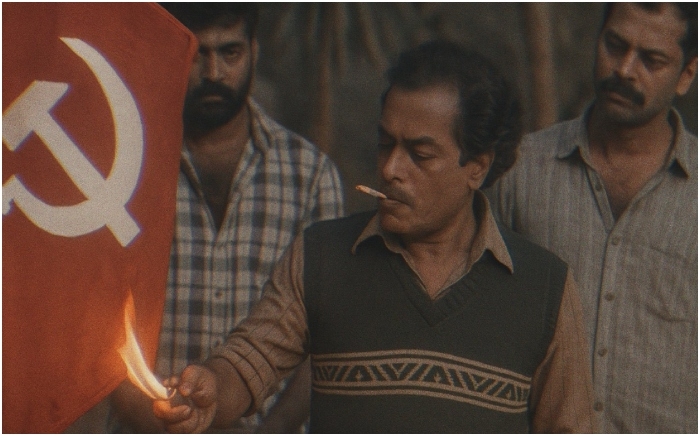
Representative Image
If Kerala signals decline, West Bengal represents collapse. Once the flagship experiment of Communist governance for more than three decades, the state (Bengal) today offers little space for the Left to recover. Its organisational machinery has thinned out, its leadership struggles for visibility, and its message no longer connects with younger voters. The inability to even stage a modest comeback over successive elections suggests something deeper than temporary setbacks; it points to structural decline. In many ways, the Left in Bengal seems to have passed the point where recovery looks realistic.
This downturn also aligns with a broader shift in India’s political landscape, especially after Narendra Modi's rise. Public discourse has tilted toward themes like nationalism, development, and strong leadership — areas where the Left’s traditional class-based narrative feels increasingly out of sync. Where it once mobilised voters around class struggle and economic redistribution, today’s electorate appears more drawn to aspirations, identity, and governance outcomes. The ideological ground beneath the Left has shifted, and it has struggled to keep pace.
There’s also a symbolic layer to this story. The gradual fading of Naxalism, once seen by some as a radical extension of Communist thought, marks the end of a chapter that carried a certain intellectual and political weight. The CPI (M) candidate in Matigara-Naxalbari, the place where this ideology originated, could barely manage 8,000 votes. As that influence wanes, it further narrows the Left’s already shrinking space in public discourse.
What remains today is an ideology that often feels disconnected from present-day realities. Traditional pillars like trade unions, student politics, and intellectual circles have not translated into electoral strength in a rapidly changing India. The messaging feels dated, leadership appears distant, and strategy often seems reactive rather than forward-looking.
Seen in this context, Kerala is not an exception; it is part of a longer trend reaching its conclusion. With its last major base showing signs of strain and no clear revival in states like West Bengal, the Communist movement in India faces a stark choice: reinvent itself or continue fading into political marginality. For now, the trajectory suggests the latter. The so-called red bastion hasn’t just weakened -- it has, in many ways, crumbled.