Marking 50 years of leadership: How B. S. Yediyurappa shaped BJP’s rise in Karnataka
Yediyurappa means horata (Protest), and horata means Yediyurappa. Day after day, year after year, he stood at the forefront of protests against governments, raising issues that mattered to the common people.
NewsBharati 06-May-2026 17:53:49 PM
Total Views |


A tireless, determined warrior who built the BJP from zero to a heroic level and brought it to power, a born fighter, one of the few politicians who truly understands the pulse of Karnataka’s people, and an excellent administrator - Our B. S. Yediyurappa.
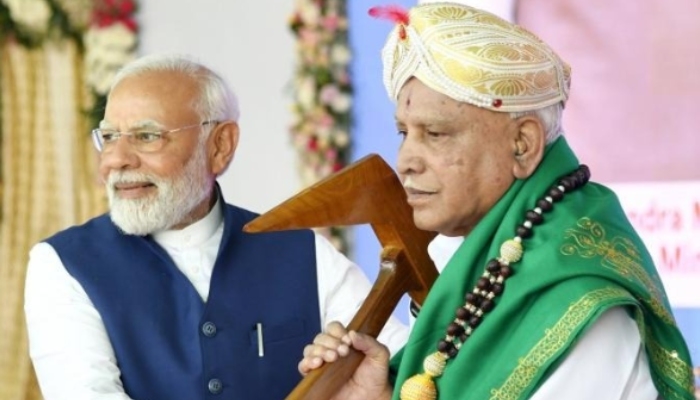
In many ways, his name became synonymous with struggle itself. Yediyurappa means horata (Protest), and horata means Yediyurappa. Day after day, year after year, he stood at the forefront of protests against governments, raising issues that mattered to the common people. His relentless activism earned him the title Raita Nayaka (Leader of Farmers), a name that reflects both his identity and his deepest political commitment.
B. S. Yediyurappa, 50 Years of Relentless Public Service and Mass Leadership
The political journey of B. S. Yediyurappa is not merely a timeline of offices held it is a story of endurance, grassroots connection, and unwavering commitment to public service. As Karnataka marks 50 years of its political life through the BSY Abhimanotsava, the milestone stands as a celebration of a leader who reshaped the state’s political landscape and redefined mass leadership in southern India.
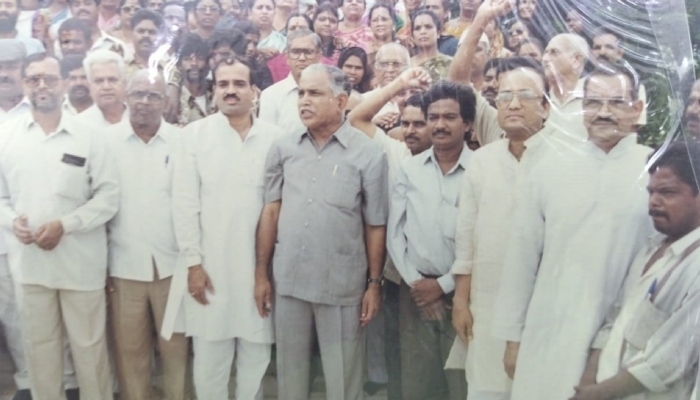
A defining chapter of his journey has been his tenure as Chief Minister, where governance translated into tangible welfare and development initiatives. His leadership reflected a rare balance between grassroots understanding and administrative execution. Policies were not abstract ideas but solutions shaped by real-world challenges he had witnessed over decades.
Among his most impactful contributions was his unwavering focus on farmers. He is widely credited as the first Chief Minister in India to introduce a separate farmers’ budget, a landmark initiative that recognized agriculture as a priority sector requiring dedicated planning and resources. This move was not just administrative; it was symbolic of his lifelong commitment to the farming community.
Equally transformative was the Krishi Bhagya Scheme, which became a lifeline for farmers in rain-fed regions. By promoting farm ponds, water conservation, and efficient irrigation practices, the scheme strengthened agricultural resilience in drought-prone areas. For many farmers, this initiative was not just policy; it was survival support in the face of uncertainty.
His governance philosophy consistently balanced welfare with development. Infrastructure expansion, rural connectivity, and irrigation projects received focused attention, demonstrating his understanding that long-term growth must go hand-in-hand with immediate relief. This dual approach helped bridge the gap between policy-making and real impact.
Beyond governance, his political journey is also defined by resilience. He has navigated complex political phases, internal party challenges, and shifting electoral dynamics, yet has repeatedly made strong comebacks. His ability to remain central to Karnataka politics for five decades speaks volumes about both his strategic acumen and the unwavering support he commands among the people.
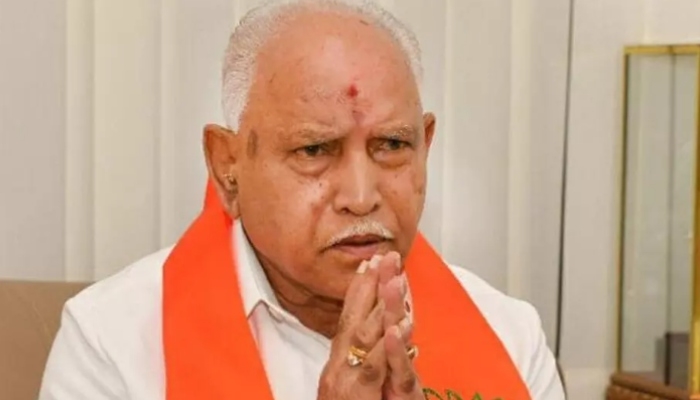
The BSY Abhimanotsava is not merely a celebration of longevity; it is a recognition of impact. It symbolizes how a leader’s journey can transcend electoral victories and defeats, resonating across generations. For supporters, it is a moment of pride for political students; it serves as a case study in sustained mass leadership.
Even today, Yediyurappa’s presence carries weight not just as a former Chief Minister, but as a guiding force whose experience continues to shape political direction in the state. His legacy is visible not only in policies and institutions but in the enduring trust he commands among millions.
As Karnataka celebrates this remarkable 50-year milestone, one truth stands clear: B. S. Yediyurappa’s journey is far more than a political career; it is a testament to struggle, service, and an unbreakable bond with the people.
When election campaigns used to take place in my hometown, I still remember how I would go along with my father and grandfather. There was always a certain energy in the air, an anticipation that was different from any other political gathering. The entire crowd would wait, sometimes for hours, just to listen to B. S. Yediyurappa ji speak. The moment he arrived, the atmosphere would transform into a wave of enthusiasm and connection. This was not just limited to one town or one district; this is a story repeated across Karnataka.
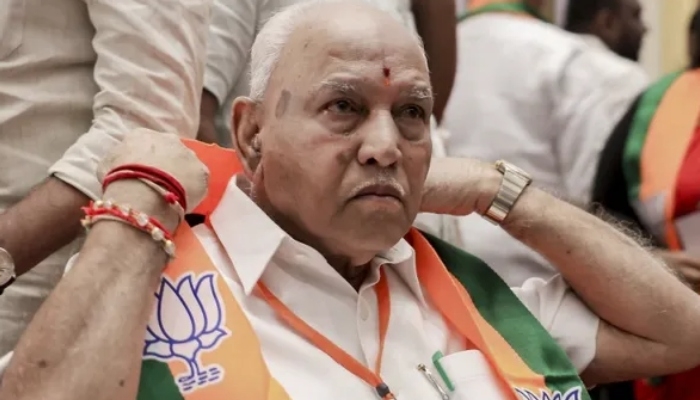
B.S. Yediyurappa (Economic Times)
In many ways, his name became synonymous with struggle itself. Yediyurappa means horata (Protest), and horata means Yediyurappa. Day after day, year after year, he stood at the forefront of protests against governments, raising issues that mattered to the common people. His relentless activism earned him the title Raita Nayaka (Leader of Farmers), a name that reflects both his identity and his deepest political commitment.
B. S. Yediyurappa, 50 Years of Relentless Public Service and Mass Leadership
The political journey of B. S. Yediyurappa is not merely a timeline of offices held it is a story of endurance, grassroots connection, and unwavering commitment to public service. As Karnataka marks 50 years of its political life through the BSY Abhimanotsava, the milestone stands as a celebration of a leader who reshaped the state’s political landscape and redefined mass leadership in southern India.
Yediyurappa’s rise has always been anchored in people-centric politics. Unlike many leaders whose strength lies within party frameworks, his power has consistently come from direct public connection. Over decades, he built a reputation as someone who listens, responds, and acts, qualities that earned him deep trust among farmers, laborers, and rural communities. His connection with the masses is emotional as much as political, which explains his enduring relevance.
An often-overlooked but defining phase of his journey is the period when the party was being built from the ground up. Along with leaders like Ananth Kumar, D. H. Shankaramurthy, V. S. Acharya, and K. S. Eshwarappa, Yediyurappa traveled extensively, often on bicycles across towns and villages to strengthen the organization at the grassroots. These were not easy times; resources were limited, but determination was limitless. What they built through sheer effort and conviction eventually grew into a powerful political movement in Karnataka.
A defining chapter of his journey has been his tenure as Chief Minister, where governance translated into tangible welfare and development initiatives. His leadership reflected a rare balance between grassroots understanding and administrative execution. Policies were not abstract ideas but solutions shaped by real-world challenges he had witnessed over decades.
Among his most impactful contributions was his unwavering focus on farmers. He is widely credited as the first Chief Minister in India to introduce a separate farmers’ budget, a landmark initiative that recognized agriculture as a priority sector requiring dedicated planning and resources. This move was not just administrative; it was symbolic of his lifelong commitment to the farming community.
His flagship Bhagyalakshmi Scheme, aimed at empowering the girl child, marked a progressive step toward addressing gender imbalance. By providing financial support to families, the scheme encouraged education and ensured long-term social security for daughters, reflecting his vision of inclusive development.
Equally transformative was the Krishi Bhagya Scheme, which became a lifeline for farmers in rain-fed regions. By promoting farm ponds, water conservation, and efficient irrigation practices, the scheme strengthened agricultural resilience in drought-prone areas. For many farmers, this initiative was not just policy; it was survival support in the face of uncertainty.
Yediyurappa also prioritized dignity and security for vulnerable sections of society. The Sandhya Suraksha Yojana expanded old-age pensions, ensuring financial stability for senior citizens without regular income.
His governance philosophy consistently balanced welfare with development. Infrastructure expansion, rural connectivity, and irrigation projects received focused attention, demonstrating his understanding that long-term growth must go hand-in-hand with immediate relief. This dual approach helped bridge the gap between policy-making and real impact.
What truly sets Yediyurappa apart is not just the schemes he introduced, but the intent behind them. His decisions were deeply rooted in field realities shaped by years of travel, interaction, and direct engagement with people. He did not govern from a distance; he governed with a lived understanding of challenges faced by ordinary citizens.
Beyond governance, his political journey is also defined by resilience. He has navigated complex political phases, internal party challenges, and shifting electoral dynamics, yet has repeatedly made strong comebacks. His ability to remain central to Karnataka politics for five decades speaks volumes about both his strategic acumen and the unwavering support he commands among the people.
His role in expanding the Bharatiya Janata Party in Karnataka is historic. At a time when the party had minimal presence in the state, Yediyurappa emerged as the face of its growth, transforming it into a formidable political force. In doing so, he laid the foundation for a broader ideological and political shift in southern India.
The BSY Abhimanotsava is not merely a celebration of longevity; it is a recognition of impact. It symbolizes how a leader’s journey can transcend electoral victories and defeats, resonating across generations. For supporters, it is a moment of pride for political students; it serves as a case study in sustained mass leadership.
Even today, Yediyurappa’s presence carries weight not just as a former Chief Minister, but as a guiding force whose experience continues to shape political direction in the state. His legacy is visible not only in policies and institutions but in the enduring trust he commands among millions.
As Karnataka celebrates this remarkable 50-year milestone, one truth stands clear: B. S. Yediyurappa’s journey is far more than a political career; it is a testament to struggle, service, and an unbreakable bond with the people.

Nivane Kalanath Bhat
Nivane Kalanath Bhat is a Political enthusiast, blogger, and commentator.