Can we harvest the demographic dividend?
Higher education is glamorous, it attracts more finances from corporates who happily contribute billions for them, but only exceptions like Wipro, Vedanta, and lately Adani, work at the government school level to raise their standards and improve student enrollment.
NewsBharati 07-May-2026 14:52:22 PM
Total Views |


Spark for this article was the recently released Marathi film, “Kratijyoti Vidyalay”. Though I had been talking about this problem, this film made me sit up and write about it. This is a lengthy article, but it needs to be written.
We have been talking a lot about the demographic dividend for Bharat in the coming 30 years because we have the largest young population in the world, 580 million out of 1.40 billion in the age bracket of 5-24 years.1 We have around 25% of our population in the age group of 0-14 years. By all means, it is the golden period of Bharat with the most productive young citizens. This is the population that will take Bharat to greater heights. Or it could also result in a failed premise if we do not take care of this dynamic age group. If we fail, it could lead to a restless society.
_202605071503094712_H@@IGHT_400_W@@IDTH_700.jpg "Right to education newsbharati")
Before I move further, let me put in the caveat – Education was a state subject before the then PM Indira Gandhi brought it under the concurrent list under the 42nd constitutional amendment in 1976. Thus, the primary responsibility of education is with state governments, and in any debate on education, the state governments proudly claim that they do not agree to the provisions brought in by the central government, like NEP or issues like textbooks or teaching of languages, and will not implement them.
The central government has tried to improve education by designing a new education policy under NEP 2020 after 34 years since the previous education policy. In a fast-changing world, our previous governments did not even think of changing with the times. The Central Government has been striving to achieve the objectives of NEP 2020 through a range of programmes and schemes. However, there is a huge worrying lag in its implementation and a lack of interest in the state governments. A more serious issue is the critical condition of schools and education being imparted in them, irrespective of the parties ruling a state.
While you ponder over these numbers, remember that youth passing out of schools are inputs for higher education. If the raw material is bad, the end product cannot be good. As per information available from genuine sources, the quality of education is going down alarmingly, except in some islands where highly costly schools are mushrooming across Bharat.
Right to Education failure
TOI published a report of NGO Pratham in 2019 that noted, “Right to Education may have ensured that more children are enrolled in schools and fewer students dropping out, but the majority of those who pass out of class VIII can’t do basic maths. A quarter of them cannot even read. Pratham also found out that there has been little improvement in learning over the past few years.”3
Right To Education (RTE) introduced by the UPA government led by the Congress party, not just forced 25% reservation for the deprived sections of the society in every school, it also forced schools not to hold back any child till class 8 in any class, dumbing down the students who were traumatized when they suddenly faced studies that were beyond them. The result of this misplaced sense of equality and psychological well-being is there to see in the report quoted above.
_202605071508485660_H@@IGHT_400_W@@IDTH_700.jpg "Right to education newsbharati")
The act was not implemented honestly, and the government departments run by bureaucrats played their usual games, and reimbursements were erratic. Thus, RTE proved to be a death knell for school education that was already in doldrums due to a lack of attention on schools by succeeding governments.
Disappearing schools
You can persuade children to come to school with Midday Meals, but how do you persuade teachers to teach? An example is UP, where the present government introduced electronic attendance for the teachers. They rebelled, forcing the government to dilute its penalty clauses and also to implement electronic attendance.4 Most of us with rural connections have seen our own cousins taking their teaching responsibilities lightly.
These regressive conditions saw the gradual shutting down of schools in rural, urban, and semi-urban areas. Attendance and admissions to government-run and charitable institutions began dwindling. These problems were whitewashed with the excuse of "rationalization" of schools, where two or more schools were merged to make them ‘viable’ on paper, but actually, depriving poor students of schools. You cannot expect a child to go to a school that could be 5-6 km away from his/her village.
According to a report on 28 October 2014, around 1 lakh schools had been shut or merged across India since the enactment of the RTE 2010, driven by consolidation policies, low enrolment, and strict compliance norms for private institutions.5 In the same article, the writer wrote that India lacks 1.2 million teachers – including regular, trained, and qualified tutors – in government schools across the country. “Ten percent of schools are still run by a single teacher, and millions of children continue to remain out of school,” he noted. “Resource is still a big challenge. Despite the RTE Act prohibiting the appointment of teachers on contract, states continue to appoint new teachers on a contract basis.
_202605071510430663_H@@IGHT_400_W@@IDTH_700.jpg "Right to education newsbharati")
The RTE law is so draconian that an article in 2015 noted, “The RTE law mandates that non-compliance with the RTE standard will lead to shutting down of such schools. Media reports that since the passing of the RTE, 2983 schools have been shut across 17 states, and another 5907 face the threat of closure. Another report from the field showed 4331 schools were already shut in 17 states, and another 15083 faced the threat of closure, affecting 1800,000 students.”7
This degradation in school numbers and quality did not stop under the BJP after 2014; it just slowed down. Over 93,000 government schools in India have shut down or merged over the last 10 years (2014–2024), reducing the total from roughly 11.07 lakh to 10.13 lakh. These closures were largely due to low enrollment and school rationalization, according to a statement in the Lok Sabha by the minister, Jayant Chaudhary. Reasons for Closure are low enrollment, zero enrollment, and mergers intended to consolidate resources. 8
In the five-year period between 2020 and 2025 alone, 18,727 government schools were closed. While government schools are decreasing, private unaided schools have seen a rise, with 3.39 lakh operating in 2024-25, up from 3.31 lakh the previous year. According to a report in India Today on 5th Feb 2026, 18000 schools have shut down in the last 5 years as per the government data.9
Are Private schools covering the shortfall?
For the people claiming that private sector schools are increasing, the bitter truth is that their growth does not absorb enough students in new schools. Affordability may be one reason. Overall, there is 9% drop in student enrolment even as the population has increased in these years. These closures have raised concerns regarding reduced access to free, nearby education for students in rural areas.10
_202605071504170652_H@@IGHT_400_W@@IDTH_700.jpg "Right to education newsbharati")
_202605071505274404_H@@IGHT_400_W@@IDTH_700.jpg "Right to education newsbharati")
All the governments in recent times have outsourced school education to private parties who work for profit. They take land at low cost in the name of non-profits, then siphon off the profits to another company using loopholes in the law.
Standards of the State Board examinations (SSC) have fallen so much that even people in rural areas do not want their children to go for the SSC board. If you visit some village clusters, you will see 5-6 decrepit schools with 10-6 students per class or shut down schools, with a new glitzy ‘international schools’ rising between that gloomy landscape. The craze of English schools, private schools, ICSE and IB schools, etc., has seen the growth of such high-cost schools even in rural Bharat. But they have not been able to fill the gap. Where are these over 30 million children if 9% are not going to school?
State governments engage the Central government on superficial conflicts like the two-language or three-language formula, questioning NEP just because it has been introduced by a government run by a political party they don’t like. Focus is not on improving standards of education, but on improving political scores. In this, shrugging off the responsibility, can we foresee the rise of an Abdul Kalam, or K Sivan, or M S Swaminathan today from government-run schools?
Lack of attention from state governments and corporates
Higher education is glamorous, it attracts more finances from corporates who happily contribute billions for them, but only exceptions like Wipro, Vedanta, and lately Adani, work at the government school level to raise their standards and improve student enrollment. Others who enter school education end up promoting highly costly, glamorous, air-conditioned 5-star profiteering schools for prestige and branding, and they become another form of gated community where rich children live life in a bubble with their parents dreaming of sending them overseas for higher studies. I am afraid that most of them will turn alien in their own land. It is left to voluntary organisations like Vidya Bharati, Vivekananda Kendra, or Chinmaya Mission, and informal schools like Ekal Vidyalay to cater to the lower strata of society.
This article is not about higher education, so I will not elaborate on it, but we all know that it has become very costly and out of reach for the poor. With competition to raise reservation ceilings flouting SC set norms, we are driving the general caste population to desperation. So, where does an average Bharatiya go? How can we harvest the much-acclaimed ‘demographic dividend’?
Unfortunately, no educationist is talking about this critical issue, or is not being heard, as governments are most enamoured by higher education. I hope the education ministry wakes up to this dire situation before it is too late.
References:
1.https://www.ibef.org/industry/education-sector-india
2.https://educationforallinindia.com/computation-of-out-of-school-children-based-on-udiseplus-2021-22/#:~:text=It%20may%20be%20recalled%20that,a%20considerable%20number%20and%20have
3.http://timesofindia.indiatimes.com/articleshow/67548851.cms?utm_source=contentofinterest&utm_medium=text&utm_campaign=cppst
4.https://ianslive.in/yogi-govt-suspends-digital-attendance-for-teachers-for-two-months--20240716190904#:~:text=Yogi%20govt%20suspends%20digital%20attendance,Chief%20Secretary%20Manoj%20Kumar%20Singh.
5.https://www.governancenow.com/news/regular-story/rte-5-years-1-lakh-schools-shut-down-india-national-forum-#:~:text=new%20teachers%20on%E2%80%A6-,About%201%20lakh%20schools%20have%20been%20closed%20down%20across%20the,Odisha%2C%20and%201%2C200%20in%20Uttarakhand
6.https://www.telegraphindia.com/india/51000-government-schools-closed-with-a-year-says-report/cid/1864203
7. https://thecsrjournal.in/rte-right-to-education-act-in-india-undermining-its-own-objectives/
8. https://sanews.in/government-schools-shut/
9.https://www.indiatoday.in/education-today/news/story/18727-government-schools-closed-in-india-in-5-years-private-schools-rise-2863516-2026-02-05
10. https://www.youtube.com/watch?v=AKCxuZit6R8
We have been talking a lot about the demographic dividend for Bharat in the coming 30 years because we have the largest young population in the world, 580 million out of 1.40 billion in the age bracket of 5-24 years.1 We have around 25% of our population in the age group of 0-14 years. By all means, it is the golden period of Bharat with the most productive young citizens. This is the population that will take Bharat to greater heights. Or it could also result in a failed premise if we do not take care of this dynamic age group. If we fail, it could lead to a restless society.
Here, I will focus on the school-going youth that numbers about 25 crore, who go to around 15 lakh schools supported by 98 lakh teachers, according to PIB and also independent agencies. The goal of NEP 2020 is to have 100% enrollment, and the government puts the school-going numbers at about 95%.
Before I move further, let me put in the caveat – Education was a state subject before the then PM Indira Gandhi brought it under the concurrent list under the 42nd constitutional amendment in 1976. Thus, the primary responsibility of education is with state governments, and in any debate on education, the state governments proudly claim that they do not agree to the provisions brought in by the central government, like NEP or issues like textbooks or teaching of languages, and will not implement them.
The central government has tried to improve education by designing a new education policy under NEP 2020 after 34 years since the previous education policy. In a fast-changing world, our previous governments did not even think of changing with the times. The Central Government has been striving to achieve the objectives of NEP 2020 through a range of programmes and schemes. However, there is a huge worrying lag in its implementation and a lack of interest in the state governments. A more serious issue is the critical condition of schools and education being imparted in them, irrespective of the parties ruling a state.
While you ponder over these numbers, remember that youth passing out of schools are inputs for higher education. If the raw material is bad, the end product cannot be good. As per information available from genuine sources, the quality of education is going down alarmingly, except in some islands where highly costly schools are mushrooming across Bharat.
Right to Education failure
TOI published a report of NGO Pratham in 2019 that noted, “Right to Education may have ensured that more children are enrolled in schools and fewer students dropping out, but the majority of those who pass out of class VIII can’t do basic maths. A quarter of them cannot even read. Pratham also found out that there has been little improvement in learning over the past few years.”3
Right To Education (RTE) introduced by the UPA government led by the Congress party, not just forced 25% reservation for the deprived sections of the society in every school, it also forced schools not to hold back any child till class 8 in any class, dumbing down the students who were traumatized when they suddenly faced studies that were beyond them. The result of this misplaced sense of equality and psychological well-being is there to see in the report quoted above.
There was another exclusivist clause introduced via an amendment that exempted minority community-run schools from this act. This meant some of the best-run schools by Christian and other minority communities went out of their preview. It also meant that only the schools run by the majority community, viz. Hindu schools would be forced to implement RTE.
The act was not implemented honestly, and the government departments run by bureaucrats played their usual games, and reimbursements were erratic. Thus, RTE proved to be a death knell for school education that was already in doldrums due to a lack of attention on schools by succeeding governments.
Disappearing schools
You can persuade children to come to school with Midday Meals, but how do you persuade teachers to teach? An example is UP, where the present government introduced electronic attendance for the teachers. They rebelled, forcing the government to dilute its penalty clauses and also to implement electronic attendance.4 Most of us with rural connections have seen our own cousins taking their teaching responsibilities lightly.
These regressive conditions saw the gradual shutting down of schools in rural, urban, and semi-urban areas. Attendance and admissions to government-run and charitable institutions began dwindling. These problems were whitewashed with the excuse of "rationalization" of schools, where two or more schools were merged to make them ‘viable’ on paper, but actually, depriving poor students of schools. You cannot expect a child to go to a school that could be 5-6 km away from his/her village.
According to a report on 28 October 2014, around 1 lakh schools had been shut or merged across India since the enactment of the RTE 2010, driven by consolidation policies, low enrolment, and strict compliance norms for private institutions.5 In the same article, the writer wrote that India lacks 1.2 million teachers – including regular, trained, and qualified tutors – in government schools across the country. “Ten percent of schools are still run by a single teacher, and millions of children continue to remain out of school,” he noted. “Resource is still a big challenge. Despite the RTE Act prohibiting the appointment of teachers on contract, states continue to appoint new teachers on a contract basis.
Between 2018–19 and 2019–20, the number of government schools fell by over 51,000, as reported by The Telegraph India, in the name of consolidation.6
The RTE law is so draconian that an article in 2015 noted, “The RTE law mandates that non-compliance with the RTE standard will lead to shutting down of such schools. Media reports that since the passing of the RTE, 2983 schools have been shut across 17 states, and another 5907 face the threat of closure. Another report from the field showed 4331 schools were already shut in 17 states, and another 15083 faced the threat of closure, affecting 1800,000 students.”7
This degradation in school numbers and quality did not stop under the BJP after 2014; it just slowed down. Over 93,000 government schools in India have shut down or merged over the last 10 years (2014–2024), reducing the total from roughly 11.07 lakh to 10.13 lakh. These closures were largely due to low enrollment and school rationalization, according to a statement in the Lok Sabha by the minister, Jayant Chaudhary. Reasons for Closure are low enrollment, zero enrollment, and mergers intended to consolidate resources. 8
In the five-year period between 2020 and 2025 alone, 18,727 government schools were closed. While government schools are decreasing, private unaided schools have seen a rise, with 3.39 lakh operating in 2024-25, up from 3.31 lakh the previous year. According to a report in India Today on 5th Feb 2026, 18000 schools have shut down in the last 5 years as per the government data.9
Are Private schools covering the shortfall?
For the people claiming that private sector schools are increasing, the bitter truth is that their growth does not absorb enough students in new schools. Affordability may be one reason. Overall, there is 9% drop in student enrolment even as the population has increased in these years. These closures have raised concerns regarding reduced access to free, nearby education for students in rural areas.10
(screen grab from (https://www.youtube.com/watch?v=AKCxuZit6R8)
All the governments in recent times have outsourced school education to private parties who work for profit. They take land at low cost in the name of non-profits, then siphon off the profits to another company using loopholes in the law.
Standards of the State Board examinations (SSC) have fallen so much that even people in rural areas do not want their children to go for the SSC board. If you visit some village clusters, you will see 5-6 decrepit schools with 10-6 students per class or shut down schools, with a new glitzy ‘international schools’ rising between that gloomy landscape. The craze of English schools, private schools, ICSE and IB schools, etc., has seen the growth of such high-cost schools even in rural Bharat. But they have not been able to fill the gap. Where are these over 30 million children if 9% are not going to school?
State governments engage the Central government on superficial conflicts like the two-language or three-language formula, questioning NEP just because it has been introduced by a government run by a political party they don’t like. Focus is not on improving standards of education, but on improving political scores. In this, shrugging off the responsibility, can we foresee the rise of an Abdul Kalam, or K Sivan, or M S Swaminathan today from government-run schools?
Lack of attention from state governments and corporates
Higher education is glamorous, it attracts more finances from corporates who happily contribute billions for them, but only exceptions like Wipro, Vedanta, and lately Adani, work at the government school level to raise their standards and improve student enrollment. Others who enter school education end up promoting highly costly, glamorous, air-conditioned 5-star profiteering schools for prestige and branding, and they become another form of gated community where rich children live life in a bubble with their parents dreaming of sending them overseas for higher studies. I am afraid that most of them will turn alien in their own land. It is left to voluntary organisations like Vidya Bharati, Vivekananda Kendra, or Chinmaya Mission, and informal schools like Ekal Vidyalay to cater to the lower strata of society.
This article is not about higher education, so I will not elaborate on it, but we all know that it has become very costly and out of reach for the poor. With competition to raise reservation ceilings flouting SC set norms, we are driving the general caste population to desperation. So, where does an average Bharatiya go? How can we harvest the much-acclaimed ‘demographic dividend’?
Unfortunately, no educationist is talking about this critical issue, or is not being heard, as governments are most enamoured by higher education. I hope the education ministry wakes up to this dire situation before it is too late.
References:
1.https://www.ibef.org/industry/education-sector-india
2.https://educationforallinindia.com/computation-of-out-of-school-children-based-on-udiseplus-2021-22/#:~:text=It%20may%20be%20recalled%20that,a%20considerable%20number%20and%20have
3.http://timesofindia.indiatimes.com/articleshow/67548851.cms?utm_source=contentofinterest&utm_medium=text&utm_campaign=cppst
4.https://ianslive.in/yogi-govt-suspends-digital-attendance-for-teachers-for-two-months--20240716190904#:~:text=Yogi%20govt%20suspends%20digital%20attendance,Chief%20Secretary%20Manoj%20Kumar%20Singh.
5.https://www.governancenow.com/news/regular-story/rte-5-years-1-lakh-schools-shut-down-india-national-forum-#:~:text=new%20teachers%20on%E2%80%A6-,About%201%20lakh%20schools%20have%20been%20closed%20down%20across%20the,Odisha%2C%20and%201%2C200%20in%20Uttarakhand
6.https://www.telegraphindia.com/india/51000-government-schools-closed-with-a-year-says-report/cid/1864203
7. https://thecsrjournal.in/rte-right-to-education-act-in-india-undermining-its-own-objectives/
8. https://sanews.in/government-schools-shut/
9.https://www.indiatoday.in/education-today/news/story/18727-government-schools-closed-in-india-in-5-years-private-schools-rise-2863516-2026-02-05
10. https://www.youtube.com/watch?v=AKCxuZit6R8
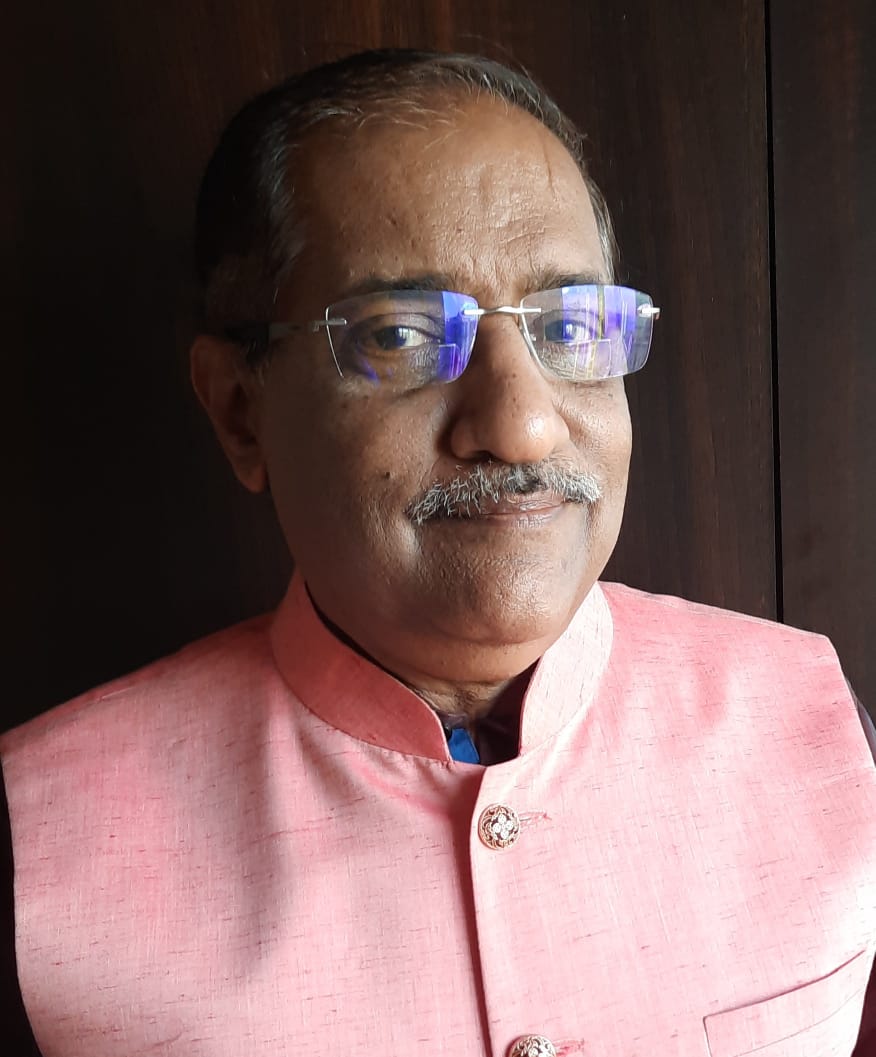
Ratan Sharda
Ratan Sharda has been awarded a PhD for his thesis on RSS. He is an author, columnist and renowned TV panelist. He has written 9 books of which 7 are on RSS, one on Guru Nanak Dev and one on Disaster Management; translated two books about RSS – The Incomparable Guruji Golwalkar and M S Golwalkar: His Vision and Mission, from Hindi to English; written by the foremost RSS thinker Shri Ranga Hari. He has edited/designed 12 books.
His most popular books on RSS are RSS360 degree, Sangh & Swaraj, RSS – Evolution from an Organisation to a Movement, Prof Rajendra Singh Ki Jeevan Yatra and Conflict Resolution: The RSS Way.
Ratan Sharda has travelled extensively in and outside Bharat. He was jailed during 1975-77 in the days of Emergency. He was an ERP consultant for two decades in addition to varied industrial experience of 2 decades. He was the founder secretary of Vishw Kendra (Centre for International Studies), Mumbai for eight years. He is an advisor to many educational institutions and voluntary organisations.