Nida Khan and the TCS Nashik Scandal- How Muslim women pose as victims of 'Islamist Patriarchy', but are at the centre of converting Hindus
(Nida Khan) The TCS Nashik case raises a question that goes beyond one accused individual: why are Muslim women increasingly at the centre of what investigators describe as organized conversion networks?
NewsBharati 08-May-2026 17:46:20 PM
Total Views |


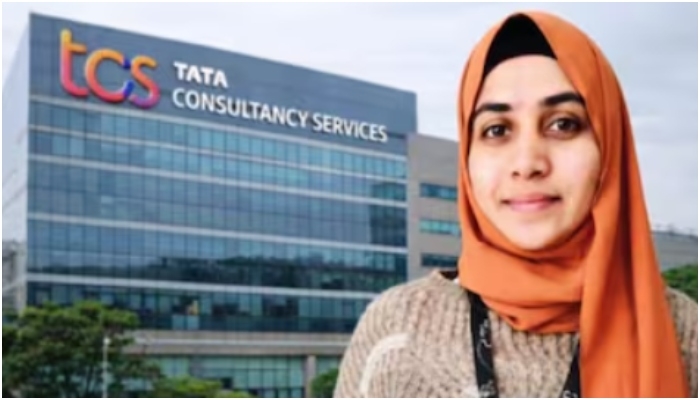
Nida Khan was, until recently, a process associate employed at the Nashik unit of Tata Consultancy Services (TCS), one of India's largest and most globally recognized IT companies. By most outward measures, she appeared to be an ordinary mid-level employee. But for months, and according to some victims, years, she allegedly used her position at the workplace to orchestrate something far more sinister, a systematic campaign of religious coercion, psychological harassment, and sexual exploitation targeting her female colleagues. (Nida Khan arrested)
The TCS Nashik case: What happened
In early 2026, multiple employees at the TCS Business Process Outsourcing (BPO) campus in Nashik, Maharashtra, filed FIRs alleging sustained sexual harassment and religious coercion by several team leaders. The allegations reportedly span from 2022 to 2026, pointing to prolonged misconduct within the workplace.
The case came to light after a woman employee filed a complaint at the Deolali Camp Police Station. As more victims came forward, a clear and disturbing pattern began to emerge. The accused allegedly created multiple WhatsApp groups and smaller internal communication circles to engage with colleagues and gradually influence them. Victims claimed that individuals were shortlisted based on personal vulnerabilities such as emotional stress or family issues.
Several victims claimed that repeated complaints had been made to the company's human resources department, including over 78 emails and multiple phone calls, but no effective action was taken. The allegations against Nida Khan herself are chilling in their specificity. According to the FIR, Khan allegedly advised women employees to dress and behave in accordance with Islamic traditions. Some complainants alleged that they were coerced or pressured into adopting religious practices, including praying, changing dietary habits, and adopting religious symbols.
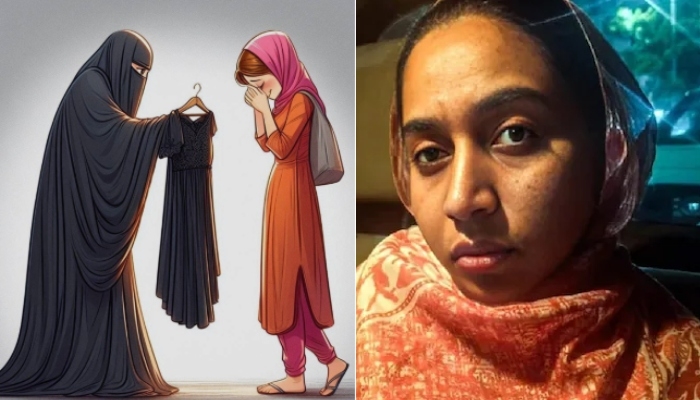
 The prosecution informed the court that the investigation had expanded beyond Nashik, with alleged links to Malegaon and Malaysia. Khan tried to influence one of the complainants to adopt Islam by teaching her religious practices. The operational details are even more disturbing. She allegedly tried to change the victim's name to "Haniya," provided her with a burqa and Islamic religious books (now seized by police), installed religious apps on her phone, and shared online content promoting conversion. Police sources say Khan repeatedly warned the victim of consequences for refusal.
The prosecution also alleged that co-accused Danish Sheikh had taken possession of the complainant's educational and other important documents, which were to be handed over to a team in Malegaon as part of the plan. This suggests a network operating well beyond the walls of a single BPO office.
The Arrest
She was finally apprehended from a flat in Kaiser Colony in Naregaon, Chhatrapati Sambhajinagar. The accused, Nida Khan, and five others, including her mother, father, brother, and aunt, were living in the flat. Her arrest came on May 8, 2026, after 25 days on the run. Besides Bharatiya Nyaya Sanhita provisions related to sexual harassment and defamation, Khan has also been booked under relevant sections of the Scheduled Castes and Scheduled Tribes (Prevention of Atrocities) Act, as the complainant belongs to a Scheduled Caste. As part of the broader probe, six female police officers were deployed undercover as employees within the facility for 40 days to monitor workplace interactions and gather evidence. TCS, for its part, suspended the named employees and reiterated a zero-tolerance policy on harassment.
Muslim Women as instruments of conversion: Exposing a broader pattern
The TCS Nashik case raises a question that goes beyond one accused individual: why are Muslim women increasingly at the centre of what investigators describe as organized conversion networks?

This is not an isolated dynamic. Across India, several cases have surfaced where women from Muslim backgrounds have played active roles in befriending, influencing, and steering vulnerable Hindu women, particularly those from lower-income or lower-caste backgrounds, toward conversion. The targeting of women from the SC/ST community, as seen in the Nashik case, is particularly deliberate. These women often face compounded social vulnerabilities, making them more susceptible to manipulation under the guise of care and inclusion.
The digital dimension has made this worse. WhatsApp groups, religious apps, curated Instagram and YouTube content, these are modern tools of soft ideological influence, and the Nashik case demonstrates exactly how they can be weaponized in a workplace setting.
Some previous cases where Muslim women have played a key role in religious conversions:
1. In March 2026, a Hindu youth identified as Tarun Khatik was brutally murdered by Sayra alias Kali (40), Sarifan (50), Salma (36), Suhail alias Sahil (21), Sameer Chauhan (20), Firoj (22), and Ismail (50) in the Uttam Nagar area of Delhi. The accused was murdered for playing Holi. In the given case, it was a woman named Sayra who claimed that the victim had deliberately thrown water on her while playing Holi, while the fact spoke that the splash of water was unintentional and that it was never by the deceased, but by his minor cousin. Despite no mistake, the parents of the minor apologized to Sayra. But the accused chose to create a ruckus and get the victim murdered.
2. On 24th February, 2026, 12 individuals from the Muslim community attacked Dalit Hindus during a Kuaan Poojan and Devi Jagran programme in Bulandshahr locality of Uttar Pradesh. According to the reports, the Muslims attacked Dalit Hindus over the DJ music during the programme. A case was registered on the complaint of one of the victims, Akash Kumar, against 64 individuals, including 15 named and 50 unnamed persons, under the BNS and the SC/ST Act.
Based on the complaints of the victims, the Police registered a case against 5 accused, including Ishaq, Sahil, and Asghar. The incident took place on 9th August 2024 in the home district of Bhim Army chief and MP Chandrashekhar ‘Ravan’.
4. In Peepalsana, Moradabad, which is a Muslim-dominated locality, the Muslim barbers refuse to give haircuts to Dalits. “If Dalits take a haircut and shave in these shops, the towels will become dirty. How will other Muslims take haircuts after that?” questioned Naushad, a barber.
5. In January 2018, a Dalit girl accused a Muslim youth of forcibly trying to convert and marry her. When she resisted the same, the youth and a few of his associates kidnapped and gang-raped her for a week. As per the girl, the accused even recorded a lewd video of her.
6. In Durveshpur village of Sardhana, Uttar Pradesh, a minor conflict between some people belonging to the Dalit and the Muslim communities escalated into communal violence. People from both communities came face to face, and heavy stone pelting and firing took place. The incident happened in February this year. Several people from both sides were injured due to stone pelting and the exchange of fire.
Recurring patterns can be observed in the crimes listed above or similar crimes in which Hindus, especially the Hindu Dalits, are deliberately targeted by the hands of the Islamists. Notably, the involvement of Muslim women in hate crimes against Hindus appears with concerning frequency in several such incidents. They appear to be perfectly willing to indulge in hate crimes against Hindus. Their consent can also be gauged from the fact that not a single woman from the community has made any effort, even in history, to report people from their own community when they have indulged in mob violence. Hence, it’s of critical importance that we do not consider Muslim women as victims of an ‘Islamic Patriarchy’ because quite clearly, they do not perceive themselves as such.
Conclusion: What the current Nashik Case Demands
The TCS Nashik case is a stark reminder that radicalization and coercion don't always announce themselves loudly. Sometimes they wear a colleague's face and operate over group chats. The fact that nearly four years allegedly passed, from 2022 to 2026, before meaningful action was taken speaks to how easily such networks can embed themselves in corporate environments.
The case demands not just criminal accountability for Nida Khan and her alleged co-conspirators, but a serious rethink of how India's workplaces handle complaints of religious coercion and how vulnerable employees, especially women from marginalized communities, are protected when internal HR mechanisms fail them.
Nida was arrested by the Nashik Police on May 8th for her key role in sexually harassing Hindu women working at TCS, mentally torturing them, and forcing them to convert to Islam. What makes the case particularly alarming is the calculated, methodical nature of the alleged conduct; this was not a single incident, but a sustained operation carried out under the cover of a corporate environment. (Nida Khan arrested)
The TCS Nashik case: What happened
In early 2026, multiple employees at the TCS Business Process Outsourcing (BPO) campus in Nashik, Maharashtra, filed FIRs alleging sustained sexual harassment and religious coercion by several team leaders. The allegations reportedly span from 2022 to 2026, pointing to prolonged misconduct within the workplace.
The case came to light after a woman employee filed a complaint at the Deolali Camp Police Station. As more victims came forward, a clear and disturbing pattern began to emerge. The accused allegedly created multiple WhatsApp groups and smaller internal communication circles to engage with colleagues and gradually influence them. Victims claimed that individuals were shortlisted based on personal vulnerabilities such as emotional stress or family issues.
Several victims claimed that repeated complaints had been made to the company's human resources department, including over 78 emails and multiple phone calls, but no effective action was taken. The allegations against Nida Khan herself are chilling in their specificity. According to the FIR, Khan allegedly advised women employees to dress and behave in accordance with Islamic traditions. Some complainants alleged that they were coerced or pressured into adopting religious practices, including praying, changing dietary habits, and adopting religious symbols.
The prosecution also alleged that co-accused Danish Sheikh had taken possession of the complainant's educational and other important documents, which were to be handed over to a team in Malegaon as part of the plan. This suggests a network operating well beyond the walls of a single BPO office.
The Arrest
After the complaints went public, Nida Khan disappeared. She had been absconding since March 25th, with two Nashik police teams searching for her. On April 18, she moved a Nashik court seeking anticipatory bail and interim protection from arrest, citing her pregnancy. Her anticipatory bail plea was rejected on May 2. After the bail was rejected, the police intensified their search, monitoring mobile phone locations and potential hideouts. The operation was a coordinated effort between the Nashik SIT, the Chhatrapati Sambhajinagar Crime Branch, and local police.
She was finally apprehended from a flat in Kaiser Colony in Naregaon, Chhatrapati Sambhajinagar. The accused, Nida Khan, and five others, including her mother, father, brother, and aunt, were living in the flat. Her arrest came on May 8, 2026, after 25 days on the run. Besides Bharatiya Nyaya Sanhita provisions related to sexual harassment and defamation, Khan has also been booked under relevant sections of the Scheduled Castes and Scheduled Tribes (Prevention of Atrocities) Act, as the complainant belongs to a Scheduled Caste. As part of the broader probe, six female police officers were deployed undercover as employees within the facility for 40 days to monitor workplace interactions and gather evidence. TCS, for its part, suspended the named employees and reiterated a zero-tolerance policy on harassment.
Muslim Women as instruments of conversion: Exposing a broader pattern
The TCS Nashik case raises a question that goes beyond one accused individual: why are Muslim women increasingly at the centre of what investigators describe as organized conversion networks?
Traditionally, discussions around Love Jihad and targeted conversion cases have focused on men. But the Nashik case flips that script. A woman, a colleague, a co-worker, is alleged to have been the primary groomer and recruiter. This is significant. Female perpetrators lower the victim's guard far more effectively. A woman encouraging another woman to "dress modestly," bond over shared experiences, or adopt new spiritual practices is far less likely to trigger alarm bells than a man doing the same. The use of a woman as a front also provides plausible deniability and social cover for a larger network allegedly operating behind the scenes, in this case, with alleged connections to Malegaon and even Malaysia.
This is not an isolated dynamic. Across India, several cases have surfaced where women from Muslim backgrounds have played active roles in befriending, influencing, and steering vulnerable Hindu women, particularly those from lower-income or lower-caste backgrounds, toward conversion. The targeting of women from the SC/ST community, as seen in the Nashik case, is particularly deliberate. These women often face compounded social vulnerabilities, making them more susceptible to manipulation under the guise of care and inclusion.
The digital dimension has made this worse. WhatsApp groups, religious apps, curated Instagram and YouTube content, these are modern tools of soft ideological influence, and the Nashik case demonstrates exactly how they can be weaponized in a workplace setting.
Some previous cases where Muslim women have played a key role in religious conversions:
1. In March 2026, a Hindu youth identified as Tarun Khatik was brutally murdered by Sayra alias Kali (40), Sarifan (50), Salma (36), Suhail alias Sahil (21), Sameer Chauhan (20), Firoj (22), and Ismail (50) in the Uttam Nagar area of Delhi. The accused was murdered for playing Holi. In the given case, it was a woman named Sayra who claimed that the victim had deliberately thrown water on her while playing Holi, while the fact spoke that the splash of water was unintentional and that it was never by the deceased, but by his minor cousin. Despite no mistake, the parents of the minor apologized to Sayra. But the accused chose to create a ruckus and get the victim murdered.
2. On 24th February, 2026, 12 individuals from the Muslim community attacked Dalit Hindus during a Kuaan Poojan and Devi Jagran programme in Bulandshahr locality of Uttar Pradesh. According to the reports, the Muslims attacked Dalit Hindus over the DJ music during the programme. A case was registered on the complaint of one of the victims, Akash Kumar, against 64 individuals, including 15 named and 50 unnamed persons, under the BNS and the SC/ST Act.
3. In the Saharanpur district of Uttar Pradesh, people from the Dalit community accused a Muslim mob of attacking them with weapons and brutally assaulting them. It was also alleged that the accused hurled casteist abuses at them and threatened to kill them. During the attack, the accused also targeted a woman. 3 people suffered serious injuries in the attack and were admitted to the hospital.
ALSO READ: Nida Khan, prime accused of Nashik TSC conversion racket arrested from Chh Sambhajinagar; here's why her anticipatory bail was rejected
Based on the complaints of the victims, the Police registered a case against 5 accused, including Ishaq, Sahil, and Asghar. The incident took place on 9th August 2024 in the home district of Bhim Army chief and MP Chandrashekhar ‘Ravan’.
4. In Peepalsana, Moradabad, which is a Muslim-dominated locality, the Muslim barbers refuse to give haircuts to Dalits. “If Dalits take a haircut and shave in these shops, the towels will become dirty. How will other Muslims take haircuts after that?” questioned Naushad, a barber.
5. In January 2018, a Dalit girl accused a Muslim youth of forcibly trying to convert and marry her. When she resisted the same, the youth and a few of his associates kidnapped and gang-raped her for a week. As per the girl, the accused even recorded a lewd video of her.
6. In Durveshpur village of Sardhana, Uttar Pradesh, a minor conflict between some people belonging to the Dalit and the Muslim communities escalated into communal violence. People from both communities came face to face, and heavy stone pelting and firing took place. The incident happened in February this year. Several people from both sides were injured due to stone pelting and the exchange of fire.
7. In August 2023, a case of Love Jihad was reported from the Rahuri region of Maharashtra, where Heena Khan, a tuition teacher, was arrested for trapping minor Hindu students and forcing them to follow Islamic practices. She drugged them through food substances and asked them to stop wearing bindis and bangles. Meanwhile, she also asked the girls to be 'friends' with one Avej, who was also arrested later for sexually assaulting the minor girls.
Recurring patterns can be observed in the crimes listed above or similar crimes in which Hindus, especially the Hindu Dalits, are deliberately targeted by the hands of the Islamists. Notably, the involvement of Muslim women in hate crimes against Hindus appears with concerning frequency in several such incidents. They appear to be perfectly willing to indulge in hate crimes against Hindus. Their consent can also be gauged from the fact that not a single woman from the community has made any effort, even in history, to report people from their own community when they have indulged in mob violence. Hence, it’s of critical importance that we do not consider Muslim women as victims of an ‘Islamic Patriarchy’ because quite clearly, they do not perceive themselves as such.
Conclusion: What the current Nashik Case Demands
The TCS Nashik case is a stark reminder that radicalization and coercion don't always announce themselves loudly. Sometimes they wear a colleague's face and operate over group chats. The fact that nearly four years allegedly passed, from 2022 to 2026, before meaningful action was taken speaks to how easily such networks can embed themselves in corporate environments.
The case demands not just criminal accountability for Nida Khan and her alleged co-conspirators, but a serious rethink of how India's workplaces handle complaints of religious coercion and how vulnerable employees, especially women from marginalized communities, are protected when internal HR mechanisms fail them.

Siddhi Somani
Siddhi Somani is known for her satirical and factual hand in Economic, Social and Political writing. Having completed her post graduation in Journalism, she is currently engaged in completing her Masters in Politics. The author meanwhile is also exploring her hand in analytics and statistics.