TMC Split: Collapse of Mamata's Model
It is a verdict on a political model that prioritized family influence over cadre confidence, power over accountability, and political management over public trust.
NewsBharati 15-Jun-2026 12:20:27 PM
Total Views |


The split in the Trinamool Congress was not a sudden development. It was inevitable. The surprise is not that it happened, but that it took so long. The cracks within the party had been visible for years, concealed only by Mamata Banerjee's personal authority and the organizational machinery built around her. The electoral debacle merely accelerated a process that had already begun.
The reality is that morality has often been used as a political weapon rather than a genuine principle. Political defections are condemned when they hurt one side and celebrated when they benefit another. Indian politics is full of examples. Congress witnessed repeated splits throughout its history. Regional parties across the country have experienced defections, mergers, and realignments. Leaders who once condemned defections have frequently welcomed defectors into their own camps. The moral outrage therefore appears highly selective.
The TMC split is therefore not merely an organizational crisis. It is a verdict on a political model that prioritized family influence over cadre confidence, power over accountability, and political management over public trust.
For the BJP, however, victory brings responsibility. If it seeks to become the natural political destination for those abandoning regional and dynastic formations, it ought to maintain grace, discipline, and democratic dignity. Political expansion should not become political arrogance.
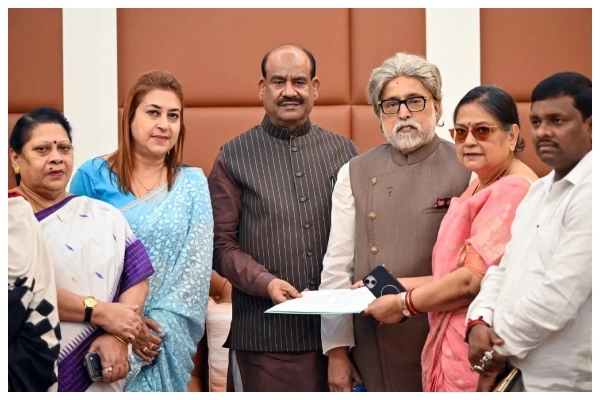
The decision of a section of TMC leaders to merge with the Nationalist Congress Party (India), a relatively insignificant political force in national politics, has understandably shocked many observers. Political commentators and opposition leaders are now raising questions about the morality and legality of such a move. Do elected representatives have the moral right to abandon the party on whose symbol they were elected? Is it a betrayal of the voters' mandate? More than seven decades after independence, these questions continue to haunt India's political discourse.
These questions deserve discussion. But before preaching morality, the political establishment must answer a far more fundamental question. Where was this concern for morality when West Bengal was witnessing systematic political violence, corruption, administrative collapse, and institutional disregard?
Where was morality when Bengal underwent a prolonged reign of political terror in which opposition workers routinely faced intimidation, violence, and social boycott? Where was morality when democratic dissent was crushed through fear and coercion? Where was morality when horrifying incidents involving the rape and murder of women repeatedly exposed the failure of law and order in the state? Where were these guardians of constitutional ethics when ordinary citizens were demanding justice and accountability? Where was morality when allegations of illegal infiltration across the Bangladesh border became a major political issue? The concerns were repeatedly dismissed as political rhetoric even as demographic anxieties and security concerns grew among sections of the population.
Where was morality when the culture of "cut money" became synonymous with governance in West Bengal? For years, citizens complained that welfare benefits and government schemes were being treated as opportunities for extortion by local political operators. The phrase entered everyday political vocabulary because the problem had become impossible to ignore.
ALSO READ: Nine Women Cadets Commissioned from IMA for the First Time
Where was the morality when the situation in West Bengal had deteriorated to such an extent that many called for Presidential Rule on the ground of collapse of constitutional machinery? Where was morality when corruption scandals involving recruitment, education, and public administration rocked the state? Senior leaders and individuals associated with the ruling establishment found themselves facing serious investigations. The scandals were not isolated incidents but symptoms of a deeper malaise within the system. Where was morality when the Mamata Banerjee government repeatedly found itself accused of resisting or delaying compliance with judicial directives? Respect for institutions cannot be selective. Those who today invoke constitutional morality must explain their silence when constitutional institutions themselves were being challenged.
The reality is that morality has often been used as a political weapon rather than a genuine principle. Political defections are condemned when they hurt one side and celebrated when they benefit another. Indian politics is full of examples. Congress witnessed repeated splits throughout its history. Regional parties across the country have experienced defections, mergers, and realignments. Leaders who once condemned defections have frequently welcomed defectors into their own camps. The moral outrage therefore appears highly selective.
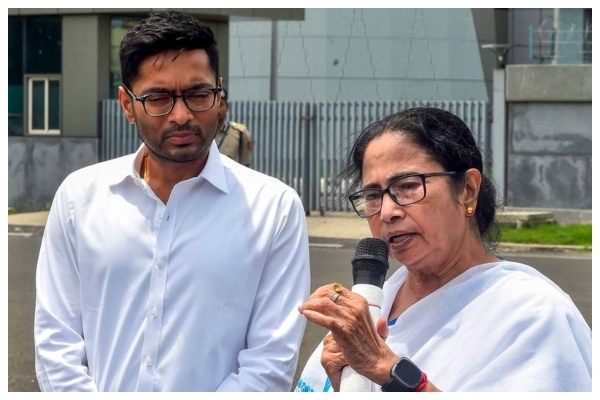
The deeper reason behind the TMC crisis lies elsewhere. Mamata Banerjee gradually transformed anti-Communist agitation into a family-centric political structure. Many leaders within the party increasingly felt that organizational merit, grassroots work, and political experience mattered less than proximity to Abhishek Banerjee. Whether this perception was entirely justified or not is secondary. In politics, perception often becomes reality. Dynastic politics creates structural instability. When authority becomes concentrated within a family, ambitious leaders begin to see limited opportunities for growth. Loyalty gradually gives way to frustration. Internal democracy weakens. Political organizations stop functioning as movements and start functioning as courts where access to the ruling family determines influence. This is precisely the challenge confronting many regional parties across India. Once a party becomes synonymous with a single family, succession becomes the dominant question. Ideology weakens. Institutions weaken. Leadership pipelines disappear. The eventual result is factionalism, rebellion, or fragmentation.
At the same time, Indian politics itself has undergone a profound transformation. For decades, electoral competition revolved around caste arithmetic, coalition management, regional grievances, and welfare promises. Those factors still matter, but they no longer define the entire political landscape.
The BJP has fundamentally altered the grammar of Indian politics by introducing a powerful civilizational narrative centered on cultural identity, national pride, and historical consciousness. Large sections of society find this message appealing because it connects politics with questions of identity and self-perception rather than merely governance and patronage.
Many opposition parties have struggled to respond effectively. Their political vocabulary remains rooted in frameworks that are increasingly losing resonance with large sections of voters. Instead of developing an alternative vision, they often appear reactive, fragmented, and defensive.
The TMC's present predicament must be understood within this larger context. Leaders leaving the party are not merely changing political affiliations. Many of them are responding to a changing political environment in which the old calculations no longer guarantee survival. Those who have sensed the shift early are attempting to align themselves with what they perceive as the political mainstream. Whether their judgment ultimately proves correct remains to be seen. But their actions reflect a growing recognition that the political landscape of India is changing rapidly.
ALSO READ: Pakistani national arrested near LoC in Kupwara during anti-infiltration operation; Probe underway
The irony is striking. At a time when Rahul Gandhi continues to predict the decline of Narendra Modi and the BJP, political developments across the country seem to suggest the opposite. Instead of weakening, the BJP's political influence appears to be expanding into spaces that were once considered impregnable opposition strongholds. The developments in West Bengal are a reminder of this reality. Reports of public anger against TMC leaders long after the electoral setback indicate that the dissatisfaction runs deeper than a temporary electoral fluctuation. Election results may come and go, but sustained public resentment is far more dangerous for any political party.
The TMC split is therefore not merely an organizational crisis. It is a verdict on a political model that prioritized family influence over cadre confidence, power over accountability, and political management over public trust.
For the BJP, however, victory brings responsibility. If it seeks to become the natural political destination for those abandoning regional and dynastic formations, it ought to maintain grace, discipline, and democratic dignity. Political expansion should not become political arrogance.
The collapse of one political order creates an opportunity for another. The real challenge is ensuring that the new order does not repeat the mistakes of the old.

Editor's Desk
Editor's Desk