Explained: Far from truth, how Pakistan portrays itself as a 'key mediator' between US-Iran; snatches credit for 'facilitating' ceasefire


🚨 BREAKING: President Trump CONFIRMS —
— Eric Daugherty (@EricLDaugh) June 15, 2026
1. Iran agreed to *NEVER* obtain a nuclear weapon
2. Iran is NOT getting $300 billion from the US
Big win, the liars and traitors are in full swing!
"Iran has agreed to never have a Nuclear Weapon! Also, the story that the U.S. is paying… pic.twitter.com/u3xy6RAK6f
The war escalated after joint US-Israeli military actions against Iran earlier in 2026, leading Tehran to respond by restricting movement through the Strait of Hormuz. The closure disrupted nearly one-fifth of global oil shipments, causing sharp increases in energy prices and concerns about global economic growth. The prolonged confrontation also raised fears of a broader Middle East conflict involving multiple regional actors.
According to reports, the framework agreement includes several major provisions:
BREAKING: 🇺🇸🇮🇷 JD Vance confirms that Iran will get $300 billion for war damages pic.twitter.com/gWfCGf7AqJ
— Megatron (@Megatron_ron) June 15, 2026
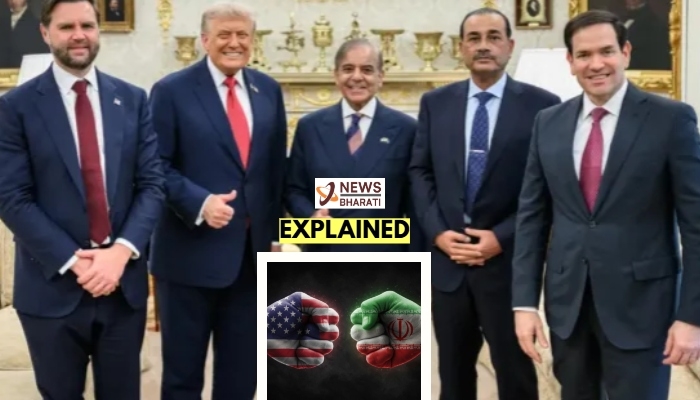
Interestingly, in the midst of everything, Pakistan has been actively presenting itself as a key mediator in the ceasefire process. Pakistani Prime Minister Shehbaz Sharif has stated that Islamabad played an important role in facilitating contacts between Washington and Tehran. In an attempt to portray the outcome as a success of Pakistani diplomacy, he indicated that Pakistan was involved in diplomatic efforts that helped advance negotiations and bring the parties to the table.

This is not the first time Pakistan has claimed a role in preventing a wider conflict. Previously on 8 April, 2026, following the temporary ceasefire between the US and Israel, Pakistani officials had attempted to take the credit by claiming that Islamabad's mediation between Washington and Tehran helped prevent a further escalation of hostilities. Pakistan highlighted its so-called role in conveying proposals, facilitating communication, and hosting negotiations aimed at securing a ceasefire. Several reports noted that Pakistan's diplomatic outreach contributed to the temporary truce and the subsequent peace talks.
Immediate benefits for India
India is expected to be one of the biggest immediate beneficiaries of the ceasefire and the reopening of the Strait of Hormuz.
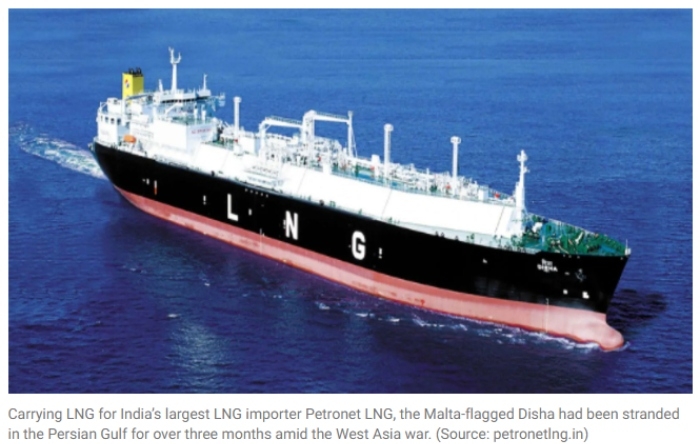
𝐈𝐧𝐝𝐢𝐚𝐧 𝐬𝐡𝐢𝐩 𝐃𝐢𝐬𝐡𝐚, 𝐜𝐚𝐫𝐫𝐲𝐢𝐧𝐠 𝟔𝟐,𝟑𝟕𝟎 𝐦𝐞𝐭𝐫𝐢𝐜 𝐭𝐨𝐧𝐧𝐞 𝐨𝐟 𝐋𝐍𝐆 𝐜𝐚𝐫𝐠𝐨, 𝐬𝐚𝐟𝐞𝐥𝐲 𝐜𝐫𝐨𝐬𝐬𝐞𝐬 𝐒𝐭𝐫𝐚𝐢𝐭 𝐨𝐟 𝐇𝐨𝐫𝐦𝐮𝐳.
— All India Radio News (@airnewsalerts) June 16, 2026
LNG carrier Disha has safely transited the Strait of Hormuz, becoming the first Indian LNG tanker to cross… pic.twitter.com/aiYMbgFLsT
The reopening of the route has also helped calm global energy markets, leading to softer crude oil prices. This is expected to improve India's trade balance, reduce import costs, and provide relief to sectors that depend heavily on imported energy, thereby supporting overall economic stability.
In addition, the normalization of shipping through the Gulf is expected to restore confidence in regional trade routes. Indian exporters and importers are likely to benefit from lower freight charges and reduced insurance premiums, which had risen sharply due to conflict-related risks. The return of maritime security in the region thus represents a significant economic gain for India, strengthening both trade flows and supply-chain resilience.
Conclusion
The evolving US-Iran agreement could prove to be a defining moment in Middle Eastern geopolitics. The reopening of the Strait of Hormuz has already helped restore confidence in global energy markets, delivering immediate economic relief to major oil-importing nations, including India. Although the durability of the agreement will ultimately depend on progress in future negotiations concerning sanctions, security arrangements, and Iran's nuclear programme, the ceasefire has created a valuable window for regional de-escalation and stability.
At the same time, Pakistan's attempts to portray itself as the principal architect of the peace process have faced scrutiny. Available evidence indicates that the ceasefire and broader agreement were primarily the result of direct negotiations between the United States and Iran, supported by the involvement of other regional stakeholders. The competing claims over diplomatic credit underscore the broader geopolitical contest among regional powers seeking recognition for their role in bringing the conflict to an end.

Siddhi Somani
Siddhi Somani is known for her satirical and factual hand in Economic, Social and Political writing. Having completed her post graduation in Journalism, she is currently engaged in completing her Masters in Politics. The author meanwhile is also exploring her hand in analytics and statistics.