"Kashmiri naujawan istemal ho rahe the," former militant Mustaq Ahmad Bhat's story of radicalisation, regret and Kashmir's changing reality
From Pakistan"s training camps to intelligence operations inside militant networks, Mustaq Ahmad Bhat"s story offers a rare insider account of how terrorism was nurtured, funded and sustained in Kashmir; and why he believes the situation has changed under the Modi government.
Total Views |


There was a time when Mustaq Ahmad Bhat believed that picking up a gun would give meaning to his life.
Growing up in Kashmir during the turbulent 1990s, Bhat says he was drawn towards militancy at a young age. Like many young Kashmiris of that era, he believed he was fighting for a larger cause. But according to him, the reality he witnessed across the border was very different from what he had been told.
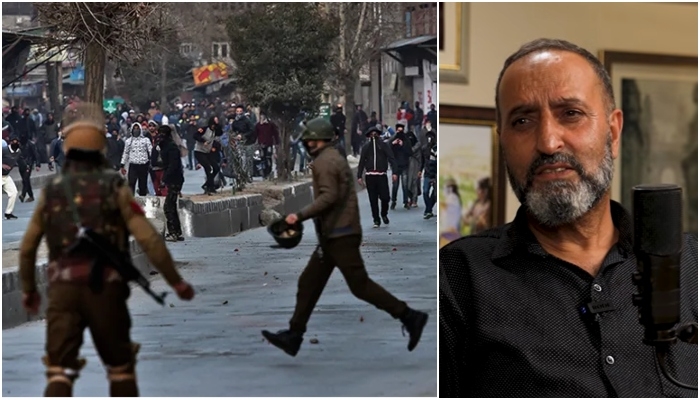
Reflecting on those years, Bhat says:
"Hum samajhte the ke hum kisi maqsad ke liye lad rahe hain, lekin baad mein pata chala ke Kashmiri naujawan sirf istemal ho rahe the."
According to Bhat, many young Kashmiris were influenced by emotion, propaganda, and promises of liberation. However, after witnessing the ground reality inside Pakistan-based camps, he claims he realised that local youth were often being used as foot soldiers in a much larger agenda.
Bhat also discusses the exodus of Kashmiri Pandits, the breakdown of law and order during the peak years of militancy, and the fear that gripped the Valley in the 1990s. He argues that decades of terrorism hurt ordinary Kashmiris the most and pushed the region backwards socially and economically.
While speaking about present-day Kashmir, Bhat says the situation has changed significantly compared to the years when militancy dominated daily life.
"Aaj security aur governance mein jo tabdeeli aayi hai, usne halaat ko kaafi had tak badla hai."
According to Bhat, better road connectivity, development projects, tighter security coordination and a more aggressive counter-terror strategy have contributed to a sense of stability in many parts of Jammu and Kashmir. He argues that the region today is very different from the Kashmir he witnessed as a young recruit in the early 1990s.
At the same time, Bhat says the lessons of that period should not be forgotten. His story serves as a reminder of how radicalisation begins, how young minds can be influenced, and how violence ultimately leaves ordinary families to suffer the consequences.
Whether one agrees with all his views or not, the interview provides a rare first-hand perspective from a man who claims to have witnessed the Kashmir conflict from multiple sides—as a militant, an insider, an intelligence source, and eventually a critic of the ecosystem that sustained terrorism.
His message is clear: terrorism did not bring peace or prosperity to Kashmir. Instead, it left behind loss, fear and generations affected by conflict, while many of the young men who joined the movement paid the highest price.
Growing up in Kashmir during the turbulent 1990s, Bhat says he was drawn towards militancy at a young age. Like many young Kashmiris of that era, he believed he was fighting for a larger cause. But according to him, the reality he witnessed across the border was very different from what he had been told.
In a nearly four-hour interview, Bhat recounts his journey from Kashmir to Pakistan, his training in militant camps, his time in Afghanistan, and his eventual disillusionment with the very movement he once joined.
Reflecting on those years, Bhat says:
"Hum samajhte the ke hum kisi maqsad ke liye lad rahe hain, lekin baad mein pata chala ke Kashmiri naujawan sirf istemal ho rahe the."
According to Bhat, many young Kashmiris were influenced by emotion, propaganda, and promises of liberation. However, after witnessing the ground reality inside Pakistan-based camps, he claims he realised that local youth were often being used as foot soldiers in a much larger agenda.
One of the striking aspects of the interview is Bhat's description of how militant infrastructure allegedly operated. He speaks about recruitment networks, ideological indoctrination, cross-border infiltration routes, and the role of handlers in sustaining violence in the Valley. He also alleges that fake Indian currency was pushed through such networks to fund activities and create economic disruption, describing it as another front in the larger conflict.
The interview takes a dramatic turn when Bhat explains how he gradually became disillusioned with militancy and later established contact with Indian security agencies. According to his account, he spent years providing information from within militant circles, helping security forces understand the workings of various organisations operating in Kashmir.
Bhat also discusses the exodus of Kashmiri Pandits, the breakdown of law and order during the peak years of militancy, and the fear that gripped the Valley in the 1990s. He argues that decades of terrorism hurt ordinary Kashmiris the most and pushed the region backwards socially and economically.
While speaking about present-day Kashmir, Bhat says the situation has changed significantly compared to the years when militancy dominated daily life.
"Aaj security aur governance mein jo tabdeeli aayi hai, usne halaat ko kaafi had tak badla hai."
Bhat credits the Bharatiya Janata Party-led government for what he describes as improvements in security, governance, infrastructure and intelligence coordination. He specifically praises Prime Minister Narendra Modi and Union Home Minister Amit Shah, stating that a stronger security policy and decisive action against terrorism have reduced the operational space available to militant organisations.
According to Bhat, better road connectivity, development projects, tighter security coordination and a more aggressive counter-terror strategy have contributed to a sense of stability in many parts of Jammu and Kashmir. He argues that the region today is very different from the Kashmir he witnessed as a young recruit in the early 1990s.
At the same time, Bhat says the lessons of that period should not be forgotten. His story serves as a reminder of how radicalisation begins, how young minds can be influenced, and how violence ultimately leaves ordinary families to suffer the consequences.
Whether one agrees with all his views or not, the interview provides a rare first-hand perspective from a man who claims to have witnessed the Kashmir conflict from multiple sides—as a militant, an insider, an intelligence source, and eventually a critic of the ecosystem that sustained terrorism.
His message is clear: terrorism did not bring peace or prosperity to Kashmir. Instead, it left behind loss, fear and generations affected by conflict, while many of the young men who joined the movement paid the highest price.