Farmers Intensify Opposition to Mekedatu Dam Amid Concerns Over Water Security and Agricultural Sustainability
The protests reflect broader concerns surrounding interstate river water management in India, where competing developmental and environmental priorities often generate tensions between upstream and downstream states.
Total Views |


Tiruchirappalli, June24: The proposed Mekedatu dam project in Karnataka has reignited the Cauvery water dispute, with farmers from Tamil Nadu's Delta region strongly opposing the project. Arguing that it could reduce downstream water availability and threaten agriculture and drinking water supplies, farmers staged a symbolic self-burial protest in the dry Cauvery riverbed at Tiruchirappalli, partially burying themselves in mud to highlight their concerns.
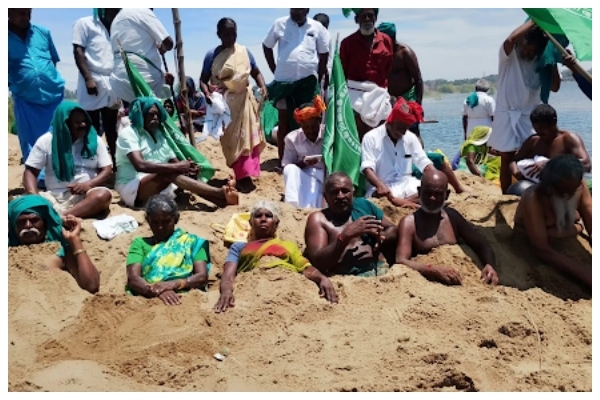
On Tuesday, a group of farmers led by P. Ayyakannu, president of the Desiya Thennidiya Nadhigal Inaippu Sangam, organized a demonstration in Tiruchirappalli. The protest took place on the dry bed of the Cauvery River, symbolically highlighting concerns over diminishing water availability. As part of the demonstration, participants staged a "self-burial" protest to draw public attention to the potential consequences of reduced river flows.
In response to these concerns, farmers have launched an indefinite protest demanding that the Tamil Nadu government take legal and administrative measures to secure the state's allocated share of Cauvery water. Protesters have also urged the Union Government to intervene and prevent the implementation of the project.
Farmer representatives argued that the Mekedatu project could significantly affect irrigation in the Cauvery Delta, one of Tamil Nadu's most important agricultural regions. According to the protesters, nearly 2.5 million acres of agricultural land could face adverse impacts if water inflows are reduced. They contend that such a scenario would threaten crop production, rural livelihoods, and the state's broader food security framework.
In addition to opposing the dam, farmers expressed reservations about proposals to establish a separate tribunal to address issues related to the Mekedatu project. They argued that creating a new adjudicatory mechanism could complicate existing arrangements governing Cauvery water sharing and potentially weaken Tamil Nadu's position in future negotiations.
ALSO READ: 163 Muslim admissions; 15 teachers: Jalna school shut after 'Sar Tan Se Juda' dance; 3, including Principal Siddiqui arrested
The protests reflect broader concerns surrounding interstate river water management in India, where competing developmental and environmental priorities often generate tensions between upstream and downstream states. While Karnataka has maintained that the Mekedatu project is intended primarily to address drinking water needs and improve water management, stakeholders in Tamil Nadu continue to fear that the project may alter established water-sharing arrangements.
The ongoing demonstrations underscore the importance of balancing regional development objectives with equitable water distribution, agricultural sustainability, and long-term water security. As debates surrounding the Mekedatu project continue, the issue remains a significant test of cooperative federalism and inter-state resource governance in India.