India Is Not A Dharmashala
India has changed. Citizens increasingly expect the State to protect the sanctity of its institutions instead of accommodating long-standing administrative weaknesses.
NewsBharati 26-Jun-2026 13:03:01 PM
Total Views |


The recent controversy surrounding passport verification has once again exposed a peculiar tendency in Indian politics. Every attempt by the Modi government to tighten the country's citizenship or identity verification framework is met with predictable political resistance. Whether it was the debate over the Citizenship Amendment Act, the National Register of Citizens, action against illegal immigration, or now stricter scrutiny in passport issuance, the same chorus of criticism resurfaces. The question is no longer whether these parties have the right to oppose the government. The more important question is why every measure aimed at strengthening India's sovereign documentation is portrayed as an assault on citizens.
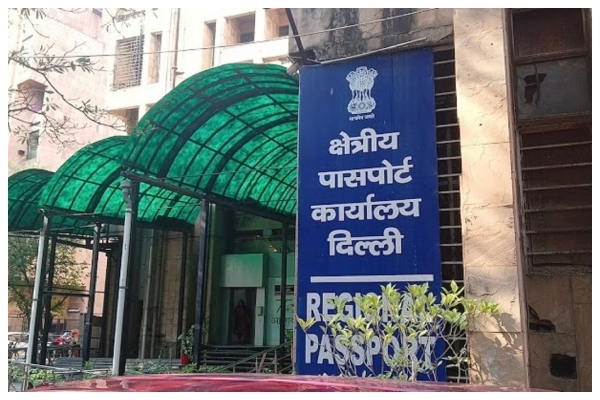 The recent Bombay High Court ruling reinforces this principle. The court reiterated that passport authorities must act within the statutory framework while processing applications and exercising their powers. The judgment serves as a reminder that passport issuance is governed by law, not political slogans. Administrative scrutiny is not arbitrary persecution but it is part of the legal architecture created to protect the integrity of India's sovereign documents.
This legal position assumes even greater significance in the context of India's long struggle with document fraud and illegal immigration, which flourished under Congress regime. For decades, forged birth certificates, fabricated residence proofs and fake identity documents enabled organised rackets to obtain genuine government documents on false foundations. This was betrayal to the nation. Once fraudulent identities entered official records, they became increasingly difficult to detect. The damage extended beyond administrative inconvenience. Every forged identity weakened the credibility of official records and created potential national security risks.
These problems did not emerge overnight. They accumulated over decades of weak enforcement, fragmented databases and inadequate verification mechanisms. Who was responsible for this? Critics of the present government often focus on the inconvenience caused by stricter checks. They rarely explain how the earlier system allowed document fraud to become so deeply entrenched. A governance model that tolerated weak verification inevitably created opportunities for abuse. That legacy cannot simply be ignored.
But every such reform is immediately portrayed by sections of the opposition as excessive, discriminatory or anti-people. That political response deserves scrutiny. Opposition is an essential part of democracy, but it also carries the responsibility of offering credible alternatives. If stricter verification is objectionable, what is the proposed alternative? Should passport authorities lower verification standards? Should documentary inconsistencies be overlooked? Should the State relax scrutiny despite well-documented instances of identity fraud? These questions deserve answers.
No sovereign nation treats its passport as a casual administrative certificate. The world's major democracies maintain rigorous procedures because they recognise that a passport is an expression of sovereign trust. It certifies that the issuing nation stands behind the identity of the holder. India cannot be expected to adopt weaker standards simply because stronger verification attracts political criticism.
India is not a dharamshala. It is a sovereign Republic with defined borders, established laws and institutions responsible for protecting its citizens. Above all it is the most ancient nation of the world. Every nation has the right and indeed the obligation to determine who qualifies for citizenship and who is entitled to receive its official documents. That principle is neither extraordinary nor controversial in international practice. It becomes controversial only when routine sovereign functions are recast as political controversies.
The broader debate is therefore not about one passport application or one verification process. It is about the character of the Indian State. Should official documents command unquestioned credibility, or should loopholes remain in the name of administrative convenience? Should governments strengthen identity verification as technology makes it possible, or continue with outdated systems that fraudsters have repeatedly exploited? These are questions of governance, not ideology.
The Modi government's approach reflects the view that national security begins with institutional integrity. A secure nation is one that knows whom it is recognising as its citizens, whom it is issuing passports to and how it safeguards the credibility of those documents. Tightening verification is therefore not an attack on genuine citizens but it is a measure that protects genuine citizens from the consequences of fraud, illegal immigration and document misuse.
India has changed. Citizens increasingly expect the State to protect the sanctity of its institutions instead of accommodating long-standing administrative weaknesses. They expect official documents to carry unquestioned credibility, not lingering doubts. That expectation is entirely legitimate. A passport issued by the Republic of India should represent verified identity, lawful entitlement and sovereign confidence not administrative complacency. The fundamental issue is that the government, irrespective of political party, must be committed to protect national integration and sovereignty.
The answer begins with understanding the law. Much of the public debate deliberately blurs the distinction between citizenship and passports. The two are governed by entirely different statutes. Citizenship is determined under the Citizenship Act, 1955. A passport, on the other hand, is issued under the Passport Act, 1967. Citizenship establishes one's legal relationship with the Indian State. A passport is a sovereign travel document issued by that State after satisfying itself that the applicant fulfils the legal requirements prescribed by law. It is not an unconditional entitlement.
This distinction was recognised by Parliament from the very beginning. The original Passport Act, 1967 itself empowered the government to refuse, impound or revoke passports under specified circumstances. The legislative intent was obvious. Parliament never intended passport issuance to become a mechanical exercise. It recognised that the credibility of Indian passports depends upon careful verification and the sovereign discretion of the State.
This legal position assumes even greater significance in the context of India's long struggle with document fraud and illegal immigration, which flourished under Congress regime. For decades, forged birth certificates, fabricated residence proofs and fake identity documents enabled organised rackets to obtain genuine government documents on false foundations. This was betrayal to the nation. Once fraudulent identities entered official records, they became increasingly difficult to detect. The damage extended beyond administrative inconvenience. Every forged identity weakened the credibility of official records and created potential national security risks.
These problems did not emerge overnight. They accumulated over decades of weak enforcement, fragmented databases and inadequate verification mechanisms. Who was responsible for this? Critics of the present government often focus on the inconvenience caused by stricter checks. They rarely explain how the earlier system allowed document fraud to become so deeply entrenched. A governance model that tolerated weak verification inevitably created opportunities for abuse. That legacy cannot simply be ignored.
The response of the present government has been fundamentally different. Technology-driven verification, digital integration of records, stronger police verification, closer coordination among agencies and more rigorous scrutiny of supporting documents represent an effort to restore confidence in India's identity framework. The objective is straightforward, which is aimed to ensure that Indian passports are issued only after proper verification and that fraudulent identities are detected before they enter the system.
But every such reform is immediately portrayed by sections of the opposition as excessive, discriminatory or anti-people. That political response deserves scrutiny. Opposition is an essential part of democracy, but it also carries the responsibility of offering credible alternatives. If stricter verification is objectionable, what is the proposed alternative? Should passport authorities lower verification standards? Should documentary inconsistencies be overlooked? Should the State relax scrutiny despite well-documented instances of identity fraud? These questions deserve answers.
India is not a dharamshala. It is a sovereign Republic with defined borders, established laws and institutions responsible for protecting its citizens. Above all it is the most ancient nation of the world. Every nation has the right and indeed the obligation to determine who qualifies for citizenship and who is entitled to receive its official documents. That principle is neither extraordinary nor controversial in international practice. It becomes controversial only when routine sovereign functions are recast as political controversies.
The broader debate is therefore not about one passport application or one verification process. It is about the character of the Indian State. Should official documents command unquestioned credibility, or should loopholes remain in the name of administrative convenience? Should governments strengthen identity verification as technology makes it possible, or continue with outdated systems that fraudsters have repeatedly exploited? These are questions of governance, not ideology.
The Modi government's approach reflects the view that national security begins with institutional integrity. A secure nation is one that knows whom it is recognising as its citizens, whom it is issuing passports to and how it safeguards the credibility of those documents. Tightening verification is therefore not an attack on genuine citizens but it is a measure that protects genuine citizens from the consequences of fraud, illegal immigration and document misuse.
India has changed. Citizens increasingly expect the State to protect the sanctity of its institutions instead of accommodating long-standing administrative weaknesses. They expect official documents to carry unquestioned credibility, not lingering doubts. That expectation is entirely legitimate. A passport issued by the Republic of India should represent verified identity, lawful entitlement and sovereign confidence not administrative complacency. The fundamental issue is that the government, irrespective of political party, must be committed to protect national integration and sovereignty.

Editor's Desk
Editor's Desk