Save The Family, Save The Nation
If we wish to build a safe, compassionate and confident India, we must strengthen the institution that has protected this civilisation for thousands of years.
NewsBharati 27-Jun-2026 13:21:37 PM
Total Views |


Every few weeks, another crime leaves the nation stunned. A son murders his parents. A husband kills his wife. Children abandon ageing parents. Young lives are destroyed by drugs, violence or emotional emptiness. The details differ, but the sense of horror remains the same.
One incident cannot define an entire generation. Nor should every crime be blamed on changing social structures. Yet such incidents compel us to ask a difficult question. What is happening to our moral compass? Why are crimes becoming increasingly brutal, calculated and devoid of human empathy? Why are relationships, once considered sacred, becoming so fragile that they can end in unimaginable violence?
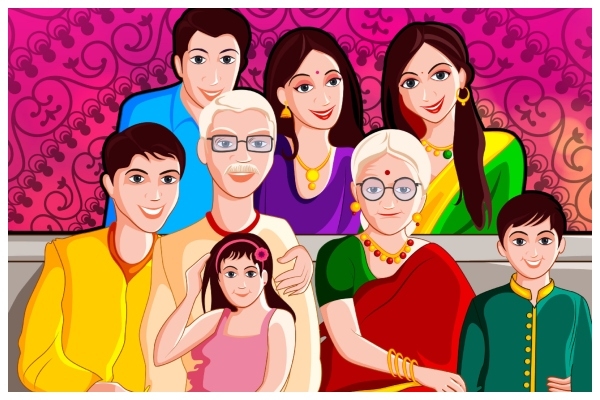
For centuries, the Indian family has been far more than a collection of individuals living under one roof. It has been the first school of values, the first court of justice, the first source of emotional security and the first lesson in responsibility. It is within the family that children learn the difference between right and wrong, sacrifice and selfishness, patience and impulse, duty and desire.
No Constitution can legislate affection. No court can manufacture compassion. No government scheme can create conscience. These qualities are cultivated quietly over years through conversations at the dinner table, respect for grandparents, the discipline of parents, shared festivals, collective responsibilities and everyday acts of love and sacrifice.
That is why the family remains India's greatest social institution.
The strength of Indian civilisation did not emerge merely from kingdoms, armies or economic prosperity. Empires rose and fell. Foreign invasions came and went. Political systems changed repeatedly. Yet India's civilisational continuity survived because the family preserved what no invading army could destroy our values, traditions, culture and sense of belonging.
The Indian family has always rested upon four enduring pillars: duty, affection, sacrifice and responsibility. Unlike extreme individualistic cultures that celebrate personal choice above every other consideration, the Indian worldview recognises that every individual is connected to a larger web of relationships. Freedom is important, but responsibility gives freedom its meaning.
This is precisely why India has historically remained a compassionate society despite enormous economic and social diversity. Today, however, the pressures are unmistakable.
The most prosperous societies in the world are themselves discovering this truth. Many face declining birth rates, loneliness, fractured families, mental health crises and increasing dependence on state institutions to perform functions once naturally carried out by families. Material abundance has not eliminated emotional emptiness. India should learn from their experience rather than imitate their mistakes.

Perhaps nowhere is this more visible than in the role played by Indian women. Across generations, mothers and grandmothers have quietly held families together, preserving traditions, transmitting values and providing emotional strength during times of crisis. Their contribution cannot be measured merely through economic statistics. They have sustained the very institution that sustains society itself.
Strong families do not guarantee that crime will disappear. Human beings possess free will, and every individual remains responsible for his or her own actions. But strong families greatly increase the likelihood that children grow into adults with empathy, self-restraint and respect for human life. They build character before society has to enforce discipline.
Every horrifying crime should therefore prompt not only demands for stricter punishment but also deeper introspection. CCTV cameras, forensic science and stronger policing are necessary. Yet no surveillance system can replace the moral vigilance exercised by loving parents. No criminal law can substitute for values instilled in childhood.
As India aspires to become a developed nation, public debate naturally revolves around expressways, artificial intelligence, manufacturing and economic growth. These are important. But no nation becomes truly developed if its social foundations begin to crack. Prosperity without values eventually produces wealth without happiness, freedom without responsibility and relationships without commitment. The future of India will ultimately be determined not merely by what happens in Parliament or corporate boardrooms, but by what happens every evening inside millions of Indian homes.
If we wish to build a safe, compassionate and confident India, we must strengthen the institution that has protected this civilisation for thousands of years. Respect for parents, care for elders, responsibility towards children, commitment in relationships and moral education at home must once again become national priorities. The Indian family is not an outdated tradition standing in the way of progress. It is the very foundation upon which genuine progress rests. When families remain strong, society remains humane. When families weaken, the consequences are measured not only in broken homes but also in broken lives. That is why protecting the Indian family is not simply about preserving a tradition. It is about preserving the soul of India.
The recent Pune case has shaken the country's conscience. A 20-year-old woman allegedly conspired with her lover to murder her own fiancé, a young man whose only "mistake" was that he stood in the way of another relationship. The sheer coldness of the alleged crime is difficult to comprehend. It was not committed in a moment of uncontrollable rage but, according to investigators, involved planning, deception and betrayal.
One incident cannot define an entire generation. Nor should every crime be blamed on changing social structures. Yet such incidents compel us to ask a difficult question. What is happening to our moral compass? Why are crimes becoming increasingly brutal, calculated and devoid of human empathy? Why are relationships, once considered sacred, becoming so fragile that they can end in unimaginable violence?
These questions take us beyond policing and criminal law. They take us to the institution that shapes human character long before schools, governments or workplaces do the family.
For centuries, the Indian family has been far more than a collection of individuals living under one roof. It has been the first school of values, the first court of justice, the first source of emotional security and the first lesson in responsibility. It is within the family that children learn the difference between right and wrong, sacrifice and selfishness, patience and impulse, duty and desire.
That is why the family remains India's greatest social institution.
The strength of Indian civilisation did not emerge merely from kingdoms, armies or economic prosperity. Empires rose and fell. Foreign invasions came and went. Political systems changed repeatedly. Yet India's civilisational continuity survived because the family preserved what no invading army could destroy our values, traditions, culture and sense of belonging.
The Indian family has always rested upon four enduring pillars: duty, affection, sacrifice and responsibility. Unlike extreme individualistic cultures that celebrate personal choice above every other consideration, the Indian worldview recognises that every individual is connected to a larger web of relationships. Freedom is important, but responsibility gives freedom its meaning.
This is precisely why India has historically remained a compassionate society despite enormous economic and social diversity. Today, however, the pressures are unmistakable.
Rapid urbanisation has separated generations. Digital technology has transformed human interaction. Consumerism increasingly defines success through possessions rather than relationships. Social media rewards instant gratification while patience and commitment receive little admiration. Many young people now spend more time learning from anonymous influencers than from parents or grandparents.
India cannot and should not reject modernity. Economic growth, technological progress and individual aspirations are essential for national development. But modernity must not come at the cost of morality.
The most prosperous societies in the world are themselves discovering this truth. Many face declining birth rates, loneliness, fractured families, mental health crises and increasing dependence on state institutions to perform functions once naturally carried out by families. Material abundance has not eliminated emotional emptiness. India should learn from their experience rather than imitate their mistakes.
Our family system has always performed extraordinary social functions without demanding recognition. It cares for children before governments intervene. It supports the elderly without treating them as burdens. It comforts people during illness without calculating financial returns. It provides emotional security that no institution can purchase.
Perhaps nowhere is this more visible than in the role played by Indian women. Across generations, mothers and grandmothers have quietly held families together, preserving traditions, transmitting values and providing emotional strength during times of crisis. Their contribution cannot be measured merely through economic statistics. They have sustained the very institution that sustains society itself.
ALSO READ: Reservation To Converted Muslims Is Unconstitutional, Says Madras HC
Every horrifying crime should therefore prompt not only demands for stricter punishment but also deeper introspection. CCTV cameras, forensic science and stronger policing are necessary. Yet no surveillance system can replace the moral vigilance exercised by loving parents. No criminal law can substitute for values instilled in childhood.
As India aspires to become a developed nation, public debate naturally revolves around expressways, artificial intelligence, manufacturing and economic growth. These are important. But no nation becomes truly developed if its social foundations begin to crack. Prosperity without values eventually produces wealth without happiness, freedom without responsibility and relationships without commitment. The future of India will ultimately be determined not merely by what happens in Parliament or corporate boardrooms, but by what happens every evening inside millions of Indian homes.
If we wish to build a safe, compassionate and confident India, we must strengthen the institution that has protected this civilisation for thousands of years. Respect for parents, care for elders, responsibility towards children, commitment in relationships and moral education at home must once again become national priorities. The Indian family is not an outdated tradition standing in the way of progress. It is the very foundation upon which genuine progress rests. When families remain strong, society remains humane. When families weaken, the consequences are measured not only in broken homes but also in broken lives. That is why protecting the Indian family is not simply about preserving a tradition. It is about preserving the soul of India.

Satyajit Shriram Joshi
Satyajit Shriram Joshi is Pune based senior journalist.