BIMARU and Beyond: What earned Uttar Pradesh that label, and what changed?
NewsBharati 27-Jun-2026 17:05:24 PM
Total Views |


Why was Uttar Pradesh called and included in the list of BIMARU states just a decade ago? Why land of Shree Ram, Shree Krishna, Saints, and Sages go into economic, social and political ignominy? Why Uttar Pradesh emerged as the top state in Bharat with the maximum number of additions to the equity investors' pool?
The Shlok from Hitopadesh
उद्यमेन हि सिध्यन्ति कार्याणि न मनोरथैः।
न हि सुप्तस्य सिंहस्य प्रविशन्ति मुखे मृगाः॥
Meaning – Success and Goals are achieved through perseverance and persistent effort, and not just by thinking and dreaming. A deer can’t enter the mouth of a sleeping lion on its own; success requires active pursuit rather than just a passive desire.
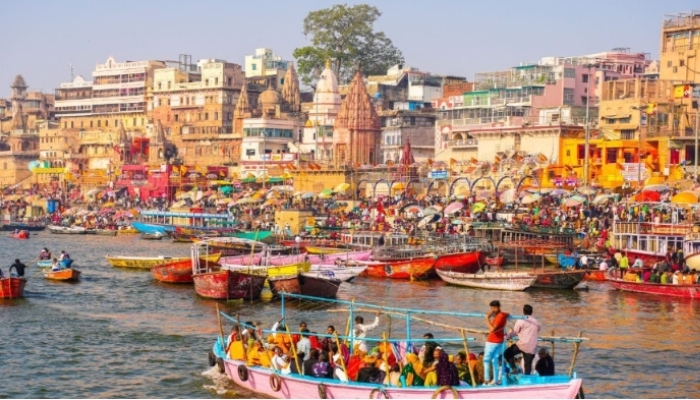
_202606271715102038_H@@IGHT_400_W@@IDTH_700.jpg "Uttar Pradesh")
The UP BIMARU Backdrop
Between 1996 and 2016, Uttar Pradesh showed a declining trajectory.
- 2nd Lowest Per Capita Income amongst all states- For FY 16 – 17, Uttar Pradesh’s Per capita income was the second lowest in the country, just above Bihar, with half of the national average per capita income, with a meagre Rs 54564/= per annum, when Bharat’s per capita income in FY 17 stood at Rs 103,219/=.
- 1/3rd Population in Deep Multidimensional Poverty - At the turn of the century, roughly one third of Uttar Pradesh’s population was deep in poverty, below the poverty line, with limited hope of a brighter future.
- High Logistics Cost to GSDP Ratio with 2/3rd Kuccha roads - In 2000, roughly 121,507 villages existed in Uttar Pradesh, with over 60 % – 65% having kachha earthen roads, which couldn’t be accessed or used during rains or any hostile season. Logistics cost as a percentage of State GDP was amongst the highest, standing at 13% to 14%, making it impossible for businesses to build, transport, and thrive.
- Rise in Crime, with low police density having poor morale to curb the nefarious activities of miscreants – Between 2010 and 2011, just in a year, UP experienced a double-digit jump in several major crime categories, murders increased by roughly 12.5%, rapes by 30.6%, and robberies by 22.2%. “Gundaraj” and “Bhahubali” words became the norm as the police struggled with basic facilities in terms of police station, arms, ammunition, and a place to stay.
- 65% of the sanctioned positions in the police were lying vacant and unfilled. Even if police nabbed a gangster, the phone would ring, and the same gangster would be released. The Police to population ratio was lowest amongst all states, just one ranked above Bihar in 2012, with 67 Police personnel for every one lakh of Population.
- High Debt with Slow Pace of State GDP growth– Uttar Pradesh’s state GDP between 2000 and about 2010 -12 grew meagerly at 5.3% - 6%, when the country was growing between 8% to 8.5%. The Debt to GSDP (Gross State Domestic Product) ratio in 2012 stood at whooping 46.9%.
Youth of Uttar Pradesh were always perseverant, with a single thought in mind, with a viewpoint that hard work and education were their passport to success, fame, and Prosperity. The land of Shree Ram, Shree Krishna, was always pious. Braj Bhoomi always brought pilgrims all across the globe to experience Krishnaprem, the holy Ganga, the holy Yamuna, and the holy Saraswati. It was always the reason to have a visit to Uttar Pradesh, yet it lacked, and it failed.
Some call it a design to fail the Spiritual Heart of Bharat, with Uttar Pradesh giving 9 Prime Ministers, yet it couldn’t excel. If Uttar Pradesh lags, Bharat lags. If Uttar Pradesh slips behind, Bharat slips backwards. If Uttar Pradesh slows down, Bharat limps. In 2017, the regime changed, with the establishment of Sushasan. The fight, which started on the Sadak for basic needs and necessities of Roti, Kapada, Makaan, eventually migrated to Sadak Bijli, Pani and eventually WIfi was about to get added and delivered to the remotest villages and households of UP.
The new regime went on to capture Sadan from the Sadak, but the fight was far from over.
The Sooyee Hui Sarkar to Satton din Wali Sarkar was established. Gundaraj Wali Sarkar was voted out, and Garibon ki, Gaonwalon ki Sarkar was voted in.
Planning, Project Management, and People – Were these things that were brought back to focus?
Every Project was planned, every minute detail of the Project was planned and then monitored to ensure it was completed in a time-bound manner. Law and order were re-established. Homes for police personnel, police stations, and modern amenities for police were put in place. The Police personnel strength was doubled to 134 Police personnel for every lack population in 2025, whilst it was 67 in 2012.
UP saw Seamless Execution from Policy to Projects - 3 B Methodology was pursued
1. Boost in Data Driven, specific, custom-made, need-oriented subsidy and facility to attract investments.
2. Bottleneck removal and weekly monitoring of every single Project through a dashboard, step-wise approach
3. Bringing in Integrated Land Banks.
The Centre and State working cohesively, the Double Engine Sarkar worked relentlessly, and the outcome was “Kaam Damdar”.
Infrastructure + Expressways + National Highways - Uttam Pradesh, Uttar Pradesh, built aggressively road and expressway infrastructure with the state today housing 42% of the Country’s total expressway network. Ganga Expressway, Agra- Lucknow Expressway, Purvanchal Expressway, Delhi – Meerut Expressway, Bundelkhand Expressway, etc., were built in the shortest span of time. Today, Uttar Pradesh boasts the second-largest network of National Highways after Maharashtra. The road and highways network, which was created between 1950 and 2016(66 years), additionally, 34% or one-third were added in just 9 years.
Aviation Hubs – Domestic + International – In 2013, there were only 2 fully commercial and operational airports with no international hubs. Today, Uttar Pradesh boasts the maximum number of Airports in the country, as compared to any other state, with 21 domestic and international gateways. In 2012-13, merely 2.6 million passengers used Air travel; that number in just 13 years has jumped to over 14 million passengers yearly, with a rise in prosperity as well as seeking convenience (over 5.3X in 13 years).
The Noida International Airport (NIA) – Jewel in the Crown- in Jewar, Uttar Pradesh, was recently inaugurated a few months back, and is envisaged to be one of the top 5 airports in the World with an area sprawling over 53 square kilometres. The first phase of this airport has a capacity to handle 12 million passengers annually.
Modern Manufacturing Hub + Defence Hub + Textile & Apparel - Uttar Pradesh is not being opportunistic in seeking business; it is partnering for mutual growth with entrepreneurs emerging as Bharat’s premier manufacturing and electronics powerhouses. UP now contributes ~ 65% of Bharat’s mobile phone production and has created over 96 lakh Micro, Small, and Medium Enterprises.
Uttar Pradesh is Bharat’s 3rd largest fabric manufacturer, producing roughly 13% of the country's total, and One District One Product is providing further government support and push to this number, aspiring to lead the table in fabric manufacturer of the year.
Recession-Proof Spiritual Tourism – The Trinity of Prayagraj, Kashi, and Ayodhya ji has enthralled visitors and knowledge seekers globally. In 2016, when UP saw ~21.5 Cr inflow of Visitors, this number simply jumped to over 7 X with 156 Crore tourists in 2025. Interestingly, this tourism is recession-proof as it is independent of leisure tourism, which swings on the ups and downs of the economy, but is purely driven by faith, belief, and shraddha.
Fast Economic Growth, Reduced Debt, One Trillion USD Economy – In the last 9 years, Uttar Pradesh GSDP compounded ~11% outpacing Bharat’s overall growth. Once a BIMARU state has become the Engine for growth for Bharat, pulling Bharat’s GDP upward and forward. Once at the bottom of the state economic league table, it is now amongst the top three state economies in the country, doubling its State GDP in the last 9 years and poised to achieve the 1 trillion USD mark in the next half a decade or less. The State Debt to GDP ratio reduced to a miniscule 23%.
1. Politics and Policy continuity and Stability
2. Protection from Macchar & Mafia (safeguarding health & Prosperity)
3. Plug & Play World-class, robust Infrastructure
The Next Ground of Growth – D Cube Approach
1. Data Centres and AI Infrastructure – Specialised and focused – UP has water, transportation, energy, people, and resources with raw earth. Can this be the one trillion USD shot in the arm for UP’s economy?
2. Defence manufacturing beyond part supplier to complete manufacturer – Can UP be the place where the next set of Small Modular reactors (nuclear energy) producing controlled nuclear energy be manufactured? Can the defence hub of UP produce the most advanced fighter planes, sea-borne drones, and next-gen intercontinental ballistic missiles?
3. Digital Governance & Digital Education – Harnessing the power of Digital Education, converting the Demographic Opportunity with young minds and talent into a Demographic Dividend.
Siddhartha Rastogi says, This is possible if Sushasan, with an able and level-headed head of state, continues, and Sanskriti, with the Silent hand of Shree Ram and Shree Krishna, carries on to thrive. If this continues in the years to come, Uttam Uttar Pradesh will be anointed as Samruddha Uttam Uttar Pradesh.
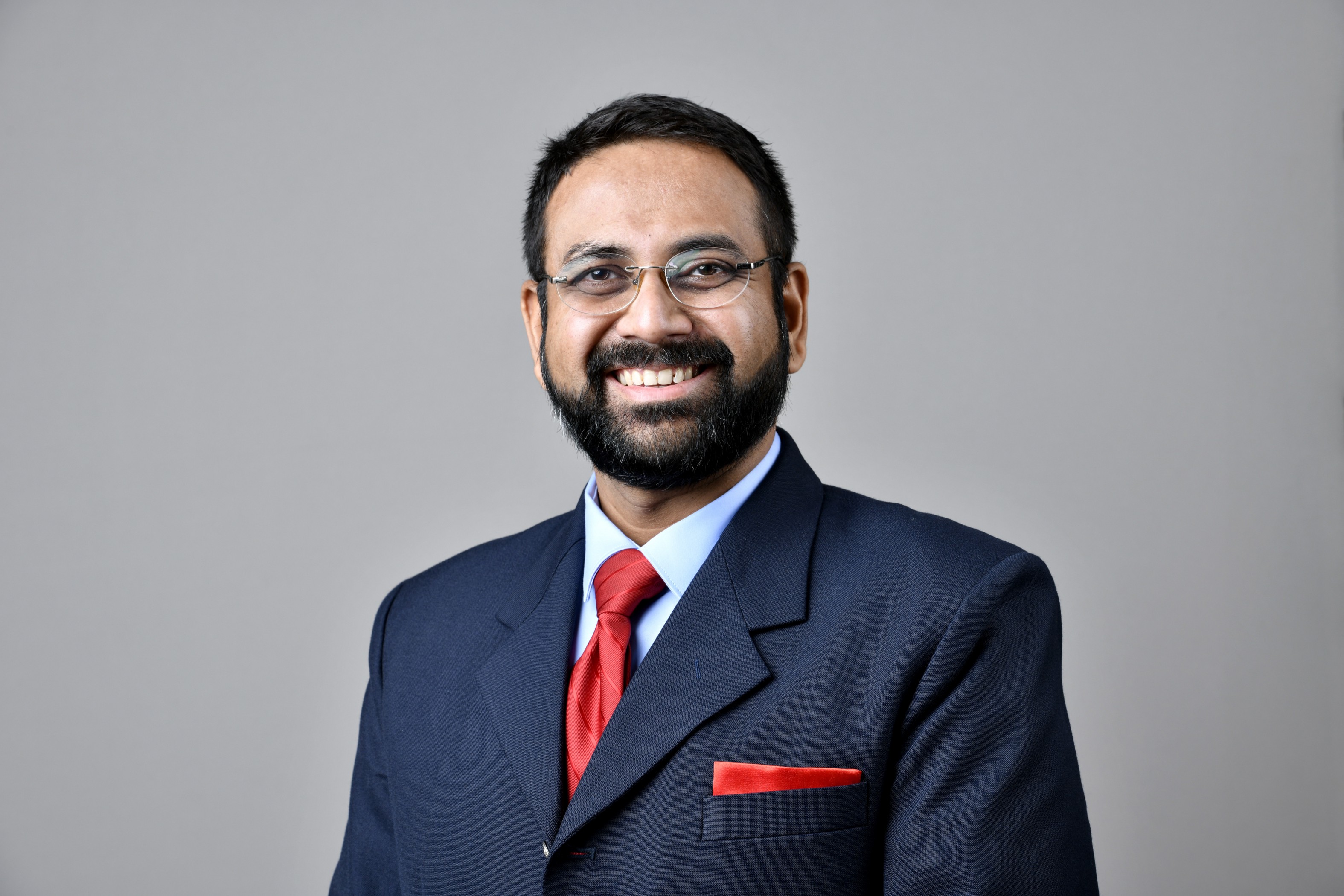
Siddhartha Rastogi
Siddhartha Rastogi is Managing Director & Chief Operating Officer of a Leading Full Service Investment Bank. Views and opinions expressed in this article are those of the authors and do not necessarily reflect the official view or position of any company or sister concerns or group company where the author is presently employed.