Sonia's Selective Tears
A nation of 1.4 billion cannot build its moral compass on selective empathy. It must stand with every innocent victim, irrespective of religion, geography or political convenience.
NewsBharati 29-Jun-2026 15:04:52 PM
Total Views |


Sonia Gandhi's article on Gaza is presented as a humanitarian appeal. It accuses the Modi government of abandoning India's moral voice and remaining silent in the face of civilian suffering. Read between the lines, however, and it is not merely an article on foreign policy. It is an attempt by the Congress to reclaim the moral pedestal it lost long ago.
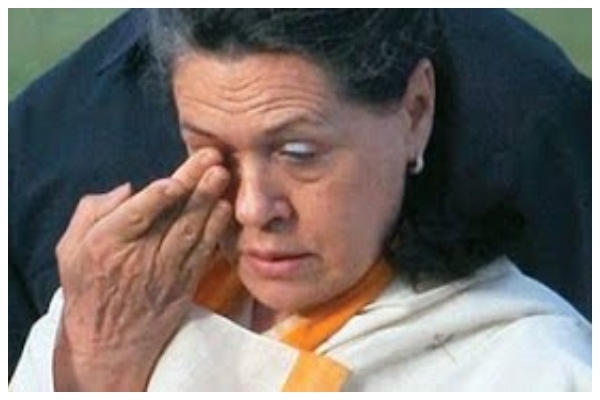
A political party that remained conspicuously muted during the exodus of nearly the entire Kashmiri Pandit community now seeks to lecture the nation on humanitarian values. One of independent India's greatest civilizational tragedies unfolded in Kashmir. Islamist terrorists drove an Hindu community from its homeland through murder, intimidation and fear. Families became refugees within their own country. Temples were desecrated. An entire cultural landscape was emptied. Where was Sonia Gandhi's moral outrage then? Where were the emotionally charged articles demanding justice for the victims? More importantly, where was the sustained political campaign by Congress to ensure the dignified return of the Pandits? The silence was deafening.
The Congress leadership opposed or delayed difficult conversations on reform within Muslim personal law while simultaneously portraying every debate involving Hindu traditions as progressive reform. Equality before law became negotiable whenever electoral considerations intervened. Even on the issue of illegal immigration, Congress consistently adopted positions that critics argued prioritised electoral calculations over national security and demographic concerns. Opposition to measures relating to citizenship and border management often appeared driven less by constitutional principle than by the fear of losing a particular political constituency. Foreign policy, too, cannot escape this domestic political lens.
Sonia Gandhi criticises India for maintaining strong ties with Israel while expressing concern for Palestinian civilians. But she carefully avoids acknowledging that Israel has stood firmly with India during moments of national crisis, supplied critical defence technologies, strengthened intelligence cooperation and supported India's fight against cross-border terrorism. Should India simply ignore these realities to satisfy ideological nostalgia?
Even more revealing is Congress's selective vocabulary on terrorism.
For years, the party hesitated to confront the ideological roots of Islamist extremism with the clarity it reserved for other forms of extremism. After major terrorist attacks, political correctness often overshadowed honest national introspection. The result was confusion instead of clarity. Contrast this with the urgency Congress displays whenever Muslims become victims anywhere in the world. Suddenly, humanitarian language flows effortlessly. This inconsistency has become impossible to ignore.
Where were these passionate defenders of humanity during the ethnic cleansing of Kashmiri Hindus? Where was this moral urgency when Hindu pilgrims were repeatedly targeted by terrorists? Where was this sustained campaign when minorities in Pakistan were subjected to forced conversions and attacks on temples? Where were the repeated opinion pieces when Bangladeshi Hindus lived under fear following waves of communal violence? Apparently, not every victim qualifies for Congress's compassion.
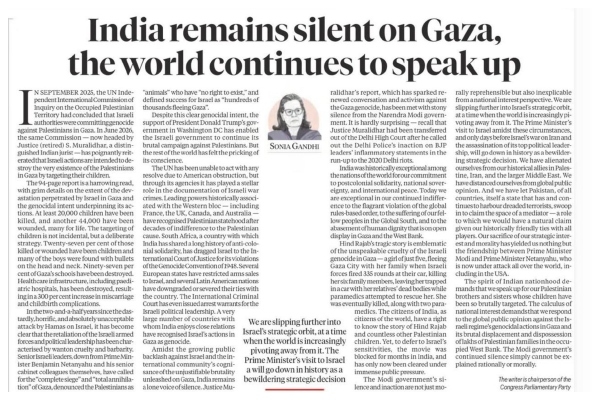
The world certainly deserves humanitarian voices. India should never hesitate to call for peace, civilian protection and negotiated solutions. It has consistently supported humanitarian aid and a two-state solution while safeguarding its strategic interests. But India does not need lectures on morality from a party whose own record is marked by selective empathy.
Before Sonia Gandhi asks India to rediscover its conscience, Congress must first rediscover its own.
It must explain why Kashmiri Pandits rarely found space in its humanitarian discourse. It must explain why persecuted Hindus in India's neighbourhood seldom evoke the same emotional response. It must explain why victims of Islamist terror are often discussed with hesitation while other tragedies receive immediate political mobilisation.
A nation of 1.4 billion cannot build its moral compass on selective empathy. It must stand with every innocent victim, irrespective of religion, geography or political convenience. That is genuine humanitarianism. Everything else is merely politics masquerading as principle.
Ultimately, Sonia Gandhi's intervention appears less like an expression of universal humanitarianism than a continuation of Congress's long-standing domestic political strategy. When compassion is consistently vocal for causes that resonate with a key electoral constituency but subdued when Hindus face persecution in Kashmir, Bangladesh or Pakistan, questions about political motivation inevitably arise. A moral voice speaks for every innocent life with equal conviction. A political voice chooses its causes selectively. That distinction explains why Congress's concern for Gaza invites scepticism rather than admirati
The problem is not that Sonia Gandhi speaks for the victims of Gaza. The problem is that the Congress leadership has never displayed the same consistency when the victims happened to be Hindus or when acknowledging their suffering offered no electoral advantage. That is why the article rings hollow.
A political party that remained conspicuously muted during the exodus of nearly the entire Kashmiri Pandit community now seeks to lecture the nation on humanitarian values. One of independent India's greatest civilizational tragedies unfolded in Kashmir. Islamist terrorists drove an Hindu community from its homeland through murder, intimidation and fear. Families became refugees within their own country. Temples were desecrated. An entire cultural landscape was emptied. Where was Sonia Gandhi's moral outrage then? Where were the emotionally charged articles demanding justice for the victims? More importantly, where was the sustained political campaign by Congress to ensure the dignified return of the Pandits? The silence was deafening.
The same pattern is visible across India's neighbourhood. Whenever Hindus face persecution in Bangladesh, Pakistan or, more recently, in the aftermath of political turmoil in Bangladesh, Congress treats these episodes as defining humanitarian crises. Temples are vandalised. Minority families face intimidation. Women report atrocities. Thousands flee violence. But the Congress leadership seldom devotes newspaper columns demanding that India redefine its diplomacy around these victims. Why this difference?
ALSO READ: Maharashtra: Bhimrao Kamble, who raped and murdered 3-year-old in Pune's Nasrapur, to be ‘hanged till death’
If human suffering is universal, why does Congress reserve its loudest voice for some victims while whispering for others? The answer lies not in humanitarianism but in politics. For decades, Congress perfected the art of selective secularism. It confused secularism with minority appeasement and gradually transformed national politics into a competition for vote banks.
The Shah Bano case remains perhaps the clearest illustration. Instead of standing firmly behind the constitutional rights of a divorced Muslim woman, the Rajiv Gandhi government overturned a Supreme Court judgment under pressure from conservative clerics. It was not social justice that prevailed. It was electoral arithmetic. The pattern repeated itself.
The Congress leadership opposed or delayed difficult conversations on reform within Muslim personal law while simultaneously portraying every debate involving Hindu traditions as progressive reform. Equality before law became negotiable whenever electoral considerations intervened. Even on the issue of illegal immigration, Congress consistently adopted positions that critics argued prioritised electoral calculations over national security and demographic concerns. Opposition to measures relating to citizenship and border management often appeared driven less by constitutional principle than by the fear of losing a particular political constituency. Foreign policy, too, cannot escape this domestic political lens.
Sonia Gandhi criticises India for maintaining strong ties with Israel while expressing concern for Palestinian civilians. But she carefully avoids acknowledging that Israel has stood firmly with India during moments of national crisis, supplied critical defence technologies, strengthened intelligence cooperation and supported India's fight against cross-border terrorism. Should India simply ignore these realities to satisfy ideological nostalgia?
Nations are not governed through newspaper editorials. They are governed through strategic interests.
India today speaks to Israel, the Gulf countries, Iran, Europe, the United States and Russia with equal confidence because its foreign policy is rooted in national interest rather than inherited ideological postures. Strategic autonomy does not require public grandstanding every time a global conflict erupts.Even more revealing is Congress's selective vocabulary on terrorism.
For years, the party hesitated to confront the ideological roots of Islamist extremism with the clarity it reserved for other forms of extremism. After major terrorist attacks, political correctness often overshadowed honest national introspection. The result was confusion instead of clarity. Contrast this with the urgency Congress displays whenever Muslims become victims anywhere in the world. Suddenly, humanitarian language flows effortlessly. This inconsistency has become impossible to ignore.
Where were these passionate defenders of humanity during the ethnic cleansing of Kashmiri Hindus? Where was this moral urgency when Hindu pilgrims were repeatedly targeted by terrorists? Where was this sustained campaign when minorities in Pakistan were subjected to forced conversions and attacks on temples? Where were the repeated opinion pieces when Bangladeshi Hindus lived under fear following waves of communal violence? Apparently, not every victim qualifies for Congress's compassion.
One need not support every action of Israel to recognise this double standard. But criticism acquires moral legitimacy only when it is consistent. A conscience that awakens only when politically convenient is not a conscience. It is a campaign strategy. Congress has spent decades dividing Indian society into electoral constituencies instead of equal citizens. Every issue was viewed through the prism of vote-bank politics. Every tragedy was measured against its political utility. That politics has steadily lost credibility because Indians increasingly recognise selective outrage when they see it.
The world certainly deserves humanitarian voices. India should never hesitate to call for peace, civilian protection and negotiated solutions. It has consistently supported humanitarian aid and a two-state solution while safeguarding its strategic interests. But India does not need lectures on morality from a party whose own record is marked by selective empathy.
Before Sonia Gandhi asks India to rediscover its conscience, Congress must first rediscover its own.
It must explain why Kashmiri Pandits rarely found space in its humanitarian discourse. It must explain why persecuted Hindus in India's neighbourhood seldom evoke the same emotional response. It must explain why victims of Islamist terror are often discussed with hesitation while other tragedies receive immediate political mobilisation.
ALSO READ: Bengal assembly set for UCC showdown as split TMC faces first major political test
The credibility of any moral argument depends not on eloquence but on consistency. The Indian voter has become wiser than Congress assumes. He can distinguish genuine compassion from political choreography. He can recognise when humanitarian language becomes a vehicle for domestic electoral messaging. Sonia Gandhi's article therefore tells us less about Gaza than about the Congress party itself. It reveals a political tradition that has long practised selective outrage, selective secularism and selective compassion. India deserves something better.
A nation of 1.4 billion cannot build its moral compass on selective empathy. It must stand with every innocent victim, irrespective of religion, geography or political convenience. That is genuine humanitarianism. Everything else is merely politics masquerading as principle.
Ultimately, Sonia Gandhi's intervention appears less like an expression of universal humanitarianism than a continuation of Congress's long-standing domestic political strategy. When compassion is consistently vocal for causes that resonate with a key electoral constituency but subdued when Hindus face persecution in Kashmir, Bangladesh or Pakistan, questions about political motivation inevitably arise. A moral voice speaks for every innocent life with equal conviction. A political voice chooses its causes selectively. That distinction explains why Congress's concern for Gaza invites scepticism rather than admirati

Editor's Desk
Editor's Desk