The collapse of QUITE in the age of reels
NewsBharati 30-Jun-2026 13:40:20 PM
Total Views |


A new kind of noise has entered Indian public life. It does not come from traffic, construction, loudspeakers, or machinery. It comes from the palm of a hand. Someone sits in a train, aircraft, hospital waiting area, restaurant, lift or queue. The phone comes out. A reel begins. Then another. Then a news clip. Then a WhatsApp forward. Then a devotional video. Then a child’s cartoon.
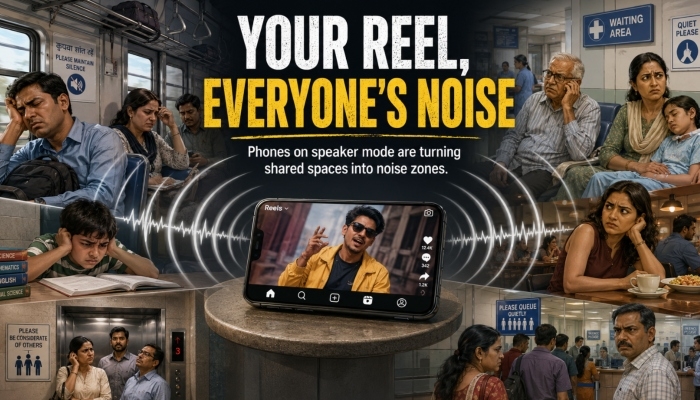
Reels are designed to grab attention in seconds. News clips arrive with urgency and drama. Children’s videos are loud and repetitive. Devotional content may be meaningful to one person, but intrusive to another. Comedy clips, speeches, songs, and forwards do the same thing when played aloud.
In a hospital, this is especially insensitive. Patients are anxious, tired, or in pain. Caregivers are already stretched. Families are waiting for reports and answers. A loud reel in such a space is not casual entertainment. It is a failure of empathy. In public transport, people cannot escape. In restaurants, people pay for the atmosphere too. In lifts and lobbies, sound travels. One loud video can disturb senior citizens, children studying, patients resting, or people working from home.
We often speak of noise pollution in India as if it comes only from outside: honking, drilling, festivals, traffic, rallies, construction sites. But now each of us may be carrying a source of noise in our own hands. That is why this epidemic is difficult to confront. It does not look like a public nuisance. It looks like normal phone use. But normal phone use becomes a public nuisance when the speaker is on.
The troubling part is how quickly this has become acceptable. People no longer feel embarrassed to play loud videos around strangers. Many do not even look up to see whether they are disturbing anyone. Some behave as though a train compartment, clinic, or restaurant is an extension of their living room.
_202606301345401176_H@@IGHT_400_W@@IDTH_700.jpg "Reel")
Our phone may be entertaining us. It may be exhausting for someone else. The solution is simple. In public spaces, watch silently or use earphones. That is all. No invention, sacrifice, or great policy reform is needed before we begin. We only need to restore one basic boundary: private consumption must not become a public disturbance. Before playing any video in speaker mode in public, ask one question: Have I obtained permission from everyone who can hear this?
If the answer is no, the sound should stay off.
The next time your thumb moves towards a video in a public place, pause. Look around. That train compartment, hospital waiting area, restaurant, lift, or queue is not an audience. It is a shared space filled with people carrying their own fatigue, pain, thoughts, prayers, deadlines, and worries.
Your reel may be funny. Your news clip may feel urgent. Your devotional song may be meaningful. Your child’s cartoon may be convenient. But other people did not choose it. A phone on speaker mode may look like a small act. It is not. It is a daily test of whether we still understand public decency. Because a nation is not shaped only by big policies, tall buildings, highways, and digital revolutions. It is shaped by what citizens do when nobody is forcing them to behave well.
So let us begin with something simple.
In public, let the phone be smart.
And the citizen is smarter.
The sound is in speaker mode. Nobody nearby has asked to listen. Yet everyone is forced to. This is no longer a small irritation. It is becoming a public noise epidemic. Mobile phones have turned into pocket loudspeakers. Shared spaces are being converted into unwilling audiences. Watching videos in speaker mode in public is not harmless entertainment. It is not private once the sound leaves the phone. The screen may be private. The sound is not. One person watches. Ten people hear.
Reels are designed to grab attention in seconds. News clips arrive with urgency and drama. Children’s videos are loud and repetitive. Devotional content may be meaningful to one person, but intrusive to another. Comedy clips, speeches, songs, and forwards do the same thing when played aloud.
They enter other people’s minds without permission. A stranger’s algorithm becomes everyone’s environment. The person watching may think, “I am only using my phone.” But people around them experience something very different. Their quiet is broken. Their attention is hijacked. Their nerves are disturbed. Their conversation is interrupted. Their waiting becomes harder.
In a hospital, this is especially insensitive. Patients are anxious, tired, or in pain. Caregivers are already stretched. Families are waiting for reports and answers. A loud reel in such a space is not casual entertainment. It is a failure of empathy. In public transport, people cannot escape. In restaurants, people pay for the atmosphere too. In lifts and lobbies, sound travels. One loud video can disturb senior citizens, children studying, patients resting, or people working from home.
We often speak of noise pollution in India as if it comes only from outside: honking, drilling, festivals, traffic, rallies, construction sites. But now each of us may be carrying a source of noise in our own hands. That is why this epidemic is difficult to confront. It does not look like a public nuisance. It looks like normal phone use. But normal phone use becomes a public nuisance when the speaker is on.
The troubling part is how quickly this has become acceptable. People no longer feel embarrassed to play loud videos around strangers. Many do not even look up to see whether they are disturbing anyone. Some behave as though a train compartment, clinic, or restaurant is an extension of their living room.
It is not. Shared space requires shared discipline. The air between people belongs to everyone present. When we fill that air with our private audio, we occupy more than our seat. We occupy other people’s peace. This is not only about noise. It is about civic sense. The person near us may have a headache, be grieving, be unwell, be caring for someone in pain, be a senior citizen struggling with sensory overload, be a child trying to study, or be a worker silently enduring this noise all day.
Our phone may be entertaining us. It may be exhausting for someone else. The solution is simple. In public spaces, watch silently or use earphones. That is all. No invention, sacrifice, or great policy reform is needed before we begin. We only need to restore one basic boundary: private consumption must not become a public disturbance. Before playing any video in speaker mode in public, ask one question: Have I obtained permission from everyone who can hear this?
If the answer is no, the sound should stay off.
Institutions should put up clear messages: “Use earphones or keep your phone silent.” “Your screen is private. This space is public.” “Reels can wait. Peace cannot.” Parents and schools should teach children that digital manners are part of citizenship. India already has enough noise: traffic, honking, construction, loud events, crowded transport, dense housing, and constant notifications. The least we can do is not add avoidable noise from our own phones.
The next time your thumb moves towards a video in a public place, pause. Look around. That train compartment, hospital waiting area, restaurant, lift, or queue is not an audience. It is a shared space filled with people carrying their own fatigue, pain, thoughts, prayers, deadlines, and worries.
Your reel may be funny. Your news clip may feel urgent. Your devotional song may be meaningful. Your child’s cartoon may be convenient. But other people did not choose it. A phone on speaker mode may look like a small act. It is not. It is a daily test of whether we still understand public decency. Because a nation is not shaped only by big policies, tall buildings, highways, and digital revolutions. It is shaped by what citizens do when nobody is forcing them to behave well.
So let us begin with something simple.
In public, let the phone be smart.
And the citizen is smarter.
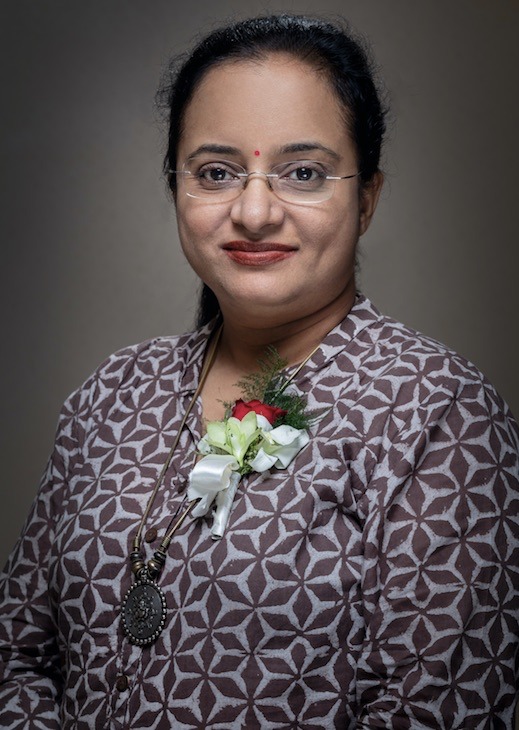
Savitha Rao
Savitha Rao is the Founder of the India Positive Citizen initiative (www.indiapositivecitizen.com) and is focused on sustainability and social work. The vision of her initiative is to inspire every Indian to contribute towards nation building with one action, once a week, every week. She speaks of building a great nation India with one positive action at a time.
She has authored the books a) India Positive Citizen b) 500+ Ways to be an India Positive Citizen c) Putting India First: India Positive Citizen Perspectives
Through her non-profit foundation, Positive Citizen Foundation she leads on-ground initiatives to enable a kinder, joyous and more sustainable world. Prime Minister Modi too has appreciated the concept of her work and the book.
Click Here To Buy Her Books on Amazon
She has authored the books a) India Positive Citizen b) 500+ Ways to be an India Positive Citizen c) Putting India First: India Positive Citizen Perspectives
Through her non-profit foundation, Positive Citizen Foundation she leads on-ground initiatives to enable a kinder, joyous and more sustainable world. Prime Minister Modi too has appreciated the concept of her work and the book.
Click Here To Buy Her Books on Amazon