Congress's Convenience On SIR
The Congress cannot claim constitutional morality only when it suits its electoral strategy.
NewsBharati 01-Jul-2026 13:25:15 PM
Total Views |


The Congress today faces two battles at once. One is against the BJP in the political arena. The other is within its own ranks, where competing voices increasingly expose the absence of a coherent national position. The debate surrounding the Special Intensive Revision (SIR) of electoral rolls has brought these contradictions into sharp focus.
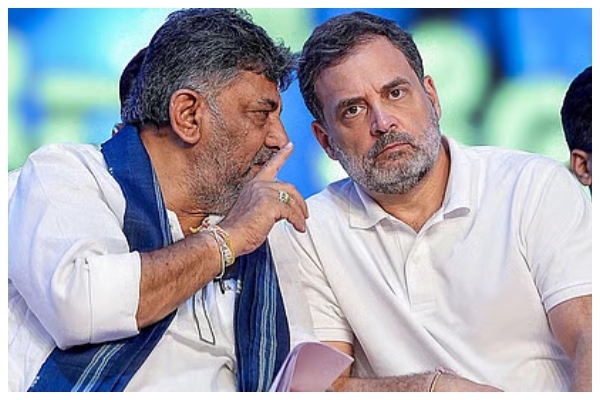
On one hand, senior Congress leaders have joined the Opposition's campaign against the Election Commission, alleging that the SIR exercise is designed to disenfranchise voters. On the other, Congress leaders in states where the political realities differ have adopted a far more nuanced position. This divergence is not accidental. It reflects a party struggling to balance regional compulsions with national politics.
The contradiction became even more visible on Tuesday. Even as differences within the Congress surfaced publicly, as many as 23 Opposition parties came together to send a joint letter to the Chief Justice of India seeking judicial intervention against the Special Intensive Revision. The Opposition attempted to project unity before the judiciary. But beneath this carefully crafted show of solidarity lie serious political inconsistencies that cannot be ignored.
The most striking example comes from Kerala. The Special Intensive Revision was conducted in Kerala when the Communist Party-led Left Democratic Front was in power. At that time, Congress never claimed that the exercise was unconstitutional, anti-democratic or an assault on voting rights. There were no nationwide protests. There were no dramatic appeals warning of the death of democracy. There was no attempt to portray the Election Commission as a partisan institution. Why?
The answer appears to lie not in constitutional principles but in political convenience. The revised electoral rolls ultimately benefited the democratic process under a government that Congress was hoping to replace electorally. Since Congress later came to power in Kerala, the very exercise it now condemns elsewhere did not become an issue worth protesting. The principle changed because the political circumstances changed.
ALSO READ: “Physical Relation in Live In Relationship Presumes To Be Consensual”: Chhattisgarh HC
This selective outrage has become a familiar feature of Congress politics. Whenever questions relating to citizenship, voter identity or electoral verification arise, the Congress reacts with extraordinary sensitivity. Whether it was the Citizenship Amendment Act, the National Register of Citizens or now the Special Intensive Revision, the party's instinct has been to oppose first and justify later. The common thread running through these campaigns is not constitutional consistency but electoral arithmetic.
Congress knows that appeasement politics remains central to several of its electoral calculations. Any measure that seeks stricter documentation, verification or scrutiny of citizenship and voting eligibility is immediately portrayed as an attack on vulnerable communities. The objective is political mobilisation rather than an objective debate on electoral integrity.
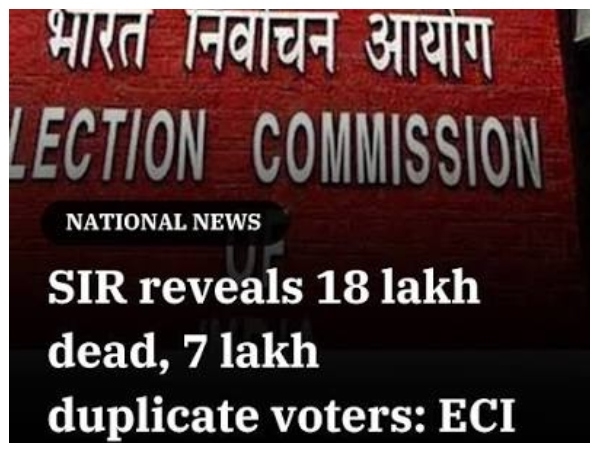
Ironically, every democracy periodically updates its electoral rolls. The Election Commission is under a constitutional obligation to ensure that deceased voters, duplicate entries and ineligible names are removed while genuine citizens remain protected. A clean electoral roll strengthens democracy rather than weakens it. If implementation raises legitimate concerns, those concerns deserve legal scrutiny and administrative correction. But portraying every verification exercise as an assault on democracy erodes public confidence in institutions without sufficient evidence.
The Congress's internal divisions further weaken its credibility. State leaders who understand local realities often avoid the absolutist language employed by the central leadership. Leaders governing or aspiring to govern different states frequently find themselves defending positions that contradict the party's national narrative. Telangana has already demonstrated how regional Congress leaders sometimes acknowledge practical administrative realities while the central leadership continues with confrontational rhetoric.
This widening gap between the national leadership and state units reflects a deeper organisational crisis. Congress increasingly appears to formulate positions not on enduring constitutional principles but on immediate political calculations. What is acceptable in one state suddenly becomes unacceptable in another. What is democratic under one government becomes authoritarian under another.
Such inconsistency inevitably raises uncomfortable questions. Is the Congress truly defending democratic institutions, or is it defending electoral interests? Is the concern about protecting voting rights, or about preserving traditional vote banks that may be affected by stricter verification processes?
ALSO READ: Nasrapur: A Blueprint For Judicial Reform
Democracy certainly demands vigilance against arbitrary state action. Electoral exercises must remain transparent, fair and accountable. Citizens have every right to question the Election Commission where genuine procedural lapses occur. But democracy also demands intellectual honesty. The same standards must apply irrespective of which party governs a state or who stands to gain politically.
The Congress cannot claim constitutional morality only when it suits its electoral strategy. If the Special Intensive Revision was acceptable in Kerala under a Left government, the party owes the country an explanation as to why a similar exercise elsewhere has suddenly become a constitutional crisis. Unless it can answer that question convincingly, its campaign risks appearing less like a defence of democracy and more like another chapter in the politics of selective outrage.
A party aspiring to govern India cannot afford different constitutional principles for different states. Democracy demands consistency. Voters notice inconsistency. And increasingly, they are judging political parties not merely by what they say, but by whether they say the same thing everywhere.

Editor's Desk
Editor's Desk