How a 'strong-toned preacher' became a political pawn: Bhindranwale's early years
NewsBharati 10-Jul-2026 17:35:57 PM
Total Views |


Contribution to the Ghadar party was still a matter of fond memories by 1970. The author, G B S Sidhu, in his book, 'The Khalistan Conspiracy', mentions that some intellectuals came openly in support of Khalistan after the 1984 Blue Star operation and its aftermath. It had no public support in Canada in 1970. He remembers in March 1979, when he was delivering a speech in Toronto, Canada, the speech was disturbed by Kuldip Singh Sodhi, a khalistani propagator.
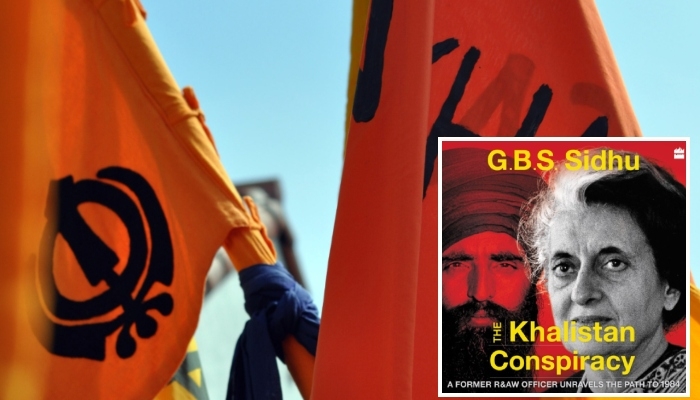
Till the end of his stay in Canada sikhs showed no interest in Khalistan. In mid-1981, when Sidhu was asked to brief senior officers, he was told that things had changed considerably.
Bhindranwale was a preacher and was against adopting Hindu practices like idol worship or pilgrimage, and many others that symbolised Hindu culture. The author states that either Sanjay Gandhi or Zail Singh was not at all concerned with the religious side of personality. He was supposed to take up political causes to appeal sikh masses and put the moderate Akali Dal leadership in an awkward position.
Soon came the opportunity, the Akali government allowed Nirankaris to organise a convention in Amritsar. Bhindranwale objected to it (Sikhs treat Nirankaris as nonconformists ) and strongly urged sikhs to disrupt the convention. In the battle between the two communities, 13 Sikhs and 13 Nirankaris lost their life.
The things on the ground didn't change much till the end of 1979. B G Deshmukh ( additional secretary of home affairs then ) traveled by road to Amritsar, talked to Shiromani Gurudwara Prabandhak Committee (SGPC) officials, and visited the Harmandir Saheb. Their main concern was about the spoiled youth and their attitude, but they found no signs of militancy. He even visited the rural area and talked to many, even though they showed no interest in the militant approach of Bhindranwale. The situation was normal.
The impression of the internal security section was slightly different, and concern about the activities of Congress after losing power was sensed. The reading was that the party was creating a monster out of Bhindranwale.
The author had the impression that political opportunism and short-term electoral interest were preferred over the national interest.
Punjab had many freedom fighters; it has a significant role in the food security of our country, and has given some of the best soldiers and sportspeople to the country. It was used as a pawn in the cold-blooded political calculations.
In the 1980 elections, Bhindranwale actively campaigned for some Congress candidates and became a well-known personality. Mrs Gandhi probably never met him alone, but there were allegations, as he enjoyed the support of the party. He was probably ready for a significant role.
More about his rise in the next part.
(This is the second part of a series of 8 articles based on the book The Khalistan Conspiracy, written by author GB Sidhu. To read the previous part, click here)
The author was trying to present his theme of preparing the next generation of the Indian diaspora, specially sikhs, to be responsible Canadian citizens, but Sodhi wanted to talk about the concept of Khalistan and disturb. He was forcibly escorted out of the audience by young sikhs.
Till the end of his stay in Canada sikhs showed no interest in Khalistan. In mid-1981, when Sidhu was asked to brief senior officers, he was told that things had changed considerably.
From 1960, he writes, Congress was interfering in Akal Dal affairs. Playing two personalities against each other was always done to retain the influence of the party. Zail Singh was in search of a religious leader to push the cause of Khalistan. One of the persons he selected was Bhindranwale. He was to become the head of Damdami Taksal Gurudwara Darshan Prakash at Chowk Mehta near Amritsar, then. Taksal in Punjabi is an educational institute.
It was founded by Guru Gobind Singh. The book written by Kuldip Nayyar stated that Kamal Nath described him as a person ' strong in tone,' which seemed to fit the bill. Thought he would be given money off and on, but we never thought that he would turn into a Terrorist. ' It was like creating a monster. Of course, Zail Singh denied any contact with him after he became the president of the country.
Bhindranwale was a preacher and was against adopting Hindu practices like idol worship or pilgrimage, and many others that symbolised Hindu culture. The author states that either Sanjay Gandhi or Zail Singh was not at all concerned with the religious side of personality. He was supposed to take up political causes to appeal sikh masses and put the moderate Akali Dal leadership in an awkward position.
Soon came the opportunity, the Akali government allowed Nirankaris to organise a convention in Amritsar. Bhindranwale objected to it (Sikhs treat Nirankaris as nonconformists ) and strongly urged sikhs to disrupt the convention. In the battle between the two communities, 13 Sikhs and 13 Nirankaris lost their life.
1 Akbar Road ( PM'S office, then used by Indira ji ) could get a point to encourage Bhindranwale to fight. Congress party supported him and his position on the anti-Nirankari agitation. His not making Khalistan a core demand was the strategy then; later, floating a new organisation to openly demand Khalistan and support Bhindranwale was a part of the same strategy. In April 1978, Dal Khalsa ( the army of the pure ) was created in a way to keep the distinct and independent identity of the Sikh Panth. (led by Bhindranwale ) Sikh independent state was the objective. It had the patronage of Zail Singh, who was a union minister in 1980 and became the president in 1982.
The things on the ground didn't change much till the end of 1979. B G Deshmukh ( additional secretary of home affairs then ) traveled by road to Amritsar, talked to Shiromani Gurudwara Prabandhak Committee (SGPC) officials, and visited the Harmandir Saheb. Their main concern was about the spoiled youth and their attitude, but they found no signs of militancy. He even visited the rural area and talked to many, even though they showed no interest in the militant approach of Bhindranwale. The situation was normal.
The impression of the internal security section was slightly different, and concern about the activities of Congress after losing power was sensed. The reading was that the party was creating a monster out of Bhindranwale.
The author had the impression that political opportunism and short-term electoral interest were preferred over the national interest.
Punjab had many freedom fighters; it has a significant role in the food security of our country, and has given some of the best soldiers and sportspeople to the country. It was used as a pawn in the cold-blooded political calculations.
In the 1980 elections, Bhindranwale actively campaigned for some Congress candidates and became a well-known personality. Mrs Gandhi probably never met him alone, but there were allegations, as he enjoyed the support of the party. He was probably ready for a significant role.
More about his rise in the next part.
(This is the second part of a series of 8 articles based on the book The Khalistan Conspiracy, written by author GB Sidhu. To read the previous part, click here)
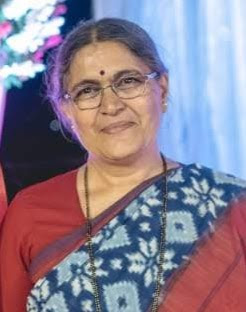
Prof. Vidya Deshpande
Professor Vidya Deshpande has had a journey of more than four decades in the field of education. Her main expertise is in the subject of Philosophy, and she has worked as a teacher of philosophy and logic with Nowrosjee Wadia college for 36 years. She has been associated with the Janakalyan Blood bank for last for 38 years and has also carried out the responsibility as a management committee member of Karve Stree Shikshan Sanstha for 10 years. Her special fields of interest are Philosophy of social sciences, school education, development of skills for self reliance, and top up skills to make students profession ready,