Claiming Indic Heritage, Honouring Invaders: Pakistan's historical contradiction
As Pakistan increasingly highlights its pre-Islamic civilisational heritage, including the Indus Valley Civilisation, questions are being raised over the names of several of its major missile systems. Many of Pakistan"s missiles and military platforms are named after historical Arab, Afghan and Turkic rulers who invaded the Indian subcontinent, creating a contrast with its recent efforts to project an ancient regional identity.
10-Jul-2026 18:40:45 PM
Total Views |


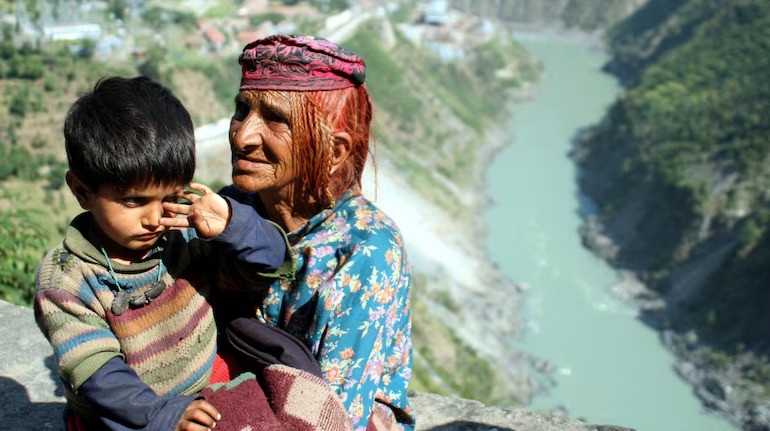
Pakistan's recent efforts to project itself as the inheritor of the ancient Indus Valley Civilisation have reignited a debate over the country's historical narrative and the symbols it uses to define its national identity.
Over the past few years, Islamabad has increasingly highlighted the civilisations that flourished in the region long before the arrival of Islam. Through documentaries, cultural outreach programmes, tourism campaigns and public statements by senior leaders, Pakistan has sought to present itself as a key custodian of the Indus Valley Civilisation, Gandhara heritage and other ancient traditions of South Asia.
The push has gained greater visibility since India suspended the Indus Waters Treaty in the aftermath of the April 2025 Pahalgam terror attack. Pakistani officials and commentators have increasingly stressed the country's historical connection to the Indus region and its ancient civilisational legacy.
However, this cultural repositioning has drawn attention to what critics describe as a major contradiction. While Pakistan seeks to embrace its pre-Islamic past, many of its strategic weapons continue to bear the names of rulers remembered for invading and plundering large parts of the Indian subcontinent.
Missiles named after conquerors
Several of Pakistan's major missile systems are named after military rulers and conquerors from Central Asia and Afghanistan.
The Hatf-II Abdali missile is named after Ahmad Shah Abdali (Durrani), the Afghan ruler who launched multiple invasions into India during the 18th century.
The Hatf-III Ghaznavi missile takes its name from Mahmud of Ghazni, who carried out a series of raids into the Indian subcontinent in the 11th century, including the attack on the Somnath Temple.
The Hatf-V Ghauri missile is named after Muhammad Ghori, whose victory in the Second Battle of Tarain in 1192 paved the way for the establishment of Muslim rule in large parts of northern India.
The Hatf-VII Babur cruise missile honours Babur, the Central Asian ruler who founded the Mughal Empire after defeating Ibrahim Lodi at the First Battle of Panipat in 1526.
Pakistan has also developed the Taimoor cruise missile, named after Timur (Tamerlane), the Turco-Mongol conqueror who invaded India in 1398 and is remembered for the sack of Delhi.
Analysts point out that these names are not random. They reflect a long-standing tradition within Pakistan's military establishment of drawing inspiration from rulers associated with Islamic expansion into the subcontinent.
ALSO READ : Who Is Opposing Saraswati Vandana?
Islamic references across military platforms
The practice extends beyond missile systems.
Pakistan has named several of its military platforms after figures and symbols from Islamic history. The Al-Khalid and Al-Zarrar tanks are named after prominent military commanders from early Islamic history.
The Zulfiqar frigate derives its name from the legendary sword associated with Prophet Muhammad, while the Ra'ad cruise missile takes its name from an Arabic word meaning "thunder" and is also linked to a chapter of the Quran.
The broader Hatf missile series itself is named after a weapon historically associated with early Islamic traditions.
Military observers say these names have long been part of Pakistan's effort to build a national identity rooted in Islamic history and military symbolism.
Shift in historical messaging
For decades, Pakistan's official historical narrative largely focused on the arrival of Islam in the region, particularly the conquest of Sindh by Muhammad bin Qasim in 712 CE.
School textbooks, official commemorations and state narratives often portrayed the advent of Islam as the starting point of Pakistan's history. This approach was particularly strengthened during the rule of General Zia-ul-Haq in the 1980s, when Islamisation became a central pillar of state policy.
In recent years, however, there has been a noticeable shift.
Pakistan has increasingly promoted archaeological sites linked to the Indus Valley Civilisation, Gandhara Buddhism and other ancient cultures that predate Islam by centuries.
Sites such as Mohenjo-daro, Harappa and Taxila have been highlighted as symbols of Pakistan's rich historical heritage. Government-backed campaigns have sought to present these civilisations as an integral part of Pakistan's identity.
Khawaja Asif's remarks add to debate
The discussion gained fresh momentum after Pakistan Defence Minister Khawaja Asif publicly argued that Pakistan's history extends well beyond the arrival of Islam.
In a television interview, Asif said Pakistanis should take pride in historical figures such as Emperor Ashoka, Chandragupta Maurya and Kanishka, all of whom ruled parts of the region centuries before the advent of Islam.
He also argued that acknowledging these historical figures does not diminish Pakistan's Islamic identity.
Asif's remarks were significant because they marked a departure from the traditional narrative that largely centred Pakistan's history on Islamic conquests.
The Defence Minister had earlier also criticised Mahmud of Ghazni, saying his invasions were driven by wealth and plunder rather than any mission to spread religious values.
His comments drew attention because one of Pakistan's principal missile systems continues to carry Ghazni's name.
Military narrative remains unchanged
Despite the evolving rhetoric among some civilian leaders, analysts believe Pakistan's military establishment is unlikely to alter the naming conventions of its strategic weapons.
The armed forces remain one of the country's most influential institutions and continue to place significant emphasis on Islamic symbolism and military history.
In recent years, Pakistan's military has frequently used Islamic terminology in military operations and public communications.
The operation launched against India during the May 2025 conflict was named Operation Bunyan-un-Marsoos, an Islamic phrase drawn from the Quran.
Similarly, military communications have often employed religious and historical references to describe security challenges and military campaigns.
Observers say this indicates that while some political leaders may seek to broaden Pakistan's historical narrative, the military continues to view Islamic identity as a central component of the state's ideological framework.
Debate over national identity
The controversy surrounding missile names reflects a larger debate taking place within Pakistan about history, identity and nationhood.
On one side is a growing effort to acknowledge the region's ancient civilisations and cultural traditions that existed long before the creation of Pakistan in 1947.
On the other is a long-established state narrative that has celebrated Islamic conquerors and military figures as foundational symbols of national identity.
As Pakistan seeks to promote its links to the Indus Valley Civilisation and other ancient cultures, critics argue that the continued use of names associated with foreign conquerors highlights an unresolved tension within the country's historical narrative.
For now, there is little indication that Pakistan's military will rename its missiles or move away from symbols rooted in Islamic history. As a result, the debate over how Pakistan defines its past and which parts of that past it chooses to celebrate is likely to continue.

Shashank Dwivedi
Shashank Dwivedi holds a PhD in Political Communication and brings rich experience in research and journalism. He has been associated with ETV Bharat and Organiser Weekly. His areas of interest include politics, welfare, education, law, culture and society.