European Union parliament slams Pakistan over forced conversion of Hindu and Christian minor girls; Flags Maria Shahbaz case
The European Parliament has passed a resolution condemning the abduction, forced conversion and child marriage of minority girls in Pakistan. The resolution highlighted the case of a 13-year-old Christian girl and called on Pakistani authorities to strengthen legal protections, prosecute offenders and ensure justice for victims.
Total Views |


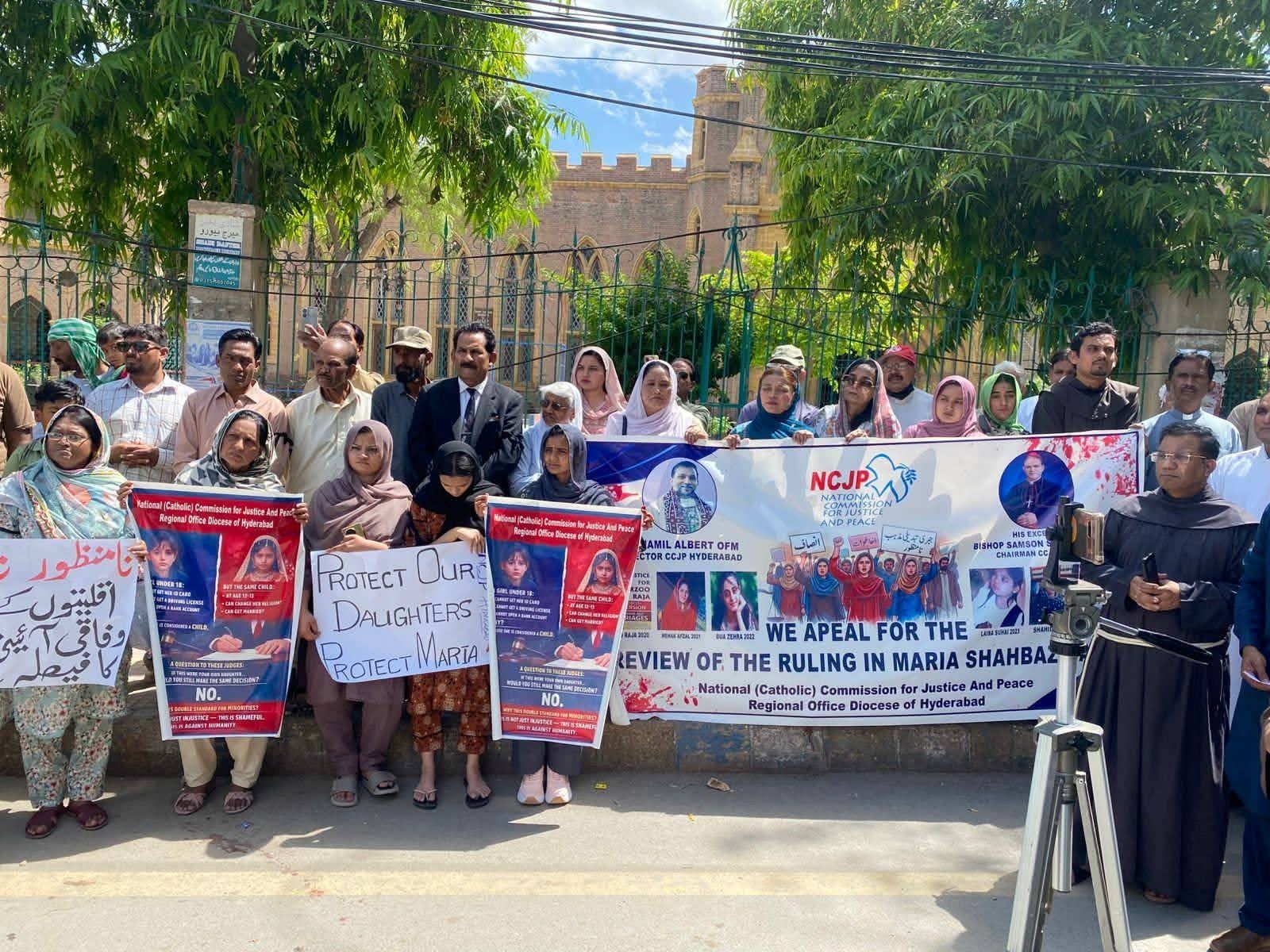
(An image from a site of protest)
The European Parliament has passed a resolution condemning the abduction, forced conversion and child marriage of underage girls belonging to religious minority communities in Pakistan. Members of the European Parliament (MEPs) expressed concern over what they described as a persistent pattern of abuses targeting Hindu and Christian girls, and urged Islamabad to take immediate corrective measures.
The resolution highlighted the case of Maria Shahbaz, a 13-year-old Christian girl who was abducted, converted to Islam and forcibly married to her abductor. Lawmakers said her case is emblematic of the broader challenges faced by minority communities in Pakistan.
MEPs called for Maria to be granted access to legal representation, psychological support and regular contact with her family. They also urged Pakistani authorities to ensure her safety and guarantee a fair legal process.
🚨 After UK, now EU spoke about Pakistan’s persecution of minorities.👏🏼👏🏼
— Tathvam-asi (@tathvamasi6) July 10, 2026
The European Parliament has adopted a strong resolution flagging severe human rights issues in Pakistan. It condemns the persecution of religious & ethnic minorities, forced conversions, child marriages,… pic.twitter.com/42XcZ0Liyw
Maria Shahbaz Case
According to rights groups, Maria Shahbaz was abducted from Lahore in July 2025 and later presented before a magistrate, where a statement was recorded claiming that she had voluntarily converted to Islam and married a 30-year-old man.
Despite official documents reportedly confirming that she was a minor, Pakistan's Federal Constitutional Court upheld the marriage in March 2026 and granted custody to the accused. Rights organisations have criticised the ruling, arguing that a child cannot legally provide free and informed consent for either marriage or religious conversion.
Human Rights Focus Pakistan (HRFP) had earlier condemned the case, stating that Maria's ordeal reflects a recurring pattern involving the abduction, forced conversion and forced marriage of girls from minority communities, particularly Hindus and Christians.
Not an isolated incident
The European Parliament's resolution noted that Maria Shahbaz's case is only one among numerous similar incidents reported across Pakistan over the years.
Citing United Nations figures from 2025, the resolution stated that among women and girls affected by forced conversion through marriage in Pakistan, approximately 75 per cent were Hindus and 25 per cent were Christians. Rights groups have long argued that underage girls from minority communities are especially vulnerable to abduction, coercive conversions and forced marriages, often facing significant hurdles in seeking justice.
Several human rights organisations have documented cases in which minor Hindu and Christian girls were allegedly abducted, converted and married to older Muslim men, with courts frequently accepting claims of voluntary conversion despite disputes over the victims' ages and circumstances.
European Parliament's demands
The resolution called on Pakistan to fully implement its national framework aimed at ending child marriage and establish a nationwide mechanism to handle complaints from families of abducted or forcibly converted minority girls.
Lawmakers further urged Pakistani authorities to:
• Protect religious minorities and their fundamental rights.
• Ensure all cases involving minors or allegations of coercion are investigated through transparent and independent processes.
• Prosecute those responsible for abduction, forced conversion and forced marriage.
• Strengthen legal safeguards for vulnerable communities.
• Facilitate the safe return of abducted girls to their families.
The European Parliament stressed that allegations involving minors must be treated with particular scrutiny and that the rights of children must be protected regardless of religious affiliation.
ALSO READ: Europe's Hottest Ideological Crisis
UN experts also raised concerns
The resolution comes months after a group of United Nations experts expressed concern in April 2026 over the continued abduction, forced religious conversion and marriage of women and girls from minority communities in Pakistan.
The UN experts warned that a climate of impunity was allowing the practice to continue. They stated that any change of religion must be free from coercion and that marriage should be based on full and free consent, conditions that cannot legally be met by a child.
The experts also argued that Pakistan had not adequately addressed the root causes behind forced conversions through marriage, including gender inequality, poverty, social exclusion, discrimination against religious minorities, religious intolerance and weak accountability mechanisms.
They emphasised that freedom of religion, equality before the law and protection from discrimination are fundamental rights that must be guaranteed to all citizens.
Renewed international scrutiny
The European Parliament's intervention places renewed international attention on Pakistan's record regarding the treatment of religious minorities. By highlighting Maria Shahbaz's case as a symbol of a wider pattern of abuse, lawmakers signalled growing concern over the continued reports of abductions, forced conversions and child marriages involving Hindu and Christian girls.
The resolution underscores increasing calls from international bodies, rights groups and minority advocates for stronger legal protections, independent investigations and accountability in cases involving vulnerable girls from Pakistan's minority communities.