Madras HC says religious practices must not harm environment
Total Views |


Chennai, July13: Nobody has the right to pollute a water body in the name of religion, the Madras High Court recently said while flagging the large-scale dumping of clothes and other articles in the Thamirabarani river during rituals for the dead [Sivanupandian v. District Collector and others].
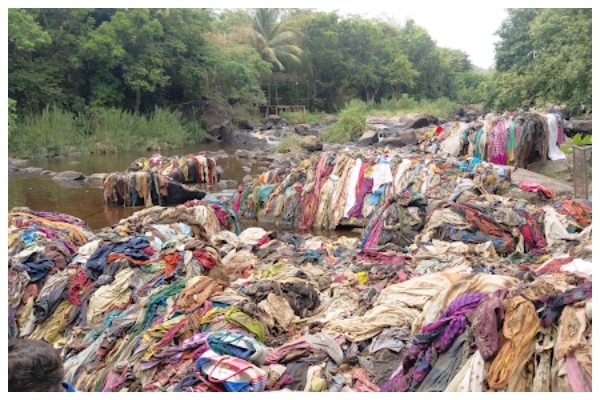
In an order passed in the last week, a Madurai bench of Justices GR Swaminathan and B Pugalendhi said that religious freedom under Article 25 of the Constitution is subject to public health.
The Court added that people are free to follow religious practices that are spiritually meaningful to them, as long as those practices do not harm the environment or infringe on the rights of others.
“No one has the right to pollute a water body even in the name of religion,” the Bench underlined.
The Court was hearing a petition challenging action taken under the Tamil Nadu Land Encroachment Act against the petitioner in connection with a mandapam in Tirunelveli district.
ALSO READ: Rahul Gandhi: A lapata LOP
During the hearing, the Court was informed that thousands of devotees visit the bathing ghats of the Thamirabarani River to perform last rites. As part of these rituals, many leave behind used and unused clothes, towels, slippers and other items associated with the deceased by throwing them into the river.
The Bench also interacted with environmental activist Moorthy, who has been involved in cleaning the river. He informed the Court that nearly one tonne of clothes is dumped into the river every day.
The Court referred to a booklet showing that between May 7 and May 28, clean-up drives removed around 86 to 90 tonnes of clothes from the river. The waste also included 1,385 kg of plastic, 374 kg of sanitary napkins and diapers, 220 kg of glass bottles, and 115 kg of slippers.
The Bench observed that polyester clothing is non-biodegradable and can become trapped in the riverbed, creating breeding grounds for bacteria. It also noted that species such as Indian black turtles and Indian flapshell turtles could become entangled in the discarded clothes and suffocate.
The Court said that access to pollution-free water is part of the right to life under Article 21 of the Constitution. It also referred to provisions of the Tamil Nadu Public Health Act, 1939, and the Water (Prevention and Control of Pollution) Act, 1974.
“Because it is destroying the river, we feel compelled to intervene.”
ALSO READ: SC rejects petitions by West Bengal Madrasa teachers on salaries and appointments
However, the Bench did not issue an immediate ban, noting that the matter involves the religious beliefs and sentiments of a large number of Hindus. The Court said all concerned stakeholders should be given an opportunity to present their views before a final decision is taken.
The Court directed the Tirunelveli District Collector to issue a public notice stating that the matter will be heard on July 16. Religious organisations and environmental activists have been allowed to intervene and make their submissions.
Advocate Ramasamy S appeared for the petitioner.
Advocates V.R. Shanmuganathan and N. Sharmiya appeared for the Hindu Religious and Charitable Endowments Department.