SC rejects petitions by West Bengal Madrasa teachers on salaries and appointments
Total Views |


Kolkata,July 13: The Supreme Court dismissed a batch of petitions filed by teachers and non-teaching staff of recognised madrasas in West Bengal. The petitioners had challenged the denial of regular appointments and salaries under the West Bengal government's grant-in-aid scheme after a committee, constituted by the Supreme Court in 2023, found them ineligible.
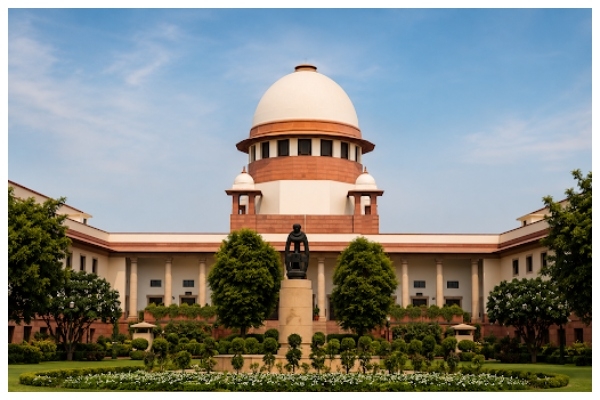
A Bench of Justices Dipankar Datta and AG Masih delivered the judgment.
The Court noted that, following its earlier directions, it had examined the cases of 13 petitioners out of more than 350 to determine whether any of them were entitled to relief. After reviewing the records, the Bench found that none of the 13 petitioners had established a valid claim for relief.
It, therefore, dismissed all petitions before the Court.
"Therefore, we have not only rejected the claims of all 13 petitioners whose cases were scrutinised, but have also rejected the claims of all the remaining petitioners. All the writ petitions are devoid of merit and are accordingly dismissed," the Court concluded.
The dispute arose from the West Bengal Madrasah Service Commission Act, 2008, which established a statutory commission to oversee the appointment of teachers in recognised madrasas.
In 2014, the Calcutta High Court struck down the Act, and the decision was upheld by a Division Bench in 2015. However, the Supreme Court stayed the High Court's ruling in March 2016. Later, on January 6, 2020, in the case of Sk. Md. Rafique v. Managing Committee, Contai Rahamania High Madrasah, the Supreme Court upheld the constitutional validity of the 2008 Act.
The dispute then shifted to the validity of appointments made between the Calcutta High Court's 2015 judgment and the Supreme Court's 2020 ruling.
In February 2023, the Supreme Court constituted a committee to examine whether appointments made during this period were valid. The committee later concluded that these appointments were invalid, prompting the affected employees to challenge its findings before the Court.
In August 2024, the Supreme Court passed an interim order protecting the services of the petitioners. In May 2025, it directed the West Bengal government to pay salaries to those who were actively performing teaching duties, subject to the final outcome of the case.