Chhattisgarh HC refuses to quash FIR over anti-Hindu speeches at Bharat Mukti Morcha, Rashtriya Christian Morcha Rally
The case arises from an FIR registered at Kunkuri Police Station on February 28, 2024, based on a complaint filed by a member of the Vishwa Hindu Parishad (VHP)
Total Views |


The Chhattisgarh High Court has refused to quash criminal proceedings against 11 social activists accused of delivering anti-Hindu speeches during a public rally in Jashpur district, holding that whether the remarks promoted communal hatred or outraged religious sentiments can only be determined during trial.
FIR filed following VHP complaint
The case arises from an FIR registered at Kunkuri Police Station on February 28, 2024, based on a complaint filed by a member of the Vishwa Hindu Parishad (VHP).

The prosecution also alleged that the speakers made objectionable remarks against the Chief Minister of Chhattisgarh and religious preacher Dhirendra Krishna Shastri, besides exhorting the crowd to break Electronic Voting Machines (EVMs) to disrupt the electoral process.
Charges framed based on video evidence
Following an investigation, including examination of video recordings of the event, the Judicial Magistrate First Class (JMFC), Kunkuri, framed charges against the accused on September 19, 2025, under several provisions of the Indian Penal Code, including Sections 153A, 153B, 295A and 505(2) relating to promoting enmity, outraging religious feelings and public mischief.
Petitioners cited free speech
Appearing for the petitioners, advocate Anchal Kumar Matre argued that the accused are social activists and rationalists engaged in creating awareness among socially and economically disadvantaged sections of society.
He contended that their speeches were protected by the constitutional guarantee of free speech and reflected the constitutional duty to promote scientific temper.
High Court says a trial is necessary
Declining to interfere, the High Court reiterated the settled legal position that the inherent powers to quash criminal proceedings must be exercised sparingly and only in the rarest of rare cases.
The Bench observed that questions such as whether the speeches were capable of promoting enmity between communities or were intended to outrage religious feelings can only be decided after appreciation of evidence during trial.
Holding that a prima facie case exists, the Court dismissed the petition and directed the trial court to proceed with the case independently and in accordance with law, without being influenced by observations made in the High Court's order.
A Division Bench comprising Chief Justice Ramesh Sinha and Justice Ravindra Kumar Agrawal observed that while freedom of speech is protected under Article 19(1)(a) of the Constitution, it is subject to reasonable restrictions, and the allegations in the case warrant a full-fledged judicial examination.
FIR filed following VHP complaint
The case arises from an FIR registered at Kunkuri Police Station on February 28, 2024, based on a complaint filed by a member of the Vishwa Hindu Parishad (VHP).
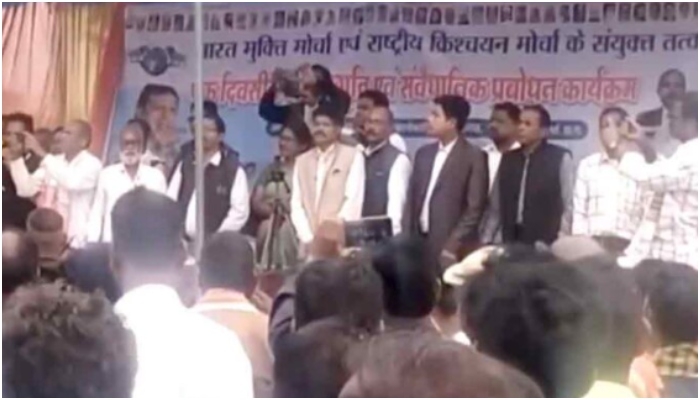
According to the prosecution, the accused, including Sunil Kumar Xalxo, Sanjay Saxena and Meera Tirkey, participated in a public meeting organised by the Bharat Mukti Morcha and the Rashtriya Christian Morcha at Saliyatoli Mini Stadium in Jashpur on February 27, 2024.
Investigators alleged that speakers at the gathering made derogatory remarks about the Hindu community, describing the term "Hindu" as an abuse and equating Hindus with "thieves, dacoits, robbers and slaves."
The prosecution also alleged that the speakers made objectionable remarks against the Chief Minister of Chhattisgarh and religious preacher Dhirendra Krishna Shastri, besides exhorting the crowd to break Electronic Voting Machines (EVMs) to disrupt the electoral process.
Charges framed based on video evidence
Following an investigation, including examination of video recordings of the event, the Judicial Magistrate First Class (JMFC), Kunkuri, framed charges against the accused on September 19, 2025, under several provisions of the Indian Penal Code, including Sections 153A, 153B, 295A and 505(2) relating to promoting enmity, outraging religious feelings and public mischief.
The order framing charges was subsequently upheld by the Additional Sessions Court in January 2026.
Petitioners cited free speech
Appearing for the petitioners, advocate Anchal Kumar Matre argued that the accused are social activists and rationalists engaged in creating awareness among socially and economically disadvantaged sections of society.
He contended that their speeches were protected by the constitutional guarantee of free speech and reflected the constitutional duty to promote scientific temper.
The State opposed the plea, submitting that electronic evidence, including video footage duly verified in accordance with law, established a prima facie case requiring trial.
ALSO READ: Shraddha Walkar's friend questions exam gap to Aftab Poonawala, who cut her into 35 pieces; revisiting the horrifying case
High Court says a trial is necessary
Declining to interfere, the High Court reiterated the settled legal position that the inherent powers to quash criminal proceedings must be exercised sparingly and only in the rarest of rare cases.
The Bench observed that questions such as whether the speeches were capable of promoting enmity between communities or were intended to outrage religious feelings can only be decided after appreciation of evidence during trial.
Holding that a prima facie case exists, the Court dismissed the petition and directed the trial court to proceed with the case independently and in accordance with law, without being influenced by observations made in the High Court's order.