Rahul Gandhi under fire - from within
Total Views |


For years, Congress leaders have publicly insisted that Rahul Gandhi is the party's undisputed leader. Internal dissent has been carefully concealed, criticism has been discouraged, and every electoral setback has been explained away by blaming the BJP, the media or the Election Commission. That carefully constructed façade has now developed a visible crack and the crack has come from one of Rahul Gandhi's oldest political mentors, Digvijaya Singh.
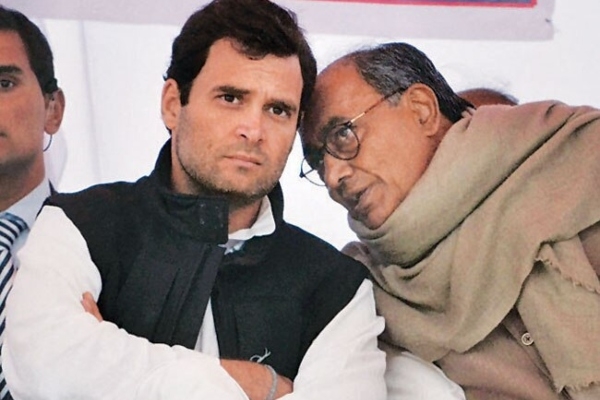 The obvious question arises as to why Priyanka Gandhi has been kept away from the organisational command despite repeated claims that she possesses exceptional political skills? If she indeed has "tremendous political ability," as Digvijaya Singh says, why has the Congress high command failed to utilise her? Is Rahul Gandhi unwilling to share authority? Or does the party itself lack confidence in its own leadership structure?
These questions become even sharper because Digvijaya Singh was once regarded as one of Rahul Gandhi's principal political guides. If someone from that inner circle is now publicly advocating an expanded role for Priyanka, it inevitably reflects growing unease within sections of the Congress. Loyalists seldom make such interventions unless they believe the existing arrangement is failing.
The Congress has suffered one electoral defeat after another under Rahul Gandhi's stewardship. State after state has slipped away. The party's organisational machinery has weakened, experienced leaders have exited, and factionalism has become routine. Despite this record, Rahul Gandhi continues to dominate the party's decision-making without being subjected to any meaningful internal accountability. Digvijaya Singh's remarks therefore appear less like praise for Priyanka and more like a polite expression of dissatisfaction with Rahul.
There is another intriguing possibility. Was Digvijaya Singh merely expressing his personal opinion, or was he articulating sentiments shared by a larger section within the Congress? Political veterans rarely make statements carrying such implications without understanding their consequences. His intervention could well be a trial balloon intended to gauge the reaction to a possible redistribution of authority inside the Gandhi family.
It also revives speculation about equations within the Gandhi household itself. Is there complete agreement between Sonia Gandhi, Rahul Gandhi and Priyanka Gandhi Vadra on the party's future? If Priyanka enjoys considerable popularity among Congress workers, why is she not entrusted with rebuilding the organisation? Is Rahul Gandhi reluctant to allow another power centre to emerge? Or are competing preferences within the family preventing a decisive organisational overhaul?
For a party that constantly lectures others on internal democracy, the Congress offers remarkably little transparency about its own leadership decisions. No one knows who takes the final call, how responsibilities are assigned, or why capable leaders remain underutilised. Decisions appear to flow not from institutional processes but from the preferences of a single family.
Digvijaya Singh's remarks, read alongside Ramachandra Guha's recent critique, point to a deeper reality confronting the Congress. The debate is no longer about whether Rahul Gandhi should lead the party. It is about whether his leadership can revive it. When doubts emerge simultaneously from a loyal Congress veteran and an independent intellectual who has seldom been sympathetic to the Bharatiya Janata Party, they cannot be dismissed as partisan attacks. They reflect a growing belief that the Congress is trapped in a leadership paradox. A party that speaks of democracy but remains captive to dynasty, a party that claims to nurture talent but cannot define Priyanka Gandhi's role, and a party that demands accountability from the government while refusing to subject its own first family to the same test. Until these questions are answered, the Congress's biggest challenge may not be the Bharatiya Janata Party—it may be the unresolved question of leadership within the Gandhi family itself.
Digvijaya Singh's demand that Priyanka Gandhi Vadra should be given a much bigger organisational role is not an ordinary suggestion. He did not merely praise her political ability. He openly questioned why she continues as a general secretary without a meaningful organisational responsibility. Such observations from a veteran who has spent decades defending the Gandhi family cannot be dismissed as casual remarks. They amount to an implicit indictment of Rahul Gandhi's leadership.
These questions become even sharper because Digvijaya Singh was once regarded as one of Rahul Gandhi's principal political guides. If someone from that inner circle is now publicly advocating an expanded role for Priyanka, it inevitably reflects growing unease within sections of the Congress. Loyalists seldom make such interventions unless they believe the existing arrangement is failing.
There is another intriguing possibility. Was Digvijaya Singh merely expressing his personal opinion, or was he articulating sentiments shared by a larger section within the Congress? Political veterans rarely make statements carrying such implications without understanding their consequences. His intervention could well be a trial balloon intended to gauge the reaction to a possible redistribution of authority inside the Gandhi family.
It also revives speculation about equations within the Gandhi household itself. Is there complete agreement between Sonia Gandhi, Rahul Gandhi and Priyanka Gandhi Vadra on the party's future? If Priyanka enjoys considerable popularity among Congress workers, why is she not entrusted with rebuilding the organisation? Is Rahul Gandhi reluctant to allow another power centre to emerge? Or are competing preferences within the family preventing a decisive organisational overhaul?
ALSO READ: 'Muslims distressed': Lucknow Maulana Mahali on Ramdev Baba's Hindu Rashtra remarks
Digvijaya Singh's intervention has therefore achieved something the Opposition has struggled to do it has reopened the debate over Rahul Gandhi's leadership from within the Congress itself. His statement raises uncomfortable questions that cannot be brushed aside with routine denials or slogans about unity.
Whether this marks the beginning of an internal realignment or merely reflects growing frustration, one conclusion is difficult to escape. If even Rahul Gandhi's long-time political mentor feels compelled to publicly argue that Priyanka Gandhi deserves greater responsibility, the real issue is no longer Priyanka's role. The real issue is Rahul Gandhi's leadership and whether even sections of his own party have begun to lose faith in it.
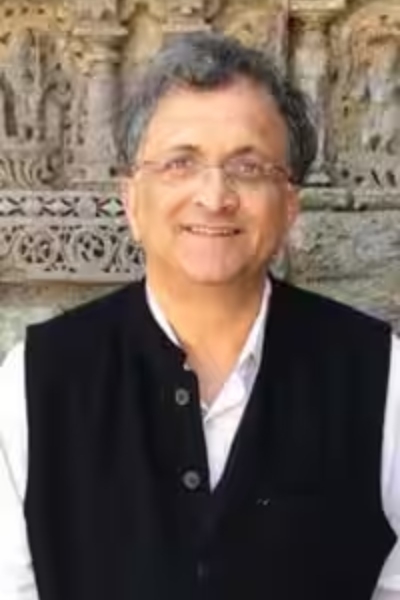
Few days back, a historian, who is close to the Nehru-Gandhi family, expressed similar views. Guha's intervention has made the Congress leadership debate even more uncomfortable. Unlike political opponents, Guha has long been regarded as an independent public intellectual who has often been sympathetic to the Congress tradition. But he has argued that the Gandhi family's continued control has helped Prime Minister Narendra Modi consolidate his political dominance, describing the Congress as a "family firm" led by Rahul Gandhi, whom he criticised for lacking discipline, gravitas and a credible administrative record. Guha also questioned Rahul Gandhi's suitability as a prime ministerial candidate and suggested that the party's dependence on one family has become its greatest weakness.
Digvijaya Singh's remarks, read alongside Ramachandra Guha's recent critique, point to a deeper reality confronting the Congress. The debate is no longer about whether Rahul Gandhi should lead the party. It is about whether his leadership can revive it. When doubts emerge simultaneously from a loyal Congress veteran and an independent intellectual who has seldom been sympathetic to the Bharatiya Janata Party, they cannot be dismissed as partisan attacks. They reflect a growing belief that the Congress is trapped in a leadership paradox. A party that speaks of democracy but remains captive to dynasty, a party that claims to nurture talent but cannot define Priyanka Gandhi's role, and a party that demands accountability from the government while refusing to subject its own first family to the same test. Until these questions are answered, the Congress's biggest challenge may not be the Bharatiya Janata Party—it may be the unresolved question of leadership within the Gandhi family itself.