In China, it's Communist Versus cross
NewsBharati 15-Jul-2026 12:20:16 PM
Total Views |


The latest reports on the treatment of underground Christians in China have once again drawn international attention to an old question: why does the Chinese Communist Party remain deeply uncomfortable with religious institutions? According to recent reports, Chinese authorities have continued to tighten restrictions on unregistered Christian congregations, with reports of raids on house churches, arrests of pastors and increasing pressure on believers to worship only through state-approved institutions. While the immediate focus is on Christians, the story is much larger than one faith. It is about the relationship between an authoritarian state and any institution that commands influence beyond its control.
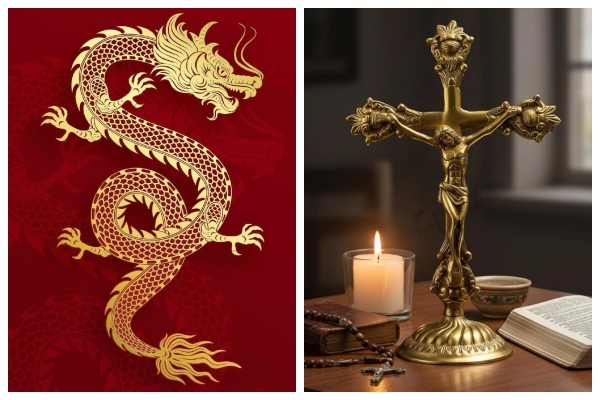
Religion presents a unique challenge because it derives authority from a source outside the state. A believer's ultimate moral obligations are defined by faith rather than political leadership. For governments that embrace political pluralism, this coexistence is generally accepted as part of a free society. For a one-party state that emphasizes ideological unity, it can be perceived as a potential vulnerability. This explains why Beijing distinguishes sharply between state-regulated churches and underground congregations. The issue, from the Party's perspective, is not simply worship. It is an organization. A nationwide network that gathers regularly, develops community leadership and maintains links beyond the state's supervision is viewed as something that requires close oversight.
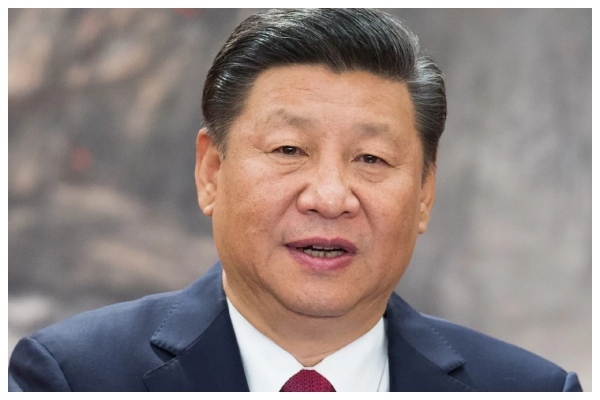 The Party's approach also reflects a broader pattern. Independent trade unions, civil society organizations, activist networks and religious bodies have all faced varying degrees of regulation or restriction when perceived as operating outside the Party's supervisory framework. From Beijing's standpoint, the common denominator is not religion but autonomous organization.There is another irony. Classical Marxist theory anticipated that religion would gradually decline as societies became more economically and socially developed. But religion has endured across diverse political and economic systems. Rather than disappearing, religious communities have adapted, expanded and continued to provide identity, meaning and social support to millions of people. China itself illustrates this complexity. Despite decades of state regulation, religious belief remains a significant feature of social life.
The reports on underground Christians are therefore about much more than Christianity. They illuminate a defining characteristic of the contemporary Chinese political system: the conviction that lasting stability requires the party to remain the highest authority in every sphere of public life. For Beijing, independent churches are not merely places of worship. They are institutions that exist outside the Party's direct command.That explains why the issue persists despite China's extraordinary economic transformation. Prosperity has changed many aspects of Chinese society, but it has not altered the Communist Party's foundational belief that political authority must remain centralized and that institutions with nationwide influence should ultimately answer to the state. The debate, then, is not between religion and atheism. It is between two competing ideas of authority one rooted in faith and voluntary association, the other in the supremacy of the party. As long as those two visions coexist uneasily, the relationship between China's government and independent religious communities is likely to remain one of the defining questions of the country's political future.
China's approach to Christianity and Islam reveals a striking evolution in the Communist Party's own ideological journey. Through its policy of "Sinicization," Beijing is attempting not merely to regulate these Abrahamic faiths but to reshape them into national institutions whose first allegiance is to the Chinese state and the Communist Party. In many ways, this marks a significant departure from classical Marxist internationalism, which regarded nationalism as a bourgeois construct that would ultimately give way to proletarian solidarity across borders. Contemporary China has charted a different course. Rather than exporting Marxist revolution or adhering rigidly to Maoist orthodoxy, it has fused Communist Party rule with a strong form of Chinese nationalism, placing national unity, sovereignty and Party supremacy above ideological purity. The result is a distinctly Chinese model in which even religion is expected to serve the nation as defined by the Party. Today's China, it seems, is less about Marx's international revolution than about the primacy of the Chinese nation under Communist leadership.
To understand Beijing's approach, one must first understand the Communist Party's worldview. For the Chinese Communist Party, governance is not merely about administering a country. It is about preserving the party's position as the ultimate political and ideological authority. Every major institution, including government, media, education, business and civil society is expected to function within a framework defined by the party. Independent centres of influence are therefore viewed with caution.
Religion presents a unique challenge because it derives authority from a source outside the state. A believer's ultimate moral obligations are defined by faith rather than political leadership. For governments that embrace political pluralism, this coexistence is generally accepted as part of a free society. For a one-party state that emphasizes ideological unity, it can be perceived as a potential vulnerability. This explains why Beijing distinguishes sharply between state-regulated churches and underground congregations. The issue, from the Party's perspective, is not simply worship. It is an organization. A nationwide network that gathers regularly, develops community leadership and maintains links beyond the state's supervision is viewed as something that requires close oversight.
History has reinforced these concerns. China's nineteenth-century experience with foreign powers left deep political scars. During the era of unequal treaties, some Christian missions became associated with foreign influence. This is what India also experienced. Modern Chinese leaders continue to invoke that history when arguing that religion must remain free from external political direction. Under President Xi Jinping's policy of "Sinicization," religious organizations are expected to align their activities with Chinese culture, national priorities and the leadership of the Communist Party. Supporters of the policy describe it as a legitimate exercise in safeguarding national sovereignty and social stability. Critics see it as an erosion of religious freedom through ideological conformity. That debate lies at the heart of the international concern surrounding China's treatment of underground churches.
The tension therefore is not merely theological. It is institutional. Can a political party remain the supreme source of public authority while allowing organizations with independent moral authority to flourish? Liberal democracies generally answer that question in the affirmative, relying on constitutional protections and pluralism. China's political model reaches a different conclusion, placing a premium on centralized control and ideological cohesion. Whether that model strengthens national unity or suppresses legitimate freedoms will remain a subject of continuing debate. What is beyond dispute is that the relationship between the Chinese state and religion cannot be understood simply as a dispute over doctrine. It reflects a deeper contest over authority, organization and the limits of state power.
China's approach to Christianity and Islam reveals a striking evolution in the Communist Party's own ideological journey. Through its policy of "Sinicization," Beijing is attempting not merely to regulate these Abrahamic faiths but to reshape them into national institutions whose first allegiance is to the Chinese state and the Communist Party. In many ways, this marks a significant departure from classical Marxist internationalism, which regarded nationalism as a bourgeois construct that would ultimately give way to proletarian solidarity across borders. Contemporary China has charted a different course. Rather than exporting Marxist revolution or adhering rigidly to Maoist orthodoxy, it has fused Communist Party rule with a strong form of Chinese nationalism, placing national unity, sovereignty and Party supremacy above ideological purity. The result is a distinctly Chinese model in which even religion is expected to serve the nation as defined by the Party. Today's China, it seems, is less about Marx's international revolution than about the primacy of the Chinese nation under Communist leadership.

Editor's Desk
Editor's Desk