Balochistan declaration: Beyond symbolism
Total Views |


The latest declaration by Baloch nationalist leaders proclaiming an independent "Republic of Balochistan" has once again drawn international attention to Pakistan's largest and most resource-rich province. Legally, the announcement changes nothing. Pakistan retains sovereignty over Balochistan, and no country has recognized the declaration. But history teaches that political declarations are not always about immediate outcomes. Sometimes they are intended to expose a deeper reality. That is precisely why this latest proclamation deserves attention.
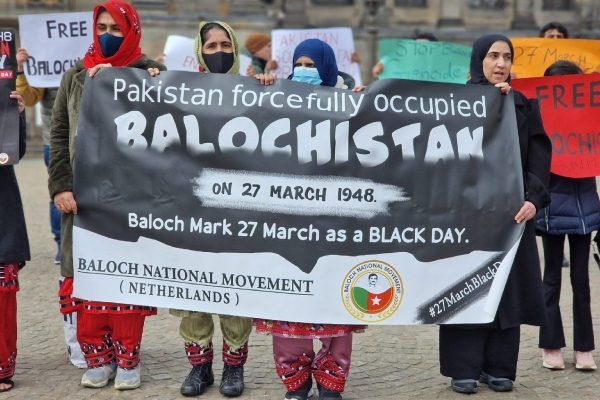
It is not the declaration itself that matters. It is what the declaration reveals about Pakistan's persistent inability to resolve one of its oldest internal conflicts. For nearly eight decades, Islamabad has viewed Balochistan primarily through the lens of national security. Successive governments have launched military operations, strengthened the security apparatus and announced economic packages. But the province has remained the site of repeated insurgencies. The latest surge in violence, including coordinated attacks on Pakistani security forces, indicates that the conflict has not been extinguished.
This is no longer a local law-and-order issue. It is a test of the Pakistani state's capacity to reconcile security with political accommodation. The timing is equally significant. Pakistan is navigating economic instability, political polarization, recurring militant violence and strained state institutions. Against this backdrop, the latest Baloch declaration serves as a reminder that unresolved internal grievances can re-emerge when a state's political resilience is under pressure.
The Baloch question also raises a broader issue about statecraft. Durable political stability cannot rest solely on coercive capacity. Military operations may suppress violence temporarily, but they rarely eliminate the political, economic and social grievances that sustain long-running insurgencies. History offers numerous examples from different regions of the world where force achieved tactical successes without delivering lasting political settlements.
Pakistan's security doctrine has long emphasized the centrality of military strength in preserving national cohesion. That doctrine has helped the state confront multiple security threats. However, Balochistan demonstrates the limits of a strategy that places security responses ahead of enduring political solutions. The persistence of the insurgency suggests that force alone has not resolved the underlying dispute.
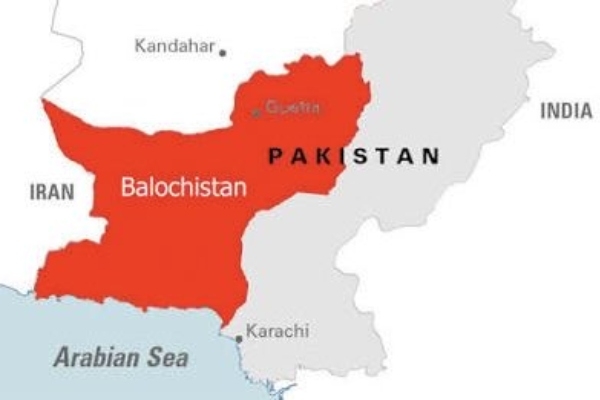
For India and the wider region, the developments merit close observation rather than speculation. Any instability in Balochistan has implications for regional connectivity, maritime security in the Arabian Sea and the future of major infrastructure corridors. At the same time, it would be premature to interpret the latest declaration as the beginning of an imminent new state. Statehood requires sustained territorial control, functioning institutions and international recognition conditions that do not currently exist.
But dismissing the declaration as an isolated propaganda exercise would be equally shortsighted.
Pakistan has overcome grave challenges before and retains the institutions of a functioning state. But the latest declaration is a reminder that national unity cannot be sustained by military strength alone. States endure not merely because they defend their borders, but because they build political legitimacy among those who live within them.
Whether the latest proclamation fades from the headlines or becomes another milestone in the long Baloch struggle, it carries an unmistakable message. The real issue is not a declaration issued by separatist leaders. The real issue is why, after decades of conflict, such declarations continue to find resonance at all. That is the question Pakistan can no longer afford to ignore.
Declarations do not create nations overnight. But they often reveal the condition of the states they seek to leave behind. The latest proclamation from Balochistan may not redraw South Asia's map today, but it has once again exposed the fault lines running through Pakistan's political landscape. The declaration is only the headline. The real story lies beyond it.