Chhattisgarh Christians mull legal challenge after HC upholds traditional Hindu prayers in schools
Justice Amitendra Kishore Prasad dismissed the plea, observing that the petition was based on apprehensions rather than any demonstrated infringement of fundamental rights.
Total Views |


Christian organisations in Chhattisgarh are considering their legal options after the Chhattisgarh High Court declined to stay the state government's directive introducing traditional Indian prayers and rituals in schools, while leaving the door open for future legal action if any actual violation of constitutional rights is established.
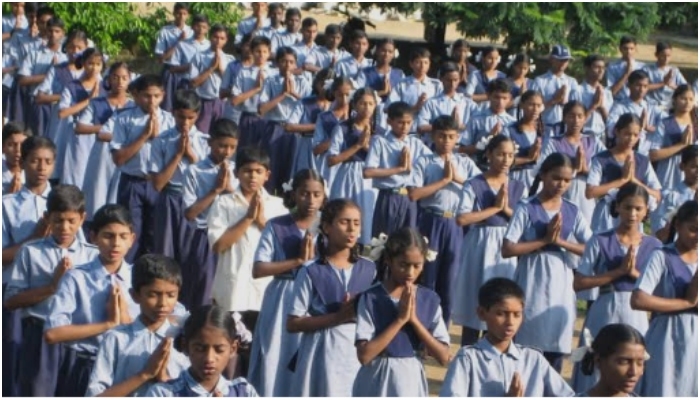
The petition challenged the prayer directive
The petition was filed by Abdul Salam Rizvi and two others, who argued that requiring students to participate in prayers rooted in Hindu tradition amounts to religious instruction in publicly funded educational institutions and violates constitutional guarantees of secularism and religious freedom.
However, the state government defended the policy by stating that the prayers form part of India's cultural and civilisational heritage and are in line with the National Education Policy (NEP) 2020, which encourages the integration of Indian Knowledge Systems into education.
The government also informed the Court that the policy does not compel students to abandon or violate their personal faith and that no widespread objections had been received from parents or students after its implementation.
Christian groups consider fresh legal options
Similarly, Pastor Simon Digbal Tandi, coordinator of the Progressive Christian Alliance in Chhattisgarh, said legal experts were reviewing the order before deciding the next course of action. Church representatives argued that the prescribed prayers are integral to Hindu tradition and should not be introduced in schools attended by students from different faiths.
The court's approach reflects the requirement of actual harm, not just speculation
By granting liberty to file a fresh petition if constitutional rights are demonstrably affected during implementation, the Court ensured that any future challenge can be considered on concrete facts rather than hypothetical concerns.
Debate comes amid scrutiny of religious practices in schools
The institution had also faced similar allegations in May 2026, when several Hindu women employees claimed they had been pressured to attend church prayers and embrace Christianity. Those allegations are also under inquiry.
While the Chhattisgarh government's policy concerns the inclusion of traditional Indian prayers in schools through a state directive, the Jabalpur case relates to allegations of pressure to participate in religious practices within a private missionary-run institution. Both developments have renewed debate over the role of religion in educational spaces and the extent to which constitutional protections of religious freedom apply in different institutional settings.
The July 2 order of the High Court came on a petition challenging the June 12, 2026, state government notification requiring all state-recognised schools to begin the day with traditional prayers such as Saraswati Vandana, Gayatri Mantra, Guru Mantra, Shanti Mantra and Bhojan Mantra, along with the ceremonial lighting of a lamp for the 2026–27 academic session.
Justice Amitendra Kishore Prasad dismissed the plea, observing that the petition was based on apprehensions rather than any demonstrated infringement of fundamental rights. At the same time, the Court granted liberty to the petitioners to approach it again if the implementation of the policy leads to concrete constitutional violations.
The petition challenged the prayer directive
The petition was filed by Abdul Salam Rizvi and two others, who argued that requiring students to participate in prayers rooted in Hindu tradition amounts to religious instruction in publicly funded educational institutions and violates constitutional guarantees of secularism and religious freedom.
However, the state government defended the policy by stating that the prayers form part of India's cultural and civilisational heritage and are in line with the National Education Policy (NEP) 2020, which encourages the integration of Indian Knowledge Systems into education.
The government also informed the Court that the policy does not compel students to abandon or violate their personal faith and that no widespread objections had been received from parents or students after its implementation.
Christian groups consider fresh legal options
Following the ruling, Christian organisations indicated that they were examining the judgment before deciding on further legal action. Father Sebastian Poomattom, Vicar General and spokesperson of the Archdiocese of Raipur, said the Church was studying the implications of the judgment.
ALSO READ: Jabalpur: Conversion pressure on sanitation worker at St Aloysius School triggers protest; education department orders inquiry
Similarly, Pastor Simon Digbal Tandi, coordinator of the Progressive Christian Alliance in Chhattisgarh, said legal experts were reviewing the order before deciding the next course of action. Church representatives argued that the prescribed prayers are integral to Hindu tradition and should not be introduced in schools attended by students from different faiths.
The court's approach reflects the requirement of actual harm, not just speculation
The High Court's refusal to interfere at the preliminary stage is consistent with the settled judicial principle that constitutional courts ordinarily do not invalidate executive action solely on speculative or anticipated harm. Instead, courts generally require evidence of actual infringement before exercising writ jurisdiction.
By granting liberty to file a fresh petition if constitutional rights are demonstrably affected during implementation, the Court ensured that any future challenge can be considered on concrete facts rather than hypothetical concerns.
Debate comes amid scrutiny of religious practices in schools
The debate over religious activities in educational institutions comes amid increasing scrutiny of allegations involving religious influence within schools. Just a day earlier, authorities in Jabalpur, Madhya Pradesh, ordered an inquiry after a sanitation worker at the missionary-run St Aloysius School alleged that he had been pressured for nearly three months to attend church services and convert to Christianity. The allegations triggered protests by Hindu organisations, while the District Education Officer constituted a committee to investigate the claims.
The institution had also faced similar allegations in May 2026, when several Hindu women employees claimed they had been pressured to attend church prayers and embrace Christianity. Those allegations are also under inquiry.
While the Chhattisgarh government's policy concerns the inclusion of traditional Indian prayers in schools through a state directive, the Jabalpur case relates to allegations of pressure to participate in religious practices within a private missionary-run institution. Both developments have renewed debate over the role of religion in educational spaces and the extent to which constitutional protections of religious freedom apply in different institutional settings.