Maharashtra's new Political grammar is beyond Pawar
Total Views |


The latest debate within Sharad Pawar's Nationalist Congress Party (SP) over whether it should move closer to the NDA is more than another episode in Maharashtra's ever-changing political theatre. It is a sign of something much bigger. The real story is not whether Sharad Pawar will take another political turn. The real story is that Maharashtra has moved beyond the politics that Sharad Pawar perfected over four decades.
For years, Pawar represented a distinctive style of politics. He was known less for ideological commitment and more for political manoeuvring. Coalition management, tactical flexibility, keeping every political option open and remaining indispensable in fractured mandates became his trademark. Admirers hailed it as unmatched political acumen. Critics dismissed it as calculated opportunism. Whatever the description, that model allowed Pawar to remain at the centre of Maharashtra's politics long after many of his contemporaries had faded.
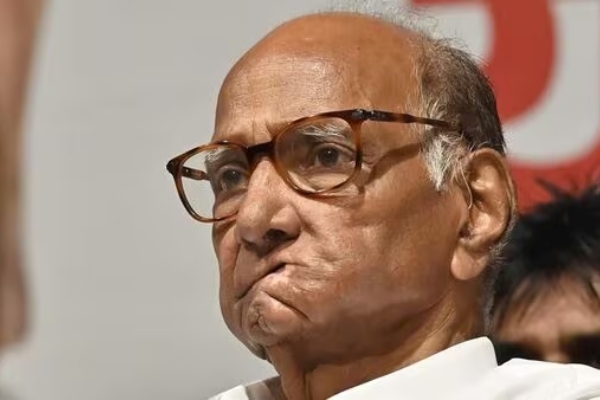
But politics evolves. What once looked like flexibility can, over time, begin to resemble a lack of conviction. The current uncertainty within the NCP (SP) over its future alignment illustrates precisely that shift. A party that has consistently projected itself as a principal opponent of the BJP is now publicly debating whether it should move closer to the very alliance it has opposed. Even if the discussion is described as exploratory, the political message reaching the voter is unmistakable. It reinforces the perception that ideology has become secondary to political survival.
ALSO READ: Balochistan declaration: beyond symbolism
The electoral record also deserves careful attention. Despite Sharad Pawar's overstated personal stature and national profile, the NCP never transformed itself into Maharashtra's dominant political force. It remained an influential regional party, but not one capable of independently commanding the state's political landscape. For much of its existence, its legislative strength revolved around a limited base, sufficient to influence governments but insufficient to define Maharashtra's politics on its own. The party excelled at becoming indispensable in coalition arithmetic rather than emerging as the people's first choice.
The split in the NCP exposed this structural weakness more than any election result could. Once the organisation fractured, the aura surrounding the founder could not prevent a substantial section of leaders and legislators from choosing a different path. The split demonstrated a fundamental truth of contemporary politics: Personal stature alone cannot substitute for organisational cohesion and political certainty. In today's political environment, leaders increasingly gravitate towards formations that appear stable, decisive and electorally viable.
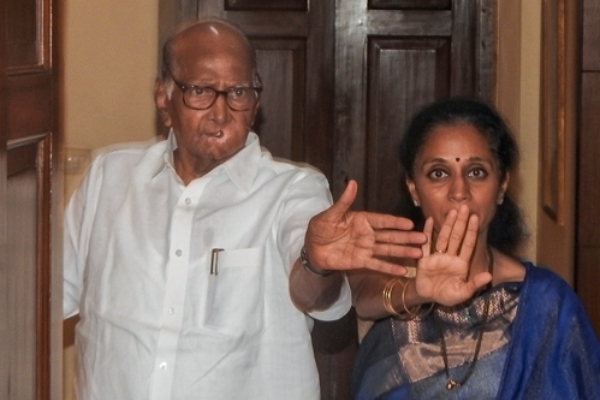
Politics rarely announces the end of an era. It quietly shifts the centre of gravity. That is precisely what Maharashtra is witnessing today. For nearly four decades, every significant political equation in the state eventually led to Sharad Pawar. Governments sought his support, rivals watched his moves and allies depended on his political calculations. Today, the equations have changed. The political conversation increasingly revolves around Devendra Fadnavis. Whether parties seek to oppose him, negotiate with him or align with him, they recognise him as the state's principal power centre. That transformation is far more significant than the internal crisis within the NCP (SP).
This represents a profound change in the state's political grammar. Earlier, political success often depended on who could assemble numbers after an election. Today, voters increasingly reward clarity before the election. Stable leadership, organisational discipline and a consistent political narrative are acquiring greater value than perpetual strategic ambiguity. The age of the master tactician is giving way to the age of the organised political machine.
That is why the current developments within the NCP (SP) are significant beyond the immediate question of alliances. They suggest that the political ecosystem which sustained Pawar's style of politics has undergone a dramatic change. Every fresh round of speculation over changing alignments weakens the image of strategic brilliance and strengthens the impression of political uncertainty. What once enhanced Pawar's stature now increasingly invites scepticism.
The debate, therefore, is not about whether Sharad Pawar can once again surprise his opponents with another tactical move. It is about whether Maharashtra still rewards the kind of politics that made those tactics effective. The evidence increasingly suggests otherwise. A new generation of voters seeks decisiveness over ambiguity, organisation over personality and clarity over endless political permutations.
That is why the latest developments within the NCP (SP) deserve to be viewed as more than an internal party matter. They mark the gradual closing of one political chapter and the opening of another. Maharashtra is not merely witnessing the difficulties of Sharad Pawar's party. It is witnessing the emergence of a new political order, in which Pawar politics is no longer the force it once was.
Every generation produces its own leadership and rewrites the rules of power. Maharashtra's new political grammar is no longer being written through tactical ambiguity or endless coalition permutations. It is being shaped by leadership, organisation, ideology and a new political centre of gravity. That is why the latest uncertainty within the Pawar camp is not merely a party crisis. It is the unmistakable sign that Maharashtra has moved beyond Pawar politics.