Inhuman human rights: An Oxymoron
If a person goes missing, the format is pretty much the same. For human rights activists, only the ‘aggrieved party’, i.e., the victim and his family, is important.
NewsBharati 16-Jul-2026 14:56:52 PM
Total Views |


"Human rights violations... are, rather, symptoms of deeper pathologies of power..." — Paul Farmer
Rakshak ya Bhakshak
Human rights are, by definition, the fundamental protections and freedoms that are for every single one of us just because we are human, and we need to have a protective mechanism whenever needed. They are built on concepts like dignity, fairness, egalitarianism, humanity, equality, righteousness, and respect. This list is pretty long and can be stretched beyond imagination.
Yet, when we look closely at how human rights are defined, used, and many times ‘weaponized’ in the real world, a deeply unsettling paradox emerges. Too often, the systems designed to protect humanity end up feeling remarkably inhuman.
The law and the watchdog themselves behave in a partial way according to the bias they hold close to their belief. In such circumstances, more often than not, someone among the affected people gets adversely affected. ‘Discretion’ is the trickiest part when it comes to taking a call- closely linked to human interpretation- which itself is inhuman because of the bias embedded in human nature. Emotions like prejudice, partiality, favouritism, bigotry, or simple discrimination will always creep in. That is why it is called ‘judgement’, which is based on human feeling. For the same crime, a judge may give ten years, and another judge could give life imprisonment; both can be justified. Judgement depends on the acuity, acumen, or astuteness of the person who has to judge. Some say the nature of the judge, or worse, the mood of the judge.
As an analogy, a good driver has to have good judgment. A slight mistake, even a millimetre, can cause a catastrophic accident. Yet the greatest, most experienced pilots, sailors, or race drivers err, which is called human error. No pilot or driver will commit an error on purpose because his own life is on the line, but a person put in the seat of a judge has nothing to lose. In today’s toxic environment, with several pulls and pressures at play, a person taking a decision takes it in such a way as to save his skin or worst currying some favours in cash or kind.
Human rights ‘only for the victim syndrome’
In any situation where a crime occurs, or there is a situation which is at cross purposes of different parties, several individuals, groups, and organizations get impacted. In a run-of-the-mill crime, say a murder, stabbing, serious accident, or robbery, there would be four to five parties involved.
The simplest example to explain would be a serious accident where the victim is bodily injured, hospitalised, and incapacitated. Here you have the injured person who is the victim, the second party, his parents/relatives who suffer financially and emotionally, third, the investigator/police, fourth, the person committing the crime, and fifth, ‘activists or human rights people/organization.’
If a person goes missing, the format is pretty much the same. For human rights activists, only the ‘aggrieved party’, i.e., the victim and his family, is important. If the parents or the crowd attacks the police on duty, it seems their rights do not matter. The person who committed a crime- actually inhuman- is also to be treated like a human- even a rapist or a guy who has broken someone’s skull because of stone pelting needs his dignity- how silly. His face must be covered in front of the media.
The paradox is immersed in political preferences
One of the most glaring ways human rights become "inhuman" is through the lens of political selectivity. In theory, these rights are universal and should be the same for 8 billion people living on this planet. In practice, they are frequently treated as commodities or geopolitical chess pieces.
Powerful nations often champion human rights loudly when pointing out the abuses of their rivals, yet remain suddenly silent when the violators are economic partners, strategic allies, or their own national interest. When the protection of human life depends entirely on geographic location, wealth, or political alignment, the system strips away the very thing that makes human rights beautiful: their unconditional nature. This selective empathy feels deeply mechanical and cold. For instance, American media and senators/ administration will be critical of human rights violations in the global south but would look the other way when Europe or other Western countries are involved.
You can always create bureaucratic hurdles
There is also a tragic, legalistic coldness in how global institutions handle human rights crises. When mass atrocities, famines, or systemic oppressions occur, the international response is often bogged down in endless debates over definitions, jurisdictional boundaries, and vetoes in comfortable discussion rooms.
While diplomats argue over whether a crisis meets the strict legal criteria of "genocide" or "war crimes," actual human beings are experiencing unimaginable suffering. When abstract legal terminology and bureaucratic procedures take precedence over immediate, lifesaving action, the framework of human rights acts less like a shield and more like an indifferent corporate machine.
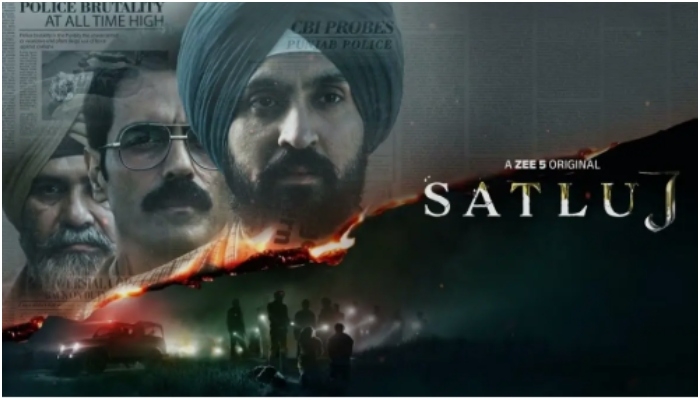
The recent case of a movie, SATLUJ
What is now making waves in the media is the sudden appearance, disappearance and reappearance of a film called ‘SATLUJ’. Most people say it is a good film with bad intentions. It shows the police excesses on the ‘innocent’ people of Punjab when the state was almost under siege by militancy, stoked by Separatist forces of Khalistanis, supported by foreign funding. No doubt that was a dark chapter of Punjab where killing, arson, loot, and rape were out of control. Police were asked to bring the conditions under control and had to go hammer and tongs after the people creating chaos. In the first place, the police were deployed because of the terrorists; otherwise, why would they get involved? The most difficult task is to identify and separate the wheat from the chaff. No terrorist wears a terrorist badge on his sleeve- there is bound to be collateral damage- both ways. Police and law enforcement agencies are under tremendous pressure. In such turbulent times, even the judges refuse to take on cases of terrorists, and the media, too, is scared to report everything on an ‘as is, where is ’ basis. In the case of Punjab, more than 11000 civilians, including 4000 Hindus, were identified and selectively killed (Pehalgam style), taking them out of buses, trains, and vehicles by the terrorists. More than 1700 police/ security personnel were killed. Around 7900 militants were killed. This was a quasi-war situation lasting over a decade. With a total death toll crossing 20,000.
Obviously, human rights were violated, and it is a fit case for human rights activity by activists. There were atrocities by terrorists (obviously), and the police also had to take punitive action. In this case in several cases, police went overboard and were taken in by the system for ‘extrajudicial killings’, and several were punished too.
The moot question is that in this case, primarily three parties were involved- terrorists, police, and the victims of terror- those killed by terrorists; were they not all humans? Of course, they all were. There was another party which was not identified or identifiable, those from the civilian population; this was a grey area (the unknown or unidentified people).
Why did this happen? The political angle
In 1977, following the end of the Emergency, Indira Gandhi’s Congress party suffered a massive defeat both nationally and at the state level in Punjab. A coalition led by the Shiromani Akali Dal (the regional, Sikh-centric political party) came to power in Punjab.
Sanjay Gandhi, known for his aggressive and often extra-constitutional political strategies, wanted to break the Akali Dal's tight hold over the Sikh electorate and the Shiromani Gurdwara Parbandhak Committee (SGPC), which managed Sikh shrines.
To do this, Sanjay and Giani Zail Singh (the defeated Congress Chief Minister of Punjab and later President of India) decided they needed a radical, charismatic religious figure. The goal was to find someone who could out-radical the Akalis on religious matters, thereby splitting the Sikh vote and weakening the Akali Dal from within.
This is actually all available in the public domain right from the time it happened.
Selecting Bhindranwale
Zail Singh and other Congress leaders scouted for potential figures who could challenge the Akali establishment. Sanjay Gandhi’s close associate and senior Congress leader, Kamal Nath, later recounted the selection process:
"The first one we interviewed did not look like a 'courageous type'. Later, they zeroed in on Bhindranwale, strong in tone and tenor, who seemed to fit the bill. We would give him money off and on, but we never thought he would turn into a terrorist."
(A political misadventure for which Punjab suffered for decades). Poor judgement.
Bhindranwale, who had recently become the head of the orthodox Sikh seminary Damdami Taksal, possessed incredible rural charisma, powerful oratorical skills, and an uncompromising, fundamentalist stance on Sikh identity. To Sanjay Gandhi, he looked like the perfect political tool to embarrass the moderate Akali leadership.
During the late 1970s, Sanjay Gandhi and Zail Singh provided Bhindranwale with substantial political and financial patronage.
Further, the ruling Congress party at the Centre (led by Indira Gandhi) covertly supported and elevated a charismatic, radical preacher, Jarnail Singh Bhindranwale.
The strategy backfired drastically when Bhindranwale turned against the Centre and began operating independently, shifting the movement from political agitation to armed militancy. He became the leader of terrorists and hijacked the Golden Temple Gurdwara, leaving little room for the administration to go for a peaceful solution. When politicians tried to exploit these fractures for short-term electoral gains, the situation spun entirely out of control, culminating in a decade of tragic violence.
Ultimately, the people of Punjab paid a heavy price.
Today’s situation
Punjab is a border state with Pakistan. The relations between them and us are not good at all. Pakistan is in a very bad economic and political situation, and the present Indian government is not ready to give any concessions. Indus Water Treaty, put in abeyance, has become a stranglehold for Pakistan. As they say ‘Doobtey ko tinke ka sahara ’, Pakistan needs a foothold somewhere to start trouble, and Punjab is the hottest area for that.
At this point, the drug menace has ruined the youth of Punjab, partly orchestrated by Pakistan. The 553-km international border with Pakistan remains a major transit route. Trafficking methods have modernized drastically; the use of rogue drones to drop commercial quantities of heroin and synthetic drugs across the border has escalated, with hundreds of drones intercepted annually by the Border Security Force (BSF) and Punjab Police.
In recent years, the nature of the crisis has shifted rapidly from traditional opiates to synthetic drugs, heavily testing both law enforcement and healthcare infrastructure. While traditional substances like poppy husk (bhukki) and opium remain prevalent in rural areas, heroin ("chitta") and synthetic opioids dominate the severe addiction statistics. Recognizing that punitive measures alone cannot solve an addiction epidemic, there has been a significant policy push toward demand reduction and compassion-led rehabilitation.
_202607161502110236_H@@IGHT_400_W@@IDTH_700.jpg "Sutluj")
Impact on families
The concern among women—and mothers in particular—in Punjab regarding the drug menace is not just serious; it has reached a state of deep, collective trauma and existential anxiety. The rise of highly addictive synthetic drugs like Chitta (a semi-synthetic heroin derivative) has led to unimaginable tragedies within households.
The emotional, financial, and physical toll has fallen squarely on the women. Today, mothers are at the absolute forefront of this crisis, driven by a desperate need to protect their remaining children and hold their families together. In several villages, women have formed vigilante groups and anti-drug committees. They obviously require state government help, which may be less than adequate today. They could be praying for a change of guard.
Agriculture in a dire state, too
In the last five decades, the sheer volume of Nitrogen, Phosphorus, and Potassium (NPK) fertilizers applied to Punjab's soils skyrocketed.
Total NPK consumption in the state rose from roughly 213,000 tonnes in 1970–1971 to nearly 2,000,000 tonnes by the 2020s. The intensity of application shot up dramatically. In 1970–1971, fertilizer usage hovered around 37.5 kg per hectare. By 2023–2024, Punjab’s average consumption reached 247.6 kg per hectare. Up nearly six times.
The groundwater situation in Punjab has shifted drastically over the last 50 years. What was once an easily accessible, shallow resource in the 1970s has turned into an alarming crisis, driving Punjab into the highest rate of groundwater over-exploitation in India.
The water table was 3 to 7 meters in 1970, and today it is 20 to 40 meters!
Therefore, ‘Drugs have impacted Nasal and Fasal both,’ and Punjab needs help.
The Satluj Impact
The human rights violations occurred on all sides in Punjab. If civilians or police personnel were killed, they also had families and needed to be given due consideration. Similarly, the unidentified were put in the missing lot, but they also had people back home.
The film shows how human rights activist Jaswant Singh Khalra, who exposed enforced disappearances and state-sanctioned extrajudicial killings in 1990s Punjab. But it does not show how terrorists under Bhindranwale selectively killed thousands of Hindus and how they killed Punjab police and security personnel too.
If truth has to be told- that too after 40 years, then human rights violations and suffering must be shown across the board and not selectively.
This becomes a case of inhuman human rights as it is one-sided.
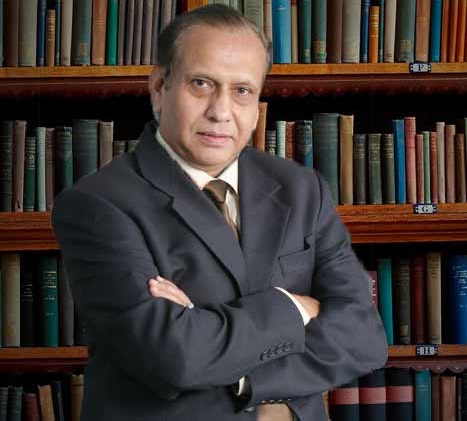
Virender Kapoor
A thinker, educationist and an inspirational guru. Kapoor is an Indian who wears many hats. An educationist of repute, he was the Director of a prestigious management Institute under the Symbiosis umbrella. He has emerged as a leading think tank in human behavior, motivation and success. As a celebrity author, his name appears with the likes of Thomas Friedman and Dale Carnegie. He has authored more than 30 books as of now which are on Amazon worldwide and several of his books are in the pipeline.