Sir Garfield Sobers was the last of cricket's complete masters
NewsBharati 18-Jul-2026 13:12:57 PM
Total Views |


In an age of specialists, Sir Garfield Sobers feels almost mythical. Today's cricket is built around clearly defined roles: opener, finisher, death bowler, wrist-spinner. Sobers belonged to a time when one extraordinary cricketer could perform every one of those roles and excel at them. His passing is not simply the loss of one of the game's immortals. It marks the fading of an era when genius was measured less by specialisation than by boundless versatility.
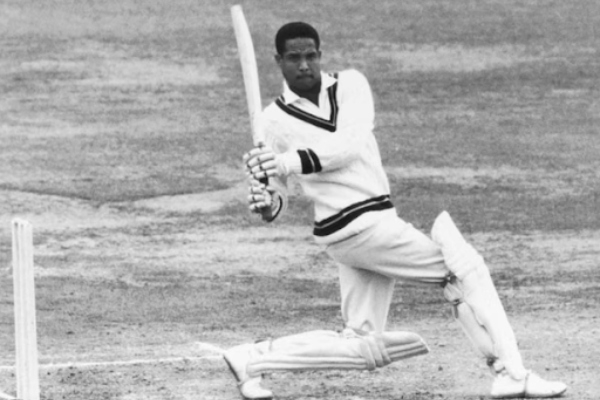
Every sporting record is eventually broken. Every generation believes it has discovered a player who will redefine greatness. Yet there are rare athletes whose legacy rests not on numbers but on the standard they establish. Sobers was one of them. His unbeaten 365 was surpassed. His pioneering feat of six sixes in an over has since been repeated. But no successor has truly matched the astonishing breadth of his talent. Cricket has produced many outstanding all-rounders after him; it has never quite produced another Sir Garfield Sobers.
Affectionately known throughout the cricketing world as 'Sir Garry', Sobers was never merely the greatest all-rounder the game has seen. He was the fullest expression of what cricket once allowed a player to become.
ALSO READ: Bhojshala Mukti Yagna convener urges Muslims to accept Bhojshala as a temple and respect judiciary
There have been many great all-rounders since, such as Kapil Dev, Ian Botham, Imran Khan, Jacques Kallis, Ben Stokes and others. Each defined an era. Yet every conversation about the greatest all-rounder inevitably returns to Sobers. Not because of nostalgia, but because no one has matched the astonishing range of his gifts.
His statistics remain extraordinary even today: more than 8,000 Test runs at an average nearing 58, 235 wickets and 109 catches. Yet numbers alone cannot explain why Sobers continues to occupy such a singular place in cricket's imagination.
Consider his unbeaten 365 against Pakistan in 1958. It stood as the highest individual score in Test cricket for 36 years, a record remarkable not only for its longevity but because it announced a new kind of batsman, one who combined patience with effortless strokeplay.
Or consider another enduring image. In 1968, playing county cricket for Nottinghamshire, Sobers became the first cricketer to strike six sixes in a single over in first-class cricket. Today, the feat has been repeated by players including India's Ravi Shastri and Yuvraj Singh. But Sobers was the first to make people believe it could even be done.
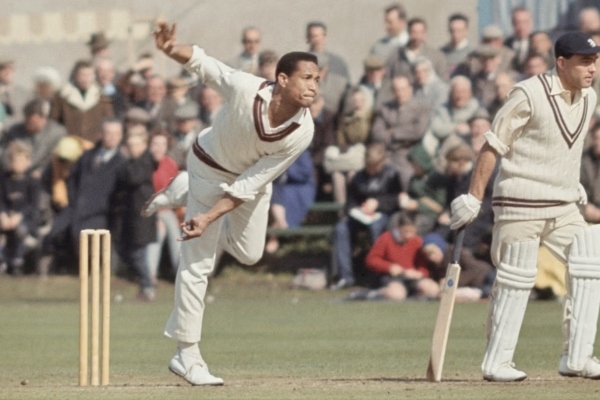
Indian cricket has always held him in special affection. Generations of Indian fans grew up watching grainy footage of his batting or listening to stories of his brilliance. He returned that affection many times over, visiting India frequently and forging friendships across generations of cricketers.
Sunil Gavaskar summed up Sobers' stature most eloquently. "The greatest cricketer to walk the earth has left us," Gavaskar wrote, adding that no words could do justice to Sobers' genius because "he was everything we dream of becoming when we pick up the bat or the ball as kids."
Sachin Tendulkar also spoke of the privilege of spending time with him. It was an acknowledgement from one legend to another.
ALSO READ: 2019 Telangana forest attack: TRS leader among eight convicted
There is another reason Sobers matters today. His career reminds us that cricket is, at its heart, a game of imagination. Modern coaching often encourages optimisation. Sobers embodied possibility. He refused to accept that a cricketer had to be one thing. He played with an instinct that cannot be manufactured in academies or taught by coaching manuals.
The true measure of sporting greatness is not whether records survive, but whether the standards survive. On that count, Sir Garfield Sobers remains peerless.
Cricket will continue to produce champions. It will produce extraordinary batsmen, fearsome bowlers and exceptional all-rounders. But every so often, the game produces a figure who seems to stretch the limits of what is possible. Sobers was one such player.

Editor's Desk
Editor's Desk