Gujarat HC Rejects Misconvinced Somnath Temple PIL: Imposes ₹2 Lakh Fine
Total Views |


Gandhinagar, Jul 02: The Gujarat High Court has dismissed a Public Interest Litigation (PIL) that sought the disclosure of an alleged archaeological survey report and other scientific records related to the Somnath Temple. The Court held that the petition was based on incorrect, misleading and distorted facts, making it legally unsustainable.
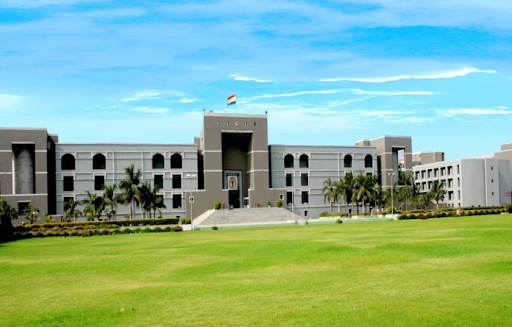
A Division Bench comprising Chief Justice Sunita Agarwal and Justice D. N. Ray observed that the petitioner had relied almost entirely on newspaper reports and social media posts without producing any authentic documentary evidence. The Bench emphasised that unverified information cannot serve as the basis for invoking the Court's writ jurisdiction and warned that entertaining such petitions would weaken the credibility of the public interest litigation mechanism established through judicial precedent.
ALSO READ:POK Revolts, Pakistan Reaps What It Sowed
The petitioner - Dr Vilas Kharat from Maharashtra, had requested directions to the Union Government, the Archaeological Survey of India (ASI), and other authorities to make public an alleged 32-page archaeological survey report, along with ground-penetrating radar (GPR) survey records, structural analyses, maps, photographs, videography, and other scientific material reportedly prepared by Indian Institute of Technology Gandhinagar concerning the Somnath Temple site. The petition also sought the preservation of archaeological records and scientific findings to facilitate future historical and academic research.
However, the High Court identified several serious deficiencies in the petition. It noted that the petitioner had incorrectly claimed that the Shree Somnath Trust was established under the Shree Somnath Trust Act, 1955, whereas the State Government clarified that no such legislation has ever existed. The Court also found that the petitioner had failed to disclose his occupation or source of livelihood, had not provided any evidence of his association with the non-governmental organisation mentioned in the petition, and lacked the authority to represent it before the Court.
ALSO READ: Beyond registration: Why Indian courts recognise the RSS as a legal entity
The Bench further observed that the factual claims made in the petition were based solely on media reports and social media content rather than verified records, authentic documents or independent research. It also found the accompanying affidavit to be legally defective, as it did not clearly disclose the source of the petitioner's information or comply with the legal requirements governing the verification of pleadings.