POK Revolts, Pakistan Reaps What It Sowed
Human rights cannot be defended only when politically convenient.
Total Views |


For more than seven decades, Pakistan built its Kashmir policy on one slogan "Azadi." It funded it, armed it, glorified it and exported it across the Line of Control. Separatism was projected as a sacred struggle whenever it suited Islamabad's strategic interests. Today, that very slogan is echoing in the streets of Pakistan-occupied Kashmir (POK), and suddenly the Pakistani establishment has discovered that demands for "freedom" are dangerous. The hypocrisy could not be more striking.
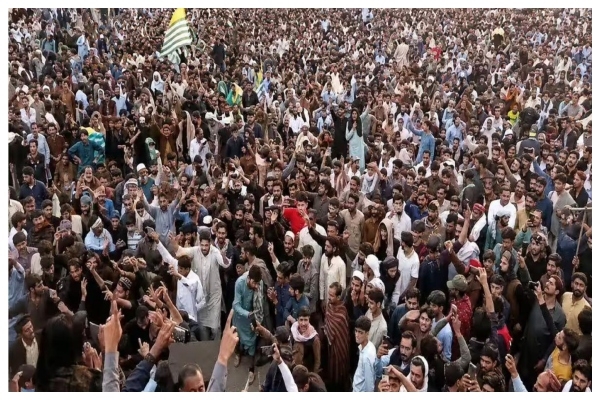 Pakistan's Kashmir narrative has always been built on double standards. When separatism weakens India, it is celebrated as a liberation movement. When the same sentiment emerges inside Pakistan, it is branded anti-national, crushed by force and dismissed as foreign conspiracy. That contradiction is now impossible to hide.
The recent unrest in POK is not an isolated law-and-order issue. It is the result of decades of political neglect, economic exploitation and systematic denial of democratic rights. The region suffers from unemployment, inadequate infrastructure, poor healthcare and chronic shortages of essential services despite possessing enormous hydropower potential. Local resources have been exploited while the benefits largely flow elsewhere.
The people of POK increasingly ask a simple question: if Pakistan claims to be their saviour, why has it failed to provide them dignity, prosperity and genuine political representation? Islamabad has no convincing answer.
Instead of addressing legitimate grievances, the Pakistani state has repeatedly fallen back on repression. Protest leaders have faced arrests, activists have reported intimidation, restrictions on assembly and heavy-handed policing have become familiar responses whenever public anger grows. The message is unmistakable that the rights are celebrated only until they challenge Pakistan's own authority.
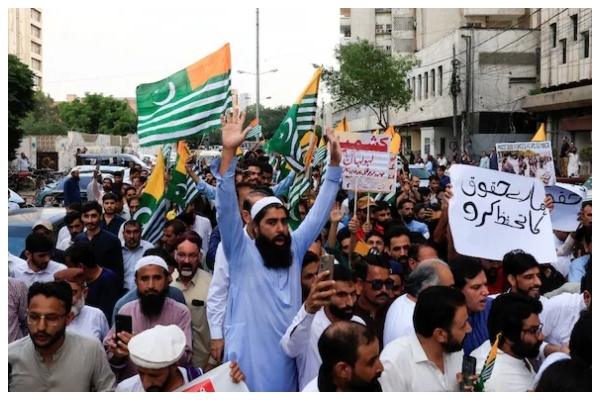
The irony is almost poetic. Pakistan spent decades nurturing the politics of separatism. It invested enormous diplomatic capital in portraying itself as the champion of oppressed Kashmiris. Today, the loudest cries questioning Islamabad's authority are coming from the very territory it claimed to have "liberated."
POK is not Pakistan's only internal crisis. Baluchistan presents an even more uncomfortable reality. Rich in natural resources but among Pakistan's poorest regions, Baluchistan has witnessed decades of insurgency, disappearances, military operations and allegations of serious human rights abuses. Families continue to search for missing relatives, journalists operate under constant fear, and nationalist voices are routinely suppressed.
Pakistan speaks passionately about alleged human rights violations across its borders but becomes conspicuously silent when confronted with allegations emerging from Baluchistan or POK. This selective morality has steadily eroded Islamabad's credibility internationally.
Human rights cannot be defended only when politically convenient. The international community is also beginning to recognise this contradiction. Pakistan's repeated attempts to internationalise Kashmir increasingly collide with uncomfortable questions about governance, democracy and civil liberties within territories under its own control. A country that suppresses dissent at home finds it difficult to claim the moral high ground abroad. History often has a cruel sense of justice.
Pakistan believed it could weaponize the language of "Azadi" indefinitely without ever facing its consequences. It assumed separatism could remain safely confined across the border. But ideas, once unleashed, rarely obey political boundaries. Today, the slogan Pakistan manufactured against India is returning to haunt Pakistan itself. The unrest in POK is therefore much more than a regional disturbance. It is a mirror reflecting the bankruptcy of Islamabad's Kashmir policy. A state that spent decades exporting instability is now struggling to contain it within its own borders. A government that preached self-determination abroad now fears demands for accountability at home.
Pakistan's greatest challenge is no longer convincing the world about Kashmir. It is convincing the people of POK and Baluchistan that the promises it made in the name of freedom were ever meant for them. Until Islamabad replaces propaganda with democracy, repression with representation and double standards with consistency, the cry for "Azadi" will remain not India's problem, but Pakistan's own political reckoning.
For decades, Pakistan lectured the world on the "right to self-determination" in Jammu and Kashmir while denying the same right to the people living under its own occupation. POK has never enjoyed genuine autonomy. Its political institutions function under Islamabad's shadow, major constitutional decisions are dictated from Pakistan, and local governments survive only as long as they remain obedient. Elections exist, but real power rests elsewhere.
ALSO READ: 'RSS is a definite, determinate and identifiable body or persons', says Karnataka Court
The people of POK increasingly ask a simple question: if Pakistan claims to be their saviour, why has it failed to provide them dignity, prosperity and genuine political representation? Islamabad has no convincing answer.
Instead of addressing legitimate grievances, the Pakistani state has repeatedly fallen back on repression. Protest leaders have faced arrests, activists have reported intimidation, restrictions on assembly and heavy-handed policing have become familiar responses whenever public anger grows. The message is unmistakable that the rights are celebrated only until they challenge Pakistan's own authority.
This exposes the biggest myth surrounding Pakistan's Kashmir campaign. Islamabad never supported self-determination as a universal democratic principle. It treated it as a geopolitical weapon against India. The moment that weapon turned inward, Pakistan abandoned every lofty principle it had preached before international forums.
The contrast with India's approach has become increasingly visible. While Pakistan continues to suppress political dissent in territories under its control, Jammu and Kashmir has witnessed expanding democratic participation, local body elections, infrastructure development and growing investment after the abrogation of Article 370 in 2019. Pakistan may disagree politically with India's decisions, but it cannot escape comparisons with conditions prevailing in the territory it controls.
The irony is almost poetic. Pakistan spent decades nurturing the politics of separatism. It invested enormous diplomatic capital in portraying itself as the champion of oppressed Kashmiris. Today, the loudest cries questioning Islamabad's authority are coming from the very territory it claimed to have "liberated."
POK is not Pakistan's only internal crisis. Baluchistan presents an even more uncomfortable reality. Rich in natural resources but among Pakistan's poorest regions, Baluchistan has witnessed decades of insurgency, disappearances, military operations and allegations of serious human rights abuses. Families continue to search for missing relatives, journalists operate under constant fear, and nationalist voices are routinely suppressed.
Pakistan speaks passionately about alleged human rights violations across its borders but becomes conspicuously silent when confronted with allegations emerging from Baluchistan or POK. This selective morality has steadily eroded Islamabad's credibility internationally.
Human rights cannot be defended only when politically convenient. The international community is also beginning to recognise this contradiction. Pakistan's repeated attempts to internationalise Kashmir increasingly collide with uncomfortable questions about governance, democracy and civil liberties within territories under its own control. A country that suppresses dissent at home finds it difficult to claim the moral high ground abroad. History often has a cruel sense of justice.
Pakistan believed it could weaponize the language of "Azadi" indefinitely without ever facing its consequences. It assumed separatism could remain safely confined across the border. But ideas, once unleashed, rarely obey political boundaries. Today, the slogan Pakistan manufactured against India is returning to haunt Pakistan itself. The unrest in POK is therefore much more than a regional disturbance. It is a mirror reflecting the bankruptcy of Islamabad's Kashmir policy. A state that spent decades exporting instability is now struggling to contain it within its own borders. A government that preached self-determination abroad now fears demands for accountability at home.
Pakistan's greatest challenge is no longer convincing the world about Kashmir. It is convincing the people of POK and Baluchistan that the promises it made in the name of freedom were ever meant for them. Until Islamabad replaces propaganda with democracy, repression with representation and double standards with consistency, the cry for "Azadi" will remain not India's problem, but Pakistan's own political reckoning.