CJP's march on Parliament: Time to act tough
Total Views |


Democracies rarely collapse in a single dramatic moment. They decay gradually when constitutional institutions begin yielding to the politics of the street. History offers an unmistakable lesson that whenever political movements conclude that legislatures no longer matter and organised crowds can achieve what elections cannot, constitutional democracy enters dangerous territory. Mobocracy invariably begins by claiming that those gathered on the streets represent the "real people" while elected representatives somehow do not.
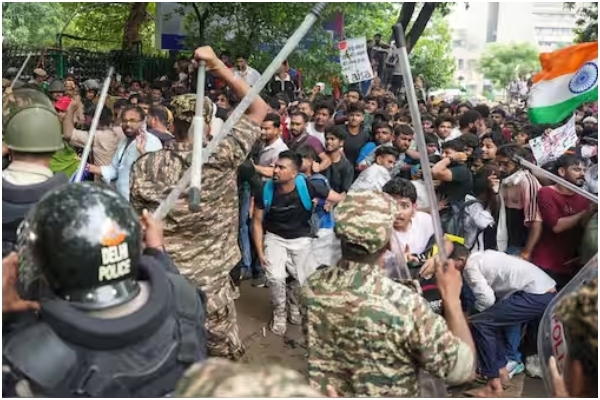
Monday's Cockroach Janta Party (CJP) march towards Parliament carried disturbing echoes of this pattern. It was presented as an exercise in democratic protest, but its political messaging, methods and mobilisation raised questions that extend far beyond a routine agitation. The aggressive attempt to march towards the nation's highest legislative institution, amplified through an orchestrated social media campaign, was not merely another protest. It was a calculated attempt to project the street as an alternative centre of political authority.
Equally disturbing was the rhetoric surrounding the agitation. Calls invoking Nepal- or Bangladesh-style uprisings among the youth reflect a dangerous political mindset. Democracies permit dissent, they do not sanction the glorification of disorder as a substitute for constitutional politics. Encouraging confrontation with institutions instead of engaging them through parliamentary debate and elections risks normalising lawlessness in the name of democratic resistance.
What unfolded in Delhi was more serious than many initially appreciated. Had the security forces failed to intervene decisively, the situation could easily have spiralled beyond control. India has witnessed how prolonged agitations can escalate, whether during the anti-CAA protests or sections of the farmers' movement. Democracies cannot afford situations where Parliament itself becomes vulnerable to coercive mass mobilisation. History repeatedly demonstrates why legislatures must remain beyond intimidation.
The 1605 Gunpowder Plot sought to obliterate the British Parliament. The Reichstag Fire of 1933 became the prelude to the destruction of democratic freedoms in Germany. Russia's 1993 constitutional crisis culminated in military action against Parliament. Terrorists attacked the Indian Parliament in 2001 to strike at the very heart of the Republic. The storming of the U.S. Capitol in 2021 reminded the world that even mature democracies remain vulnerable when political passions overwhelm constitutional restraint. These episodes differed in ideology and circumstance, but they shared one common feature - each challenged institutions through which democratic legitimacy is exercised.
Parliament is not merely another government building. It is the constitutional heart of the nation. Governments change. Prime Ministers come and go. Political parties rise and decline. Parliament alone remains the enduring institution through which the sovereign will of the people is translated into law. Any attempt to overawe, encircle or intimidate Parliament physically or symbolically strikes at the very foundation of representative democracy.
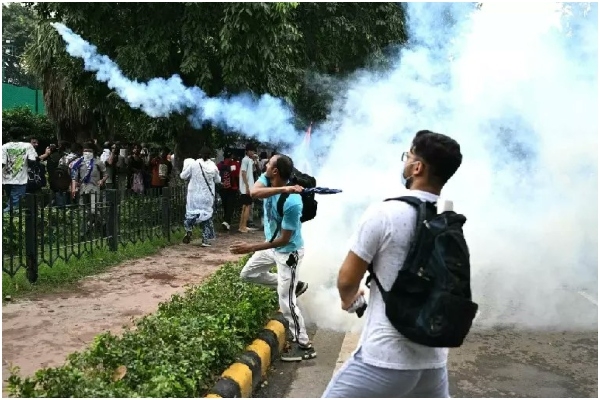
Peaceful protest is unquestionably a constitutional right. Citizens have every right to criticise governments, organise demonstrations and demand accountability. But constitutional rights are inseparable from constitutional responsibilities. Protest cannot become a mechanism for transferring political decision-making from Parliament to the streets. If organised crowds become the ultimate source of political legitimacy, elections lose their meaning and legislatures become irrelevant.
The criticism directed at the Delhi Police is therefore misplaced. The police were not protecting a political party or an individual government. They were protecting Parliament and, by extension, the constitutional order itself. Every mature democracy secures its legislature with extraordinary care because Parliament belongs to the nation, not to the government of the day. Westminster, Capitol Hill and India's Parliament are protected for precisely this reason.
Preventive policing around Parliament is not an assault on democracy. It is one of democracy's essential safeguards. Had the police allowed unrestricted access in an already volatile atmosphere, the consequences could have been catastrophic. The same voices criticising the police today would almost certainly have questioned their failure had violence or a breach of Parliament occurred.
ALSO READ: 'Peaceful student' CJP protesters pelt stones at Delhi Police hours after Dipke posted about trucks loaded with stones blaming Police
The controversy surrounding the organisers of the march also warrants careful scrutiny. Several individuals and organisations associated with the campaign have previously faced investigations, public scrutiny or allegations concerning foreign funding or external influence. Every such matter must be determined strictly through due legal process. At the same time, the government has an equally important responsibility to investigate any credible evidence of attempts by external interests to exploit domestic political fault lines. Transparency, rather than speculation, is the most effective antidote.
India has welcomed dissent throughout its democratic journey. But dissent cannot become a shield for those seeking to weaken constitutional institutions or destabilise the Republic. Citizens should distinguish between democratic protest aimed at improving governance and political mobilisation designed to erode faith in the constitutional order. The defence of Parliament is not the defence of any government; it is the defence of India's democracy itself. The Republic will remain strong only so long as its institutions remain stronger than the crowds assembled outside them.