Mr. Wangchuk, moral authority cannot be manufactured
Total Views |


Public protests often produce charismatic faces, who claim to speak for the nation. But history reminds us that not every movement carries the same moral authority, public legitimacy or national purpose. India has witnessed three high-profile agitations in the post-independence era. Jayprakash Narayan led the anti-emergency struggle in seventies and Anna Hazare's anti-corruption crusade of 2011-12 are remembered always. A small section of activists and politicians try to draw a parallel between Hazare's movement and Sonam Waghchuk's latest fast. But the anti-corruption crusade by Anna Hazare and Waghchuk's current agitation can never be compared.
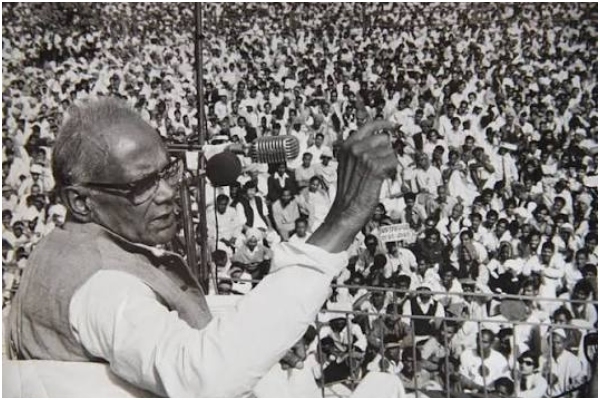
While both attracted media attention and invoked the language of public interest, the similarities largely end there. The two movements emerged in vastly different political climates, were led by individuals with different public standing, and drew support from very different social and political constituencies.
JP joined the freedom movement after returning from the United States, where he had worked while pursuing higher education. Inspired by Mahatma Gandhi, he became an active participant in the Indian freedom struggle and was imprisoned several times by the British. During the Quit India Movement of 1942, he emerged as one of the underground leaders, who kept the resistance alive despite severe repression. His courage earned him nationwide respect.
After Independence, JP could easily have occupied the highest political offices. He was among the most respected leaders of his generation and enjoyed enormous public goodwill. But he deliberately stayed away from the pursuit of power. He refused ministerial positions and distanced himself from electoral politics, believing that nation-building required social transformation as much as political change.
When JP returned to public leadership in the 1970s, it was not as the head of a political party but as the moral conscience of the nation. His call for "Sampoorna Kranti" (Total Revolution) sought ethical, social, political and administrative reforms rather than merely a change of government. He appealed to students, workers, farmers and ordinary citizens to fight corruption, authoritarianism and the misuse of state power through peaceful and democratic means.
During the emergency (1975–77), JP became the unifying force of the opposition. Leaders belonging to different ideologies socialists, Bharatiya Jana Sangh, Gandhians and others accepted his leadership because he was seen as politically impartial and personally above ambition. He did not aspire to become Prime Minister, nor did he seek electoral office after the emergency. His only objective was the restoration of democracy and constitutional freedoms.
This absence of personal ambition became the foundation of his moral authority. Indians trusted JP because they believed he had nothing to gain for himself. His credibility was earned over decades of sacrifice, consistency and public service. In his case, character preceded leadership. That is why millions accepted his call, and why his moral authority became the most powerful weapon against the Emergency.
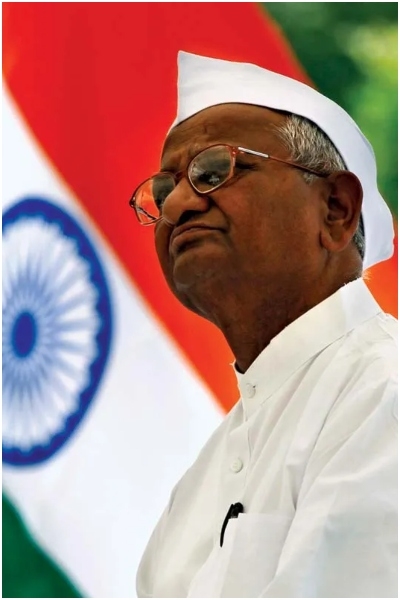
Anna Hazare entered the national stage with impeccable credentials. A former soldier, he had devoted decades to rural transformation in Maharashtra. Ralegan Siddhi became a model village because of his commitment to water conservation, prohibition, community participation and clean governance. His personal life reflected austerity, discipline and transparency. Even his critics rarely questioned his integrity. When Anna called upon Indians to fight corruption, millions believed he had earned the moral right to make that appeal.
More importantly, Anna's movement emerged during one of the darkest phases of the United Progressive Alliance (UPA) government. The country was reeling under allegations surrounding the 2G spectrum allocation, commonwealth games, coal block allocations and several other controversies. Inflation was high. governance appeared paralysed. Public confidence in the political establishment had reached one of its lowest points in decades. The anti-corruption movement became a vehicle for expressing widespread public frustration against a government perceived to be unresponsive and morally compromised.
ALSO READ: CJP's march on Parliament: time to act tough
The political landscape today is markedly different. After more than a decade of the Narendra Modi government, Indian politics has undergone a significant transformation. National security, infrastructure development, welfare delivery, digitisation and anti-corruption measures dominate political discourse. Electoral verdicts have repeatedly demonstrated that despite criticism from opponents, the government continues to enjoy substantial public support. Unlike 2011, there is no comparable nationwide wave of resentment against the Union government.
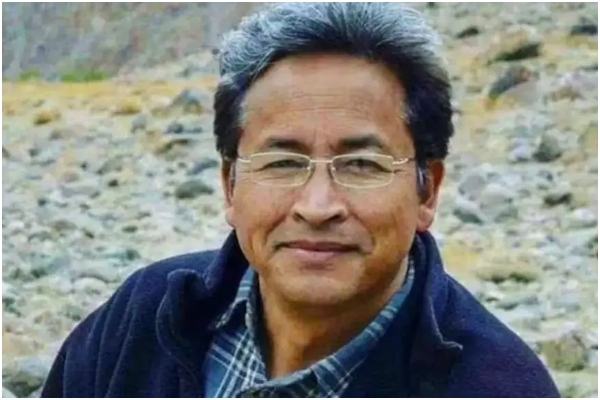
This altered political reality explains why Sonam Wangchuk's mobilisation has not generated a similar national response. Sonam Wangchuk has emerged as one of the most visible faces of public protests concerning Ladakh. However, visibility in the media and on social media is not the same as moral authority. The latter is earned through unquestioned credibility, transparency and consistency.
Over the years, Wangchuk has faced several controversies that his critics argue cannot simply be brushed aside. Questions have repeatedly been raised in the public domain about his foreign associations, including his personal and professional connections. His educational initiative has also attracted scrutiny, with critics alleging that it lacks the necessary government recognition and that certificates issued by it do not carry formal academic validity. These allegations have led some to accuse him of misleading students and the people of Ladakh. His institution has also received notices over alleged violations of the Foreign Contribution (Regulation) Act (FCRA), during both the UPA and NDA governments.
Equally important is the company a movement keeps. A public campaign is often judged not only by its declared objectives but also by those who rally around it. Many of the prominent political activists and organisations supporting Wangchuk's agitation are individuals and groups who have frequently opposed the present government on a wide range of ideological issues. Several have little mass support of their own and are viewed by many citizens as habitual protesters rather than constructive nation-builders. Their presence has allowed critics to portray the agitation as another platform for anti-government mobilisation rather than a focused campaign on Ladakh's concerns.
This marks a sharp contrast with Anna Hazare's campaign. Although political parties later attempted to draw advantage from it and some members of his team eventually entered electoral politics, Anna himself consistently projected an image of political neutrality. The central issue remained corruption, a concern that resonated across party lines. His movement drew legitimacy from the issue itself rather than from alliances with established ideological groups.
Another significant difference lies in public perception of national priorities. During the UPA years, corruption dominated public discourse because citizens believed systemic reform was urgently required. Today, while disagreements over policy certainly exist, the national conversation is more diverse, encompassing economic growth, defence preparedness, technology, employment, welfare and India's expanding global profile. In such an environment, a single-issue agitation finds it more difficult to acquire universal appeal unless it connects with a broader national sentiment.
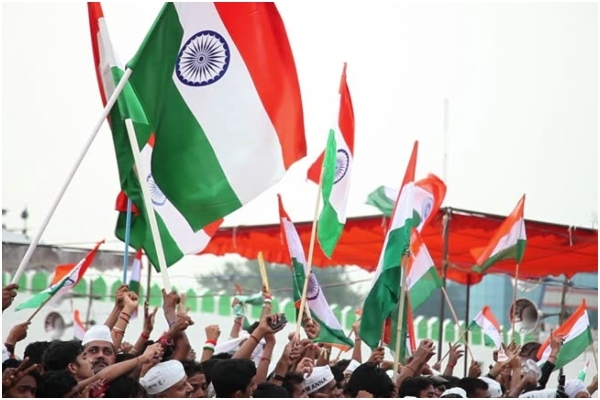
Mass movements also depend upon timing. The same demand may receive overwhelming support in one political context and limited attention in another. Anna Hazare's campaign coincided with a moment when public anger had accumulated over years. Wangchuk's protest, despite media visibility, has not encountered a comparable reservoir of nationwide discontent.
Democracy certainly provides every citizen the right to protest peacefully and present grievances before the government. That right must be respected regardless of political affiliation. At the same time, public support cannot be manufactured through symbolism alone. It has to be earned through sustained credibility, broad public confidence and a cause that reflects the prevailing mood of the nation.
Anna Hazare's movement became a defining political moment because it represented an extraordinary convergence of personal integrity, public trust and widespread national dissatisfaction. Sonam Wangchuk's campaign is unlikely to achieve that level of moral or democratic legitimacy. Leadership is ultimately measured not merely by media visibility or celebrity status, but by the depth of public confidence it commands and the quality of the people who stand beside it.
Those who seek to compare Sonam Wangchuk with JP or Anna Hazare, overlook a fundamental difference in public credibility. Anna Hazare's moral authority was rarely questioned. His personal integrity became the foundation of his movement. Wangchuk, on the other hand, has not enjoyed the same unquestioned public standing.
Every agitation is not a people's movement. Every fasting activist is not another Anna Hazare. Moral authority cannot be borrowed from history. It has to be earned through an unimpeachable public life, a cause that resonates with the nation, and a movement that rises above partisan politics. Jayaprakash Narayan and Anna Hazare fulfilled those conditions. Sonam Wangchuk has not. India has changed, its politics has changed, and above all, the people have changed. They no longer rally behind every televised protest. They ask a simple question - Who is leading the movement, who stands behind it, and what larger national purpose does it truly serve?