Excuse me, Mr Naseeruddin
NewsBharati 23-Jul-2026 11:56:46 AM
Total Views |


There was a time when Naseeruddin Shah's performances spoke louder than his interviews. Today, the opposite often appears true. Long before the release of his next film, his latest political remark dominates headlines. For many Indians, Shah has gradually ceased to be merely an actor. No one can deny his right to speak. Every citizen is free to express political opinions. Equally, when a public figure repeatedly enters contentious political debates, the public is entitled to examine whether those interventions reveal a consistent pattern. That pattern has become increasingly difficult to ignore.
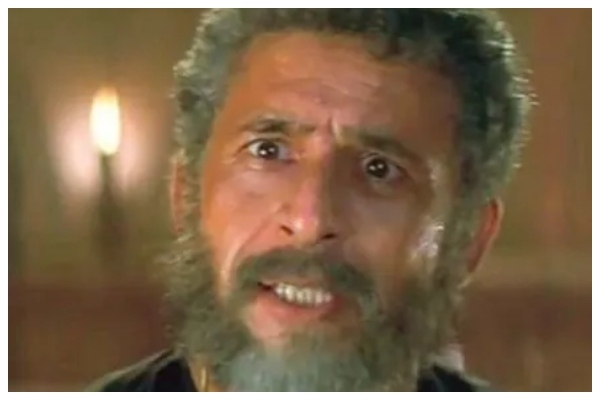
In 2018, Shah remarked that he feared for his children's future in India and said that, in some instances, the death of a cow seemed to matter more than the death of a police officer. The statement immediately became a national controversy. Supporters described it as a warning about intolerance. Critics argued that it presented an unbalanced portrait of India while overlooking the country's democratic resilience and everyday coexistence.
The Citizenship (Amendment) Act protests provided another example. Shah openly sympathized with the protesters and criticized the government's handling of the demonstrations. This episode reinforced the impression among his critics that whenever a major political confrontation emerged, his position was remarkably predictable, which was based on his religious identity.
The controversy widened further when Shah criticized the popularity of The Kashmir Files, The Kerala Story, and Gadar 2, describing the trend as dangerous. Many viewers disagreed strongly. They regarded these films as attempts to bring neglected subjects into mainstream discussion. Shah's remarks therefore reinforced a growing criticism that he appeared dismissive of narratives that challenged long-established cultural and political assumptions.
His attack on fellow actor Anupam Kher, whom he called a "clown," marked another turning point. Political disagreement is common in a democracy. Personal ridicule is less persuasive. Even many who shared Shah's broader political concerns questioned whether such language elevated public debate.
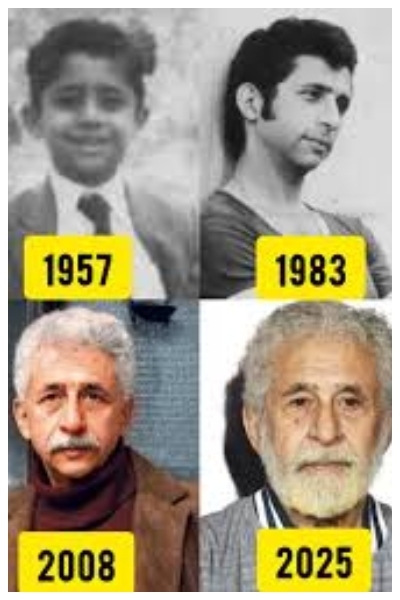
Most recently, reacting to police action during the Jantar Mantar protests, Shah warned that "everything will be remembered." Once again, his supporters praised him for speaking out. His critics, however, saw another instance of what they regard as selective activism. They asked whether he displays the same public urgency whenever victims, violence, or intimidation arise in circumstances that do not fit his preferred political narrative.
This recurring pattern explains why discussions about Naseeruddin Shah increasingly revolve around Muslim politics rather than cinema. The issue is no longer any single statement. It is the cumulative effect of many statements over many years. The larger question is about the responsibility that accompanies celebrity influence. Public intellectuals gain credibility not merely by criticizing governments but by applying consistent standards across issues. If criticism appears concentrated in one direction while comparable concerns elsewhere receive relatively little attention, audiences are entitled to question that imbalance. Such scrutiny is part of democratic debate.
ALSO READ: Why did the US embassy release an advisory three days before CJP agitation?
There was a time when Naseeruddin Shah symbolised India's parallel cinema movement, a stream often associated with left-leaning. His image was that of an actor shaped by ideological debates rather than identity politics. Today, that image has changed. His public interventions are increasingly viewed through the prism of Muslim religiosity and political controversies rather than cinema. The ideological "comrade" who once claimed the language of universal progressivism has given way to a public figure whose interventions appear selective, predictable and increasingly religious. Whether on the Mughals, the CAA, The Kashmir Files or recent protests, it is his political commentary not his acting that now defines his public persona.

Editor's Desk
Editor's Desk