Bengal CJP protest turns violent: Attacks, vandalism reported; Govt invokes Goonda Act, CM warns ‘next three generations will remember’
West Bengal government invoked its new Goonda Act against those accused of turning a Left backed-CJP protest in Kolkata violent, with journalists attacked, vandalism reported and six media persons seriously injured, as Chief Minister Suvendu Adhikari told the Assembly that nearly 70 people had been identified, seven FIRs registered, and warned that “their next three generations will remember” the strictest action under the tough new law.
Total Views |


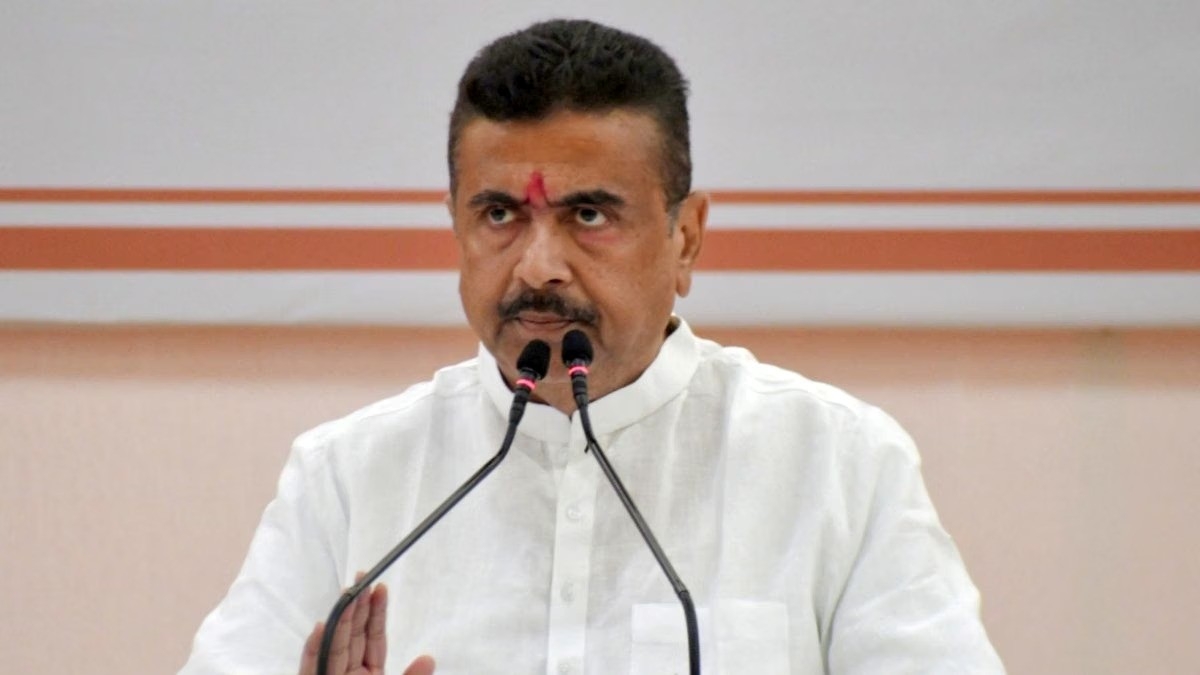
The West Bengal government has invoked the newly enacted West Bengal Public Safety and Control of Anti-Social Activities Act, 2026, commonly referred to as the Goonda Act, against those accused of attacking journalists and police personnel during a Left backed-CJP protest in Kolkata on July 24. The action ranks among the law’s first significant applications since it came into force earlier this month.
Addressing the state Assembly on July 25, Chief Minister Suvendu Adhikari described the violence as a “planned attack” on media personnel. The protest had been organised by Left student groups demanding the resignation of Union Education Minister Dharmendra Pradhan over the alleged NEET paper leak.
“The strictest possible action will be taken,” Adhikari said, confirming that provisions of the new anti-social activities law had already been added to the registered cases.
CM Suvendu Adhikari’s statement in the Assembly:
— Facts (@BefittingFacts) July 25, 2026
• Seven FIRs have been registered against the rioters.
• The Goonda Act has been invoked against them.
• Seventy rioters have been identified. They are neither students nor NEET aspirants.
• Afroz of Rajabagan, Naheed of… pic.twitter.com/AhfeEq9eiA
Nearly 70 identified; multiple FIRs filed
According to the Chief Minister, investigators have identified around 70 individuals who were allegedly present during the violence but had “no connection with the student protest.”
He alleged that the attackers first threw shoes and water bottles and later targeted journalists covering the demonstration after police refrained from using force despite repeated provocation.
He added, “Police were repeatedly provoked by the agitators but they were restraint. Everybody has seen how shoes and bottles were hurled on police. The protestors wanted police to resort lathicharge so that the ‘drama’ could continue but police didn’t allow them to take the opportunity,” he said in the House adding, “Seventy people have been identified but no one of them is student or CJP member. These people have no link NEET movement.”
In the state assembly, West Bengal CM Suvendu Adhikari says, "The manner in which mediapersons were attacked yesterday, it was necessary to know the facts. I personally met some injured mediapersons at the hospital. A rally was organised by SFI etc and it was peaceful. But… pic.twitter.com/rOf9bg9WtG
— ANI (@ANI) July 25, 2026
The government stated that six journalists suffered serious injuries and were treated at government hospitals, while several others received minor injuries. Multiple FIRs have been registered. Adhikari publicly named five individuals the administration alleges were involved: Afroz of Rajabagan, Naheed of Khidirpur, Tanveer and Nizam of Iqbalpur, and Rahul Jamal of Watgunge.
He added that seven FIRs had been lodged and warned that “their next three generations will remember the action we are going to take under the Goonda Act.”
Earlier on July 25, the Chief Minister visited the injured journalists at SSKM Hospital in Kolkata, assured them of medical support, and reiterated the promise of legal action.
Police response
Defending the handling of the protest, Adhikari said security forces had been instructed to exercise restraint unless the situation became uncontrollable.
“The intention was to provoke the police into using batons and tear gas so that the situation spiralled out of control. The police did not fall into that trap,” he told the Assembly, thanking Kolkata Police for maintaining restraint.
Police said 70 people have been identified for their alleged involvement in the attacks on police and media persons at Dorina Crossing, Esplanade, where thousands of students and members of the public had gathered after a protest march from Sealdah railway station.
Protest or attempt to disrupt law and order?
Earlier on July 24, Left student organisations, led mainly by the Students Federation of India (SFI) with the support of the CJP, had organised a protest march demanding the resignation of Union Education Minister Dharmendra Pradhan over the alleged NEET paper leak, the dissolution of the National Testing Agency (NTA), and justice for students who alleged police excesses during protests in Delhi.
Separately, a petition challenging the constitutional validity of the West Bengal Public Safety and Control of Anti-Social Activities Act, 2026, has been filed before a division bench of the Calcutta High Court headed by Acting Chief Justice Tapobrata Chakraborty.
Police used water cannons, lathi-charge and tear gas shells to disperse protesters after they assembled at Dorina Crossing in Kolkata, causing traffic disruption. Shoes, water bottles and stones were allegedly hurled at policemen during the confrontation.
Around 6 pm, police, assisted by the Rapid Action Force (RAF), carried out a coordinated operation to clear the area and restore normalcy.
Early test for Bengal’s new anti-goonda law
The crackdown marks one of the earliest major applications of the Goonda Act.
The BJP government, led by Chief Minister Suvendu Adhikari, enacted the law arguing that existing provisions under the Bharatiya Nyaya Sanhita and other statutes were inadequate to tackle organised crime, habitual offenders, riots, vandalism and politically motivated violence.
Officials said previous regimes had allowed a “goonda culture” to flourish and that there was no effective mechanism to recover the cost of damage to public or private property during protests and unrest.
The legislation draws inspiration from similar laws in states such as Uttar Pradesh, Maharashtra and others, particularly the model of making rioters financially accountable for destruction caused.
Key provisions
The Act significantly expands the definition of “anti-social activity” to include any act that causes or is likely to cause alarm, danger, fear or insecurity among the public; grave or widespread danger to life or property; disturbance of public order; obstruction of lawful business or profession; unlawful dispossession of property; substantial damage to public or private property; and illegal mining, sand extraction or forest/wildlife offences that result in loss to the public exchequer.
A “goonda” is defined as a person who habitually commits, attempts, abets, finances or facilitates such activities, whether alone or as part of a gang or syndicate or who has been charge-sheeted under the organised crime provisions of the Bharatiya Nyaya Sanhita (Sections 111 and 112), or under the Arms Act, NDPS Act, Immoral Traffic (Prevention) Act or Explosive Substances Act, or who is generally reputed to be desperate and dangerous to the community.
Core powers under the law include:
• Preventive detention: for up to 12 months without trial if authorities are satisfied it is necessary to prevent anti-social activities. Detention orders can be issued by the state government, District Magistrates, Commissioners of Police, or police officers of Superintendent rank and above. Orders issued by local officers remain valid for only 15 days unless confirmed by the state government.
• Advisory Board review: Every detention must be examined by an Advisory Board headed by a sitting or former High Court judge (with two other members qualified to be High Court judges). The Board must submit its report, ordinarily within nine weeks, on whether sufficient cause exists for continued detention.
• Externment: District Magistrates, Police Commissioners or authorised senior officers can direct a “goonda” to leave a specified area, district or districts and prohibit re-entry for up to one year, while requiring the person to report movements.
• Offences under the Act are cognisable and non-bailable.
• Wide powers of search, seizure and confiscation of property, documents or materials believed to be linked to anti-social activities.
• Violation of a detention or externment order is punishable with imprisonment up to three years and fine. Harbouring a person against whom such an order has been issued can attract up to two years’ imprisonment and fine.
A companion legislation, the West Bengal Maintenance of Public Order (Amendment) Act, 2026 creates a Claims Commission to assess and recover compensation for damage to public and private property during riots, unlawful assemblies or violent protests, with the possibility of auctioning the offender’s assets if necessary.
The state government has described the law as a necessary instrument to curb organised crime and restore public order, with the Chief Minister repeatedly assuring the Assembly that it would target only “goondas” and would not be misused for political purposes.
Protest context
The violence took place amid nationwide demonstrations over the alleged NEET paper leak, with student organisations demanding accountability and reforms.
While protests have occurred in several states, Kolkata authorities alleged that July 24’s rally was infiltrated by elements seeking to trigger unrest, a claim contested by opposition groups. The episode has sharpened political debate over both the management of the protests and the reach of West Bengal’s new public order law.