Fast ends, questions begin
Total Views |


Politics is often decided not by the beginning of a movement but by what happens after its emotional peak. Sonam Wangchuk's decision to end his hunger strike may have closed one chapter of the agitation, but it has opened another, one that is likely to determine whether this movement retains political relevance or gradually loses momentum.
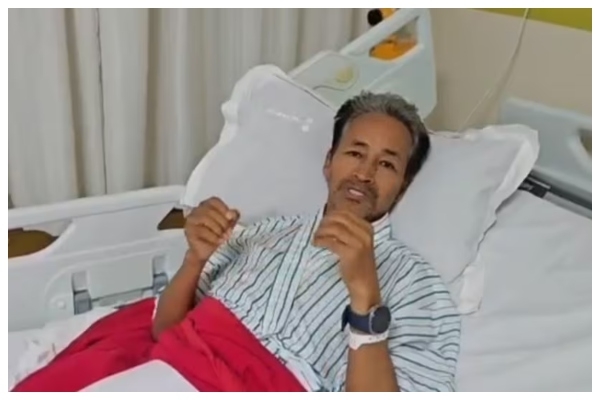
The Centre's handling of the agitation deserves close political scrutiny. Contrary to the assumption its critics, the Modi government did not surrender to sustained street pressure. Nor did it rely exclusively on police action. Instead, it adopted a calibrated strategy: maintain a firm law-and-order position, prevent disruption of public life, engage with protest leaders through dialogue, and finally offer limited but specific assurances on issues directly concerning students. By doing so, the government attempted to project two messages simultaneously that democratic dialogue remains open, but governments cannot be coerced into policy decisions through indefinite street mobilisation. Whether one agrees with this approach or not, it has altered the political landscape.
The first consequence is that the pressure has shifted from the government to the leadership of the agitation. During the hunger strike, the Centre was under constant scrutiny. Every passing day raised questions about whether it would respond. That phase has ended. Once Wangchuk accepted the government's assurances and broke his fast, the immediate moral pressure on the government diminished. The spotlight has now moved to those who led and supported the agitation. This is where the political story becomes far more interesting.
Such alliances generally remain intact as long as confrontation continues. The moment negotiations begin, internal contradictions begin to surface. Recent statements by Geetanjali Wangchuk have drawn attention precisely because they suggest differing perceptions within the broader movement about its future course. Whether those differences widen or are resolved remains to be seen, but they underline an important political reality - maintaining unity after the peak of a mass movement is often far more difficult than creating it.
The Congress also faces an uncomfortable political choice. It invested considerable political capital in supporting the agitation and portraying it as a symbol of governmental failure. But politics becomes complicated once the principal face of the movement accepts dialogue and ends his fast. If Congress continues to intensify street mobilisation despite the changed circumstances, it risks inviting questions about whether its objective is examination reform or political confrontation with the Modi government. If it moderates its position, sections of its own support base may perceive it as retreating from the campaign.
The same dilemma confronts CJP and other activist organisations. Movements sustained by civil society groups often depend upon continuous public mobilisation. Governments, however, seek to move issues from the streets into institutional processes. Once discussions begin, activist groups must decide whether to remain partners in dialogue or continue confrontation. That decision is rarely unanimous.
History shows that broad protest coalitions frequently begin to fragment once the emotional intensity subsides. Students generally seek concrete reforms and institutional safeguards. Political parties calculate electoral gains and losses. Ideological organisations attempt to keep larger political narratives alive. These objectives may temporarily overlap, but they seldom remain identical over a prolonged period.
Equally, the agitation itself has reached a defining moment. Until now, its unity was sustained by a common confrontation with the government. That phase has changed. Different organisations within the movement now have different political calculations. Some may prefer negotiations. Others may favour continued agitation. Political parties will weigh electoral considerations, while activist groups may seek to maintain pressure through sustained mobilisation. That makes the central political question unavoidable.
Can this coalition survive now that its principal leader has ended his fast and the government has shifted the battle from the streets to the negotiating table? The answer will determine not merely the future of this agitation but also the credibility of those who claimed to speak with one voice. Temporary alliances are easy to forge during moments of confrontation. Sustaining them after the confrontation begins to ease is a far greater challenge.
For the Modi government, the immediate political objective appears to have been achieved it has weathered the most difficult phase without conceding to maximum pressure. But for the opposition, Congress, CJP and the assortment of activist groups that assembled around the movement, the real examination begins now. Their common adversary alone may no longer be sufficient to preserve theunity. The fast may have ended, but the political test has only just begun