Open letter to the Prime Minister Shri Narendra Modi - Splitting Ministry of education into two separate Ministries
In an increasingly knowledge-driven global economy, education is also vital for technological leadership and innovation.
NewsBharati 25-Jul-2026 10:45:29 AM
Total Views |


Scale, size and importance of education in India
We are a very huge nation. The population of India is approximately 1.47 billion, making it the most populous country in the world. This figure accounts for nearly 18% of the global total.
India operates about 1.49 million (14.9 lakh) schools, forming the largest school education system in the world. These institutions serve over 24.8 crore students. Approximately 69% are managed by the government, 23% are private unaided, and the rest are government-aided or alternative institutions. Population of Canada just 4.2 crores and of UK is 7 crores.
We have more school children than total population of Egypt, Iran, Saudi Arabia, UAE put together. And even more than Germany, UK, France put together.
We have over 1,400 recognized universities with more than 53,000 colleges. More than 4.5 crore students enrolled in colleges. These numbers are staggering if not mind boggling. The entire load of managing this entire show rests on one ministry headed by one cabinet minister. He does have two state ministers but still the entire responsibility rests on the shoulders of one minister.
There is overload
This issue isn't just about a lack of staff; it’s a systemic strain caused by the sheer scale of managing the world's largest education ecosystem alongside massive, fast-paced policy shifts.
A significant amount of ministry bandwidth gets consumed by high-stakes centralized examinations. Centralized entrance exams (like NEET-UG and CUET) managed via the National Testing Agency (NTA) handle millions of candidates. Managing paper leaks, technological glitches, legal challenges, and nationwide protests frequently forces leadership into reactive crisis mode.
States also are overloaded. If the central Ministry of Education handles macro-policy and nation-wide regulation, state education departments carry the overwhelming brunt of day-to-day execution.
Because education is on the Concurrent List in India's constitution, state ministries manage over 90% of the public schooling and higher education infrastructure in the country. In almost every state, the Education Department is the
single largest employer in government and it is routinely cited as one of the most operationally overburdened.
Importance of education in a rising nation like India
India’s demographic dividend where more than half the population is under 25 can only be unlocked through quality education. It is the single most powerful tool for breaking the cycle of poverty, driving innovation, and fostering national development. A well-educated workforce attracts global investment, powers the nation’s growing service and manufacturing sectors, and drives sustainable GDP growth.
Socially, education serves as a great equalizer. In a nation historically marked by deep disparities, education promotes social mobility and reduces systemic inequality based on caste, gender, and socio-economic status. By bridging the gap between urban and rural opportunities, education transforms individuals from passive survivors into active contributors.
ALSO READ: CJP agitation: Expose the puppeteers
In an increasingly knowledge-driven global economy, education is also vital for technological leadership and innovation.
Skill development which has been ignored by us since 1947
Very rightly you as the head of the government, have realised that educational degrees alone do not get you jobs. Your speech in parliament was brilliant where you enumerated that when a graduate is asked ‘what do you know? He responds I am a graduate, and thats all he keeps repeating every time he is asked the question’.
Therefore, with a clear vision you started skill development with special emphasis on employment and entrepreneurship. For this a clear roadmap and action plan was created and implemented in letter and spirit. The Ministry of Skill Development and Entrepreneurship (MSDE) was created as the apex body of the Government of India tasked with removing the disconnect between the demand and supply of skilled manpower, upgrading vocational frameworks, and fostering entrepreneurship across the country. Very high priority and importance have been given to this by having a Minister of State - Independent Charge, to provide leadership for this ministry. This has a core mission to Implement the Skill India Mission to enhance youth employability and support enterprise creation.
Crores of graduates- what to do with them?
India produces around 15 million (1.5 crore) graduates every year! This massive pool includes about 1.5 million engineering graduates alongside roughly 8.5 million students earning general degrees like B.A., B.Sc., and B.Com. Across all higher education programs, including diplomas and post-graduate courses, annual graduating cohorts frequently exceed 10 million (1 crore) individuals.
All these people feel ‘entitled for a job’, that too a white-collar good job. On top of it they expect the government to provide them a job! The economists and policymakers are firmly of the opinion that a government's primary responsibility is not to act as an employer-of-last-resort for every graduate, but rather to build an environment where the broader economy generates productive jobs. But this virus of ‘government to give’ me a job- or G2G-job virus from God alone knows where it has come is eating the nation from inside out. If in a discussion of learned panel you have nothing else against the administration your first question shot out like a Frisby is ‘why have you failed to provide jobs?’ and everybody looks blank sheepishly thereafter.
Having headed a prestigious B- School for a decade plus, I realised that I could make you employable but cannot give a job on the plate like a masala Dosa. You pay for education to become worthy of employability. Education and skill development makes you job ready and thereafter it is an open market- you need to upskill, educate and make yourself useful to the organisation which has to pay you salary.
As Gandhi ji said “A customer is the most important visitor on our premises, he is not dependent on us. We are dependent on him.”
I would like to use it differently - “An employer is the most important person for a job seeker; he is not dependent on you. you are dependent on him.” You need to bring value to the table and enhance the output or efficiency of the employer and not the other way round. This is applicable across generations.
This needs to be said loud and clear and let it sink in properly.
‘I can provide you education at cheaper rates but I can’t provide high salary to a cheaply educated person’
We need to focus on better managed education system
Indians are intelligent people and we need to ensure they are educated and skilled properly.
The administration of education has to be managed with utmost care, due diligence and constant focus.
As brought out earlier we have a very huge number of people who are in their learning phase. From school to postgraduation is almost one third of your productive life cycle. A boy or a girl is learning for 2 or 3 years preschool,12 years in school, the 4 years graduation plus 2 years PG which is almost 20 years. If he works till 60, he has spent 33% time of his life only learning.
As brought out in the beginning we have a huge population which is on the ‘education treadmill’ of 20 years. Twenty-five crores in schools and five crores in colleges with an education apparatus consisting of 15 lakh schools 50000 colleges and 1400 universities you cannot hold just one man accountable for everything- the minister of education! From curriculum to teaching, to examination and much more it is a very complex and gigantic task. You are not only dealing with manpower but you are directly responsible to the progress of the nation, you are a feeder to every industry big or small- it touches all business verticals and your economy.
Division of responsibility and accountability at the centre
Though the present system has two departments within the ministry of education in the centre, one for schools and other for higher education each headed by a secretary level bureaucrat, the organisation is too unwieldy as one monolithic giant like a dinosaur. Remember dinosaurs got bogged down by their own weight. Yet the entire responsibility lies at the top- with the cabinet minister. Remember bottle neck is always at the top of the bottle and you also haul it up by the neck.
Higher education which is also becoming more and more critical as knowledge is rapidly advancing needs to be under ministry of higher education with one minister as in charge.
Though today India claims to be the Vishwa guru and we are being recognised as a beacon of news things to come- new ideas, new policies etc we could also look at some other nations having two separate ministries within education space.
It is time to catch the bull by the horns and this is just the right time to do it.
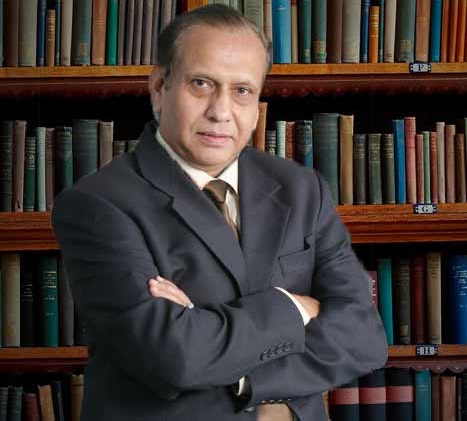
Virender Kapoor
A thinker, educationist and an inspirational guru. Kapoor is an Indian who wears many hats. An educationist of repute, he was the Director of a prestigious management Institute under the Symbiosis umbrella. He has emerged as a leading think tank in human behavior, motivation and success. As a celebrity author, his name appears with the likes of Thomas Friedman and Dale Carnegie. He has authored more than 30 books as of now which are on Amazon worldwide and several of his books are in the pipeline.